Sunday, March 8, 2015

Storyteller Life Hack: The Travel Bag


I spent an incredible week of telling in the Currituck area.  So many of the various things I’ve written about on this blog happened last week, that I’ve been in a perpetual state of amusement.  There are times when you just have to throw up your arms and surrender to the universe without getting too upset. 

Two hour delays because of fog, a possible ice storm, rescheduling shows from one day to another, rearranging performance and workshop schedules, renegotiating contracts midstream to deal with the changed circumstances, and that doesn't even begin to cover the TV Head children, and other interesting behavior I encountered, but I am not blogging about any of that this week. No, this week we will be discussing one of the most important weapons in your traveling arsenal; your travel bag.


Yeah, I'm a fool for Vera Bradley bags
    
When first I began to travel, I would simply load the bag with the toiletries on my side of the sink.  I'd take my lotion, skin conditioners, toothpaste, and whatever I thought I needed, put it in the bag, and then pack my clothes.  I found that this process meant that I would occasionally turn up at my final destination without necessary items.


The other problem I had was forgetting essential cords, like the ones that go to my phone or computer.  Finally, after a few years, I decided there had to be a better way.  

I remembered that when I was pregnant, the literature suggested that I pack a bag with everything in it that I would need to take to the hospital with me when I went in to have the baby.  


It occurred to me that if it worked for a trip to the hospital, it ought to work for longer trips, especially since I was anticipating taking such trips.  

With that in mind, I put together my storytelling travel bag with duplicates of all the supplies I need on a daily basis.  Then, I put the bag in my closet in easy reach.

What’s in it?


1.     A cord for my computer
2.     A cord for my phone
3.     Toiletries (Toothpaste, floss, toothbrush, you get the picture)
4.     Skin Care Regime (Oil of Olay to Jergens)
5.     Nail care regime (files, polish, creams, base and top coat)
6.     Cough drops and other throat needs
7.     Aleve (because sometimes life is a headache)
8.     Melatonin (a sleep aid when my travel schedule makes me jittery)
9.     Extra pens and pencils (You can't ever have enough)
10. Contact lens solutions (Including eyedrops)
11. My sleep mask (I like it really, really dark when I sleep)
12. Dread accessories (If you don't have dreads, use your imagination)
13. Shower cap  
14. Sleep net (I hate rolling over and pulling my own hair)


My travel bag


There are a few more things in there, but you get the point.  The toiletries are all kept in a 'kit' so that I can keep track of them, and it is easy to see when I have to replace things.  

When I get ready to leave for a week, overnight, two weeks, or however long, I only have to put my clothes and my contact lenses in the bag.  I don’t have to scour the room to see if I’ve left anything I need. 


When I get home, I just take out the clothes and my contact lenses.  Everything else stays in there.  If I have to fly, I take out the large bag with my regular size toiletries and replace it with my flight kit.

It also means that I don’t ever take the primary computer cords and such out of my house.  It also makes it much easier for me to get out of the house when I have to travel.  Packing has become a breeze.

For wherever your travels might lead!

This set up might not work for everyone, but it is a timesaver for me.

Every little bit helps.

Happy Traveling!


Thursday, February 26, 2015

Snow Days: Rescheduling A Month of Work

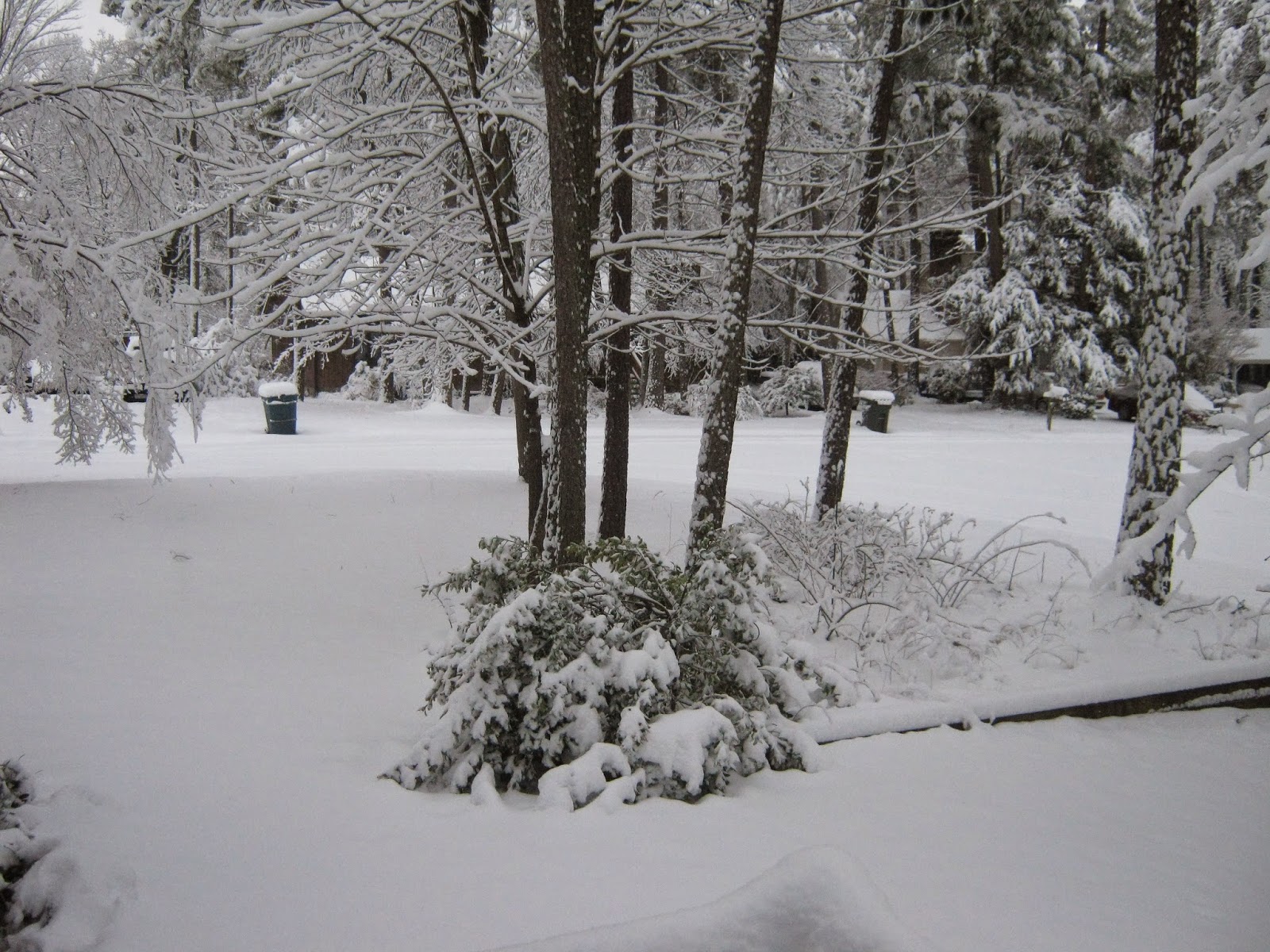
The view from my front porch


February isn't always snowy in North Carolina.  In fact, if we get any snow at all, it tends to be maybe once, and it is a dusting that lasts twenty four hours.  Not so this year.  This year we have had two weeks of snow and ice.  We are constitutionally incapable of dealing with snow, and our entire state hangs a 'closed' sign in the window and hoards as much milk and bread as possible.


This means that schools get canceled, and shows cannot go forward.  It also means I get to spend a few of my ever dwindling days with my children.  Still, there are some things we can do to make sure that if Mother Nature renders our schedule nonfunctional, we are prepared.  Here are things that Dave and I do.


1 - Make sure to keep some wiggle room in the schedule for March and April.  That way, if you have to reschedule shows from the snowier months, you have some places to put the rescheduled shows.

2 - Be proactive with your shows.  If you think a cancellation is on tap, call them a couple of days ahead of schedule and make some alternate plans.  If there is school, great, if not, you have a fallback position you could take.

3 - Cancelation of a show might occur if the school needs the instructional time, and the administrators are unwilling to do the show because of that.  How to proceed?  Well, we have a nonrefundable deposit requirement for venues.  We offer them the option of booking a show for the next year.  If they decide to go that route, then we apply their deposit to the show.  If they decide to forgo the show, then we just keep the deposit.  We've had organizations who've asked if they get the deposit back, at which time we politely refer them to the words, 'nonrefundable' in the contract they signed.  

4 - Schools can get wild and wiggly in this kind of weather and occasionally they change things without giving you adequate notice, or any notice that they've made an alteration.  Be as flexible as you can, and realize they are frazzled.

5 - If you can, offer venues a range of days to choose from in your schedule.  

6 - After you reschedule, send out an amended contract, or a new one so everyone is on board with the new plan.


Hmmm, it seems like I won't be going anywhere for a couple of days.  I have shows out on the coast starting Monday morning, and i hope most of the ice will be gone by then.

Last night I was busy  taking pictures of the snow in the dark.  I enjoy that it makes it look as if you are photographing the universe.


Just before I went in for the night, I took one last picture.  Wouldn't you know it, Old Man Winter photobombed me!  That guy has some nerve.


Happy Rescheduling!


Wednesday, February 18, 2015

Storytellers As Keepers of History: Our Stories Tell Us Who We Are


"The British are coming!"  Paul Revere rode alone to warn the whole of the countryside.


"I cannot tell a lie.  T'was I who chopped down the cherry tree."  George Washington was always truthful.


Betsy Ross sewed the very first American flag.  Yes, see, a woman did something important to further the American revolution.

Sherman hated the south, that's why he burnt and destroyed so much of it.


What were the stories you learned in American history?  What were the stories you internalized?  What did you learn about World War II or Vietnam?  Who was held up as a hero?  Who was vilified?  What is it you were taught about American values, and whether or not we lived up to those values?


Through much of human history, the bulk of the population were not capable of reading.  Population wide education is a pretty recent development in society.  Before we could read to ourselves, we had to have others tell us what was happening.

The griot, bard, poet, minstrel, folksinger, or jongleur had the job of keeping everyone informed about what was happening.  Their tales were often dressed in poetry or little personal flares.  People learned about the world beyond their villages by listening to the stories that were carried from place to place.  The stories that pleased the population were told over and over again until they moved from mere tellings to ritual.  The longer we tell the same story, the more we begin to believe it is true.  We actually reinforce each other when it comes to these tales.  In the end, they get added to the history of how we understand things.

The problem, of course, is that some of these stories have absolutely no bearing on the truth.  They didn't happen entirely the way they were reported, and, some are made up of whole cloth.

How can we tell the difference between what is real and what is just story, and why does it matter anyway?  If the stories make us feel good, and they aren't really hurting anything, why does it matter?

Well, I would like to put forward that it does matter because of a very simple, but profound truth that we overlook all of the time.

George Santayana said it best:


It matters what we hold up as history.  It isn't enough that we only remember the shining examples of our triumphs.  We must also face the darkness and the realities of those times when we, as a nation, faltered.  If we cannot look into that yawning crater of failures, then we are going to head down the same road, and fall into the same craters.

This is an obvious sentiment, but it is not something that is easy to do.  

Why?  Why is it so hard to admit that we've made bad choices, been led by the nose by foolish or dangerous practices or ideas?  Why?

Well, if we've done bad things, it suggests that the people who run our countries are just people.

No matter the country, the populace likes to tell grandiose stories about how it came to be.

You never hear a story like this:

Bob liked growing cabbages.  He found a great place to grow cabbages and cleared some land.  Other people followed, and before long, the area was big enough to need some kind of governance, and the people living there kind of fell into a system, and it eventually grew up into a town.  

No, the stories are all about intrepid adventurers or travelers or men who couldn't lie or stout hearts who held off regiments with nothing more than hope and faith.  That's the history we tell.  That's sexy and it sells.

George Washington was a truthful man.  He never lied, not once in his whole life because he was perfect, right?  Really?  Who honestly believes that?  Does it make him less of a person because he might not have been honest every second of his life?  No.

Did Paul Revere rouse the whole countryside by himself?  No, he had help, and he was just one of at least three men who were responsible for that heroic ride.  Does that take away from his accomplishments?  No.  

Something else I never learned was that after Paul Revere and his merry band roused the countryside, women and old men, who were the ones left home, were the citizen army who put the British on the run.  Old farmers, and their wives were the 'army' which inflicted such damages on the redcoats.  How come nobody tells that part of the tale?  Well, maybe they do, but I never heard it in school.

Did Betsy Ross actually sew the American flag?  No, probably not.  In fact, she was never credited with this accomplishment in her lifetime.  So, why bring this up at all?  Is it because we needed a woman to have done something special in the founding?  Aren't there plenty of women in history who actually did contribute?  Why have we mythologized a non-event?

As for Sherman, his action had nothing to do with hating the south or being virulently anti-slavery.  He burnt much of it to the ground to break it.  It was in rebellion, and he meant to make sure it didn't rise right back up and start causing problems once more.

General William Tecumseh Sherman


It goes deeper.  There are those who would like to put the actual history of what happened in our country behind us because it isn't always pleasant.  They actually have an alternative suggestion. 
This is not an isolated problem.  All over our country we are changing the stories we tell about ourselves to reflect something that either didn't happen or is so limited in scope that it doesn't even begin to tell the story of who we are as a nation, or what we've done.

There are others out there telling true stories as well.  Somehow, these stories never seem to get as much traction in our history books or rise to our notice as say, Betsy Ross.  For instance, how many people know much about Ida B Wells?

Ida B. Wells


February is black history month.  A month where we fill in some of the history that somehow managed to get left out of the history books.  We also have Hispanic history month and women's history month.  We have these concentrated times because these groups are still underrepresented when we tell the history of America in our schools.

What is to be done about the fight we are waging to keep our history? There is only one thing to be done: Keep telling the stories of our history; the powerful ones, the truthful ones, the ones we turn from, the ones we embrace.

There are shameful things in our past, yes, and we need to answer to ourselves for them, but there are also spectacular successes we should celebrate.  We need our history; it is the only thing that will keep us from failing our future.

There are storytellers out there telling our history in interesting and accessible ways.  They are invited into schools to give a different picture of the world than the flat one students read about in books. 

To those tellers who focus on true history, and not the surface kind we often get, I salute you.

The stories we tell matter.  They shape how we feel about ourselves.  The stories we refuse to tell because they might make us look bad, matter as well.  Not hearing them robs us of our ability to grow and get better as a society.


Let us keep telling the stories that need to be heard.  Let them be grounded in facts.  Let us embrace them as part of who we have become.  Even the difficult ones.


Happy Lore Keeping.

Monday, February 9, 2015

February: Perpetually In Transit


Drove to Delaware on Tuesday.

Four shows on Wednesday.

Four shows on Thursday.

One appearance Thursday night with some of my favorite people.  Kelly Starling Lyons, Antonio Sacre, Carmen Agra Deedy.

Four shows on Friday.

Drove home on Saturday.

Flew to Tampa, FL on Sunday.

Four shows on Monday.

Currently trying to fly from Tampa to Raleigh.

Unfortunately, I've been routed through Atlanta.

Flight to Atlanta is delayed.

Going to land at 8:15 pm if all goes as planned instead of 7:35pm.

Sadly, the plane will land about fifteen minutes after my connecting flight starts boarding.

Not to worry, I could still maybe make my connecting flight before it takes off at 8:40pm.

Sure, it could happen.  Sure..........wait a minute.  I'll be right back.

Made a back-up reservation on the 10:30pm flight just in case because I refuse to spend the night in the Atlanta airport.  If I miss my last flight, Carmen Deedy is going to see me again much sooner than she planned!

I really hate the Atlanta Airport.

At least I have tomorrow off and I may not get out of bed before noon.


Yeah, yeah, I know.  I picked this life.  Doesn't make it better right now.

That's all I'm saying.

Happy Traveling!

Thursday, January 29, 2015

Trophic Cascades. A beautiful story.

  1. Trophic cascades are powerful indirect interactions that can control entire ecosystems. Trophic cascadesoccur when predators limit the density and/or behavior of their prey and thereby enhance survival of the next lower trophic level.


I loved this video.  Talk about pure storytelling.

The Business Manager: How Do You Manage The Manager?


I am married to my business manager.  Now, in saying this I do not mean that my business manager and I work together so often, and are in each other's lives so deeply, that my husband says I might as well be married to her or him.  No.  My husband is my business Manager.  I often refer to him as The David.

Here we are in our younger, cooler days

How did he become my manager?   Well, thirteen years ago my husband gave up his job as a social worker in the Duke University Hospitals System, and I gave up my job as the full time homemaker and primary caregiver of our two children.

He came home, and I went back on the road.  Eight months after that, he took up the post of business manager.  I will spare you the bumps and bruises of that transition..it would make a good story, though.

Fast forward to a year after he took up the job.  We turned into a C Corp called DLW Storyteller Inc.
It exists separately from us, and has its own life, which is weird.  On March 1, 2015, we will have been a company for twelve years.


Over the last decade, we had to work to figure out what each of us is responsible for in the business.  We've gotten help from Merle Davis over the years.  I understand Paula Lepp, does her bit, Jim May's daughter was in it up to her ears when I first started in this business, Diane Ferlatte's husband picks up the slack, and Ed Stivender's sister manages his work.


Diane Ferlatte


I can't speak to how any of them manage their managers, but I can tell you how The David and I roll.  There are some hard and fast rules we follow when it comes to who does what.  For instance:

1)  I am not allowed to book anything.  I can't even pretend to promise.

2)  I do not handle travel plans.  I can suggest, but I don't make the arrangements.

3)  I do not meet with the lawyers or accountants by myself.  Ever.

4)  I don't quote prices for anything.  Ever.


One might be tempted to ask why there are such strict rules about what the artist isn't allowed to do.  Simple, when control freaks work together, they do not do a good job controlling the same things.

When The David became my manager, I'd already been in this business for fourteen years.  I was used to doing everything a very specific way.  David doesn't think, behave, organize or consider things the same way I do.  Our first year was one fight after another until I finally let him manage the business part of the business.  This was a very hard thing to do.


Saw a bunch of these pithy sayings about letting go.  Chose one at random.  They all apply.


There were many up sides to giving up control of the day to day operations.  I no longer have to worry about lots of time consuming details.

The David:


1) Takes care of targeting, distributing, and managing all of the PR

2)  Books all of the shows and fields all of the phone calls from clients

3)  Works out fees for block booking and sends out the contracts

4)  Responds to the emails

5)  Mails out the education packets

6)  Deals with people who think they want a storyteller when what they need is a magician or other type of performer

7) Consults with people who are putting festivals together for the first time, or who are new to the world of PTA cultural arts representation

8) Works with our accountant

9)  Arranges studio time for recordings

10) Cuts checks for everyone

11)  Manages accounts for the business

12) Does the taxes

13)  Works out where I'm going to be in the world and when

14)  Organizes the number and type of charitable events we do every year

15)  Makes us look good

16) Tracks deadlines for conference submissions, and proposals


Heavens, you might ask, if he is doing all of that, what on earth are you doing?

Me?  I get to be an artist.

1)  I write the PR copy, in fact, I usually write the base for all of the copy that comes out of the company

2)  I write stories

3) I read tons of material both fiction and non-fiction

4) I manage our social media presence

5)  I write non-fiction articles for books, magazines, and blogs

6)  I create workshops, write up their descriptions, create blurbs for them, and teach them

7)  I learn new stories

8)  I go to conferences where I take classes, and do the whole Networking thing

9)  I teach at conferences

10) I keynote conferences, and various other events

11)  I mentor new tellers and confer with colleagues

12)  I write this blog

13) I travel all over the world

14) I do author appearances

15)  Every now and then I show up in Unitarian pulpits

16)  I tell stories


This morning as I was getting into the shower, I was lamenting that Thursdays are my non-fiction day.  I spend the morning creating copy for things.  It is not my favorite way to spend the day.  I prefer fiction or picture books or reading or well, most of the other elements of my job.  The David scoffed at my complaint.

"Oh, poor baby."  He mocked.  "One day of the week where you have to write stuff that isn't fun.  Awww!"  He made a dramatic sigh.  "I've got to go upstairs and write out eight contracts, work on the taxes, and book four hotels.  So, go sit down and commune with your blog while I do the parts of your job that you hate."

I looked at him while wearing my shower cap and nothing else, "My job?"  I replied in melodramatic shock.  "That's your job, buddy."

So, that is the way I describe dealing with a business manager.  

The David describes his job differently:

"The hours are awful, the pay is terrible, and my boss sexually harasses me on the job."

And now all the world knows working with me is hell.
(Originally, I was going to put a pic of a woman in leather with a whip right here, but I just googled those images, and I'm pretty sure I'm not old enough to be seeing material like that, so I chose a lovely picture from Dante's Inferno instead)

For the record, I did enjoy writing the last part.

Happy Working!