Showing posts with label #Kwanzaa. Show all posts

Friday, January 1, 2021

Day 7 - The Last Day of Kwanzaa! Imani

Habari Gani?  What's the news?


 Imani - (i -MAH - nee)


Faith


Today is the last day of Kwanzaa -

Imani means faith.

We should strive to have faith in our people, families, and communities.

2020 really tested my faith...

It tested my faith in America

It tested my faith in common decency

It tested my faith in people's ability to tell the difference between reality and conspiracy theories

It tested my faith in people's willingness to learn

It tested my faith in my own ability to be patient, kind, understanding, or accepting.

(I am not typically good at the whole patient understanding thing, and I strive to be kind and accepting, but I am not always good at that either)

It tested my faith in the general whether or not America can survive itself.

Yes, my faith was tested, but it wasn't broken.

For all of the stories I watched or encountered about people tearing each other down, there were many more about people holding each other up.

Friends sent me facemasks at the beginning of this.

Healthcare workers went above and beyond!

People grasped each other's virtual hands and reached across the world to "embrace" each other.

Frontline (essential) workers in so many industries worked hard to keep things going.

Many people listened to science.

More people participated in our electoral process than ever in the history of our country.

I will focus on what moves our country forward, and continue to stand against those things that attempt to drag our country backward.

I will work to keep my faith in the universal human desire to be safe, have those we love be safe, and to care for those who need our help.

A quick story -

There was once a man who had a magic ring. He'd found it when he was young, and it changed his raucous ways and made him a pillar of the community.

He had three children. All of them were as raucous as he was in his youth.

The children didn't bother curbing their behavior. They all knew that someday their father would will one of them the ring, and that child will have the onerous task of caring for their siblings.

Well, the father - probably because of his misspent youth - died earlier than anyone could have expected.

The next day, each of the man's children came to the village elders. Each had been given golden rings with a note from the father claiming that THEY had the real ring.

A huge argument broke out amongst the children as each claimed they had the real ring. The villagers gathered and joined in the commotion. 

How could they tell who had been given the real ring?

One of the elders came forward. "We need not worry about which has the true ring," she said. "We will look at their behavior. The one who has the actual ring will change."

Each of the man's children stared at their ring. As they did so, they realized that they were certain that their father had put his faith in them.  

Their father had given the other two phony rings so they would not feel bad. Each of his children decided that they would have to work hard to be certain they cared for their siblings. their families, and the community.

The argument ended, and each of the young people returned home. 

in years to come their neighbors were amazed. Nobody could tell which of the three had been given the true ring.

It is amazing how having faith in people can change them.


Happy New Year!

Take the Nguzo Saba with you ou every single day!

See you in story!


Wednesday, December 30, 2020

Day 5 - Nia - Celebrate Kwanzaa!

 Nia - (NEE - uh)

Purpose


Habari Gani?

Nia!

Nia means purpose. It is important to move through life with a purpose or goal. This is not an overarching goal that moves everything in your life, but it could be.

Without focus or a goal, then you have no way to know if you are moving towards achieving something or not. Having a purpose also focuses your choices. Is this choice moving me towards my goal, or is it going to ultimately prevent me form achieving what I want?

Looking back on 2020, I can honestly say that when the year started my goals were the ones they always were.

Goals -

- Keep our company afloat

- Support my children in the way that is most helpful to them

- Volunteer in the communit when you can

- Financially support local social services organizations

- Support our neighbors

- Pay attention to local state, and national politics so I can be certain my voice is counted

The purpose in all of these things is to do my best to support my family and the communities in which I participate.

After COVID... it turns out my goas didn't change and neither did my purpose!

How did I live Nia this year?

- Took our business virtual

- Supported my children as jobs ended and everything went virtual

- Co-founded ASST with the amazing Sheila Arnold

- We have financially and pysically supported our local food pantry

- One of the. things I have found amazing is how active our neighbors have been with the Little Library we erected on our corner. People came from all over the place to exchange and share books during the pandemic.

- And, of course, I vote, comment, and participate in politics.

How did you live Nia this year?

What were your goals and how do they interact with your purpose?

- A short poem

The Seedling

As a quiet little seedling
Lay within its darksome bed,
To itself it fell a–talking,
And this is what it said:

“I am not so very robust,
But I ‘ll do the best I can;”
And the seedling from that moment
Its work of life began.

So it pushed a little leaflet
Up into the light of day,
To examine the surroundings
And show the rest the way.

The leaflet liked the prospect,
So it called its brother, Stem;
Then two other leaflets heard it,
And quickly followed them.

To be sure, the haste and hurry
Made the seedling sweat and pant;
But almost before it knew it
It found itself a plant.

The sunshine poured upon it,
And the clouds they gave a shower;
And the little plant kept growing
Till it found itself a flower.

Little folks, be like the seedling,
Always do the best you can;
Every child must share life’s labor
Just as well as every man.

And the sun and showers will help you
Through the lonesome, struggling hours,
Till you raise to light and beauty
Virtue’s fair, unfading flowers.

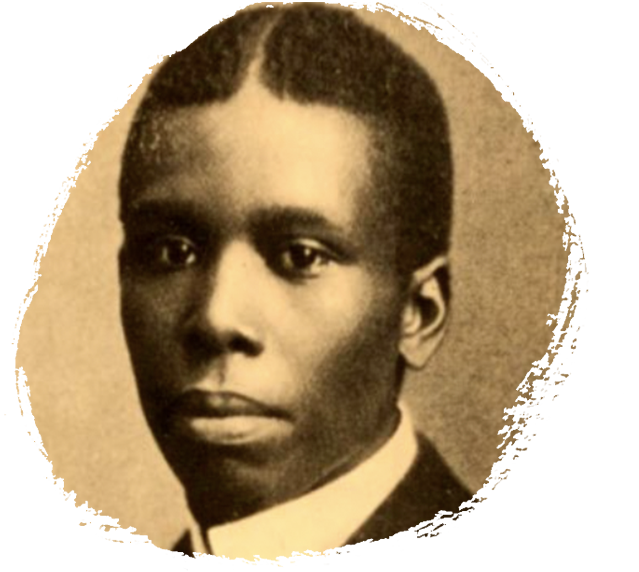
Paul Laurence Dunbar

Born in 1872, Paul Laurence Dunbar was one of the first African-American poets to gain national recognition. He authored numerous collections of poetry and prose during his life.


Tuesday, December 29, 2020

Day 4 - Ujamaa - Celebrate Kwanzaa!

 Ujamaa - (oo- JAH - mah)


Habari Gani? 

Ujamaa!  Cooperative Economics

It is important for African Americans to start and maintain businesses. The only way they can maintain them is if they have customers. Ujamaa is about making sure that we shop and participate with businesses owned and operated by African Americans in our community.

Being able to open and maintain businesses helps African Americans build wealth in their communities. They hire local people, and that means that the money enriches the surrounding area instead of being sent far away to a large corporation.

These days, I include all sorts of local shops in Ujamaa as more and more of our small stores struggle to compete with multi-national corporations. Some stores - I'm looking at you Walmart - I won't go into for any reason at all!

I especially include indy book stores in this group. Support local book shops!

Oh, and if you are near Durham, NC keep an eye out for this cafe and bookshop opening in March of 2021!


So, how did I express Ujamaa this year?

I purchase hair and skincare products from African American owned businesses.

I buy my performance outfits from African American owned stores, and I pick up meals at black-owned businesses.

When Rofhiwa opens, I will buy books from there!

What about you? Is there an African American owned business you could support today and through the year?

A quick story - 

There was once a cook named Kaliah. She worked for a chef named Michael in a rich man's kitchen. She spent her time flitting from one dish to another putting the finishing touches on everything. Nothing left the kitchen unless Kaliah had tasted it first.

The rich man was famous for the wonderful meals that were served at his table, and people yearned for an invitation to eat with him.

"Your cook is a marvel!" his guests would proclaim after a sumptuous meal. 

The rich man would chuckle proudly. "I know!"

"We would love to meet him!" 

The mayor would bellow, "Send for Michael!"

Michael would appear to collect his applause and praise.

One night, after a very large supper, Kaliah went to speak to Michael.

"Excuse me, Michael."

"What are you still doing here? You should go home. You have to be back early to start the bread."

"I would like to talk to you about increasing my wages."

"Why?" he demanded. "You make what everyone in the kitchen makes."

"I am here before everyone else, I leave after everyone else, and I am in charge of all of the stations. You ask so much more of me than you ask of anyone else. I think you should increase my wages."

Michael laughed. "Do you think you should make as much as I do? Ha!" 

Kaliah went home to her family. They were struggling to get enough money to put food on their own table. It wasn't fair.

The next morning, instead of going to the rich man's kitchen, she went in to see the local baker and offered to help him. He was grateful for her assistance. He paid her in two loaves of bread.

Next, she went to a stall that sold soup. It was still early. She helped him get his soup ready for the day and added a few touches here and there. He swore it was the best soup he'd ever made. He paid her in soup.

That day,  her family had more than enough to eat. Kaliah never did go back to the rich man's house. She continued to help the local cooks in her area. It made quite a difference for the people who lived and worked in the town. 

Eventually, Kaliah, with the help of her friends and neighbors opened up her own little cafe. She and her family did very well for themselves.

As for Michael? In the end, he started ordering copious amounts of food from Kliah's cafe. It was the only way he kept his job.

Invest in local merchants!


Happy Kwanzaa!


Day 1 - Umoja - Celebrating Kwanzaa!


Monday, December 28, 2020

Day 3 - Ujima Celebrating Kwanzaa

 Habari Gani! - "What's the news?"


Ujima - (oo-Gee- muh) - Collective Work and Responsibility


On the third day of Kwanzaa, the Nguzo Saba is Ujima! 

We are called to work together to build what my friend Sheila Arnold calls "the beloved community".

If we want our communities to be stronger, safer, and more welcoming, we must work together to achieve that.

In the year 2020, there were many ways to show Ujima

- Did you wear your mask?

- Did you self isolate when necessary?

- Did you keep your physical distance whenever possible in public?

- Did you work to reduce mixing your household with others?

Working together cooperatively to staunch the spread of COVID is an act of Ujima that saved many lives.

Oh yes, and the big thing I and many other Americans did this year was vote! VOTING is also a part of Ujima. Standing up to be counted - no matter who you vote for - is part of building our community.

This has been a year of standing up and being counted. We have had marches for justice and an overwhelming response to police violence and systemic racism. 

Many of these peaceful marches were marred by people who were not practicing Ujima and sought to cause chaos, damage, or harm. 

It is always up to each of us to stand up and stand against those forces that would tear our families, neighborhoods, communities, regions, states, and country apart.

(Some people wonder why I am such an outspoken advocate for peace and justice - this is part of it)

The organization I helped co-found has a weekly meeting on Monday afternoons for performers who are interested in discussing our artform, learning new strategies, and working through our concerns as well as celebrating our triumphs. If you want to know more about Artists Standing Strong Together - ASST for short - click the link. 

If you are a storyteller who is struggling financially, please click here. ASST has a fund that provides grants if you are having trouble with necessities like rent, medicine, food, or any other urgent need. 


So, how did you live Ujima this year?

A quick story - 

In the 1950s my mother was living with my great grandparents in a black neighborhood called The Bottoms. Every year when there was to be a vote, some of the white men would come into the black neighborhoods and break their windows, burn crosses on their lawns, and do random damage.

They did this because in Texas there was a poll tax. Poor black families would have to choose between paying the tax or using their money to repair the damage done to their property before winter came.

The black people called these acts of violence the white riots.

Some black families were so scared of this intimidation tactic, that they wouldn't dare go near a polling place. What if they were recognized and something even worse happened to them?

The families on my great grandparent's street decided they'd had enough, and one year, they banded together to stand against the rioters.

Despite being afraid that there would be dire consequences that might include lynching, the men and women of Kent Street stood together and prevented the white rioters from coming into their neighborhood. 

They were successful.

That was the last year the white riots were held.

We are all responsible for building stronger, safer communities. One person alone can only do so much. 

The job of uplifting our neighbors, keeping those we love safe, and choosing hope, possibilities, and opportunities over hatred, violence, and systemic oppression falls to us, the citizens. We have the power to change the world if we work together.


Happy Kwanzaa!


This explains how to celebrate Kwanzaa


Day 1 - Umoja - Celebrating Kwanzaa!


Day 3  - Ujima - Celebrating Kwanzaa


Sunday, December 27, 2020

Day 2 of Kwanzaa - Kujichagulia - Celebrating Kwanzaa

Kujichagulia - (coo - JEE - cha- goo - LEE - uh                                      Selfdetermination 


Each day begins with a single phrase -


"Habari Gani?"  (huh-Bar-ee  Gah - nee) - It means "What's the news?" You answer with the Nguzo Saba (n- Goo-zo Sah-bah) of the day.

Today it is Kujuchagulia.

On the second day of Kwanzaa, we celebrate our inner strength and our right as human beings to forge our own path through life and make our own mistakes!

Historically, African Americans have not had the legal right in America to plot their own course, choose for themselves what job they would have, where they could live, or even get an education. 

Today we light the green candle in the middle of the Kinara and a red one.

Reflection - How have I lived Kujichagulia over the last of the year?

In 2020, I decided - along with my husband - to revamp our business model to include pre-recorded videos. I made sure there was plenty of material for clients to choose from, and I worked hard to roll with the punches that 2020 threw at us. I decide what types of performances I would and would not do, and what type of work I am willing to take. 

How did you show Kujichagulia this year?


A quick story - 


Mr. and Mrs. Dunch grew carrots. They sold carrots. They ate carrots. They loved carrots. They lived carrots.

Mr. Dunch's father had been a carrot farmer. He had inherited the farm from his father who also grew carrots. In fact, the Dunch family and had been growing carrots for four generations.

Everyone in those parts knew about the Dunch family. They were honest, kind, thoughtful, and very industrious. 

The eldest Dunch child was their son Elmer. Elmer was a very good Dunch. He was a carrot chemist. He knew everything there was to know about how to care for, fertilize, plant, and harvest carrots. He was taking the family into a new era.

The second Dunch child was Peony. Peony was a very good Dunch. She was an artist who spent her time creating beautiful works of art featuring carrots in very creative ways. Her work was the star of the gift shop and was featured in cafes, restaurants, and hotel lobbies all over the world.

The third Dunch child was Henry. Henry was allergic to carrots. This caused all sorts of chaos in the Dunch family, and some speculation that Henry wasn't actually a Dunch. Despite Mr. Dunch trying to force Henry to work the farm, Henry couldn't wait to get old enough to flee the horrors of the Dunch family, the judgemental community, and the pressure of being a Dunch.

So, Henry went off to community college, got a degree in mechanical engineering, and moved to a big city to escape the Dunch name. They changed their name to Dale and ended in and out of rehab a couple of times before they got clean.

They found an amazing partner, went back to school to brush up their skills, got married and was pleased to have all of the Dunch family come to their wedding. They were hired by a small firm that designs all sorts of industrial equipment.

One of the harvesters Dale designed improved the yield of carrot farms fivefold. 

Dale was a very good Dunch.

Plot your own course! You are what is needed!


Now in Paperback!!!


Happy Kwanzaa everyone!


Day 1 - Umoja - Celebrating Kwanzaa!

Day 2 - Kujichagulia - Self Determination

Day 3 - Ujima Celebrating Kwanzaa


Day 5 - Nia - Celebrate Kwanzaa!


Saturday, December 26, 2020

Day 1 - Umoja - Celebrating Kwanzaa!

 Unity


A story for Kwanzaa - 

Umoja is the first of the Nguzo Saba. The Nguzo Saba are the principles of Kwanzaa. These principles are meant to guide us through the year.

The first is Umoja - It means unity. It means we must work together to accomplish our collective goals. 

First - Consider the things you have worked for in your life over the last year.

For me, the biggest one that comes up is co-founding Artists Standing Strong Together. ASST is how I lived out Umoja in my community this year. My husband and I also donated to food pantries, donated our time to our church. 

In what ways did you exhibit Umoja this year?

So, here is a quick story to share about Unity.

Once there was a house. For many years it stood strong and tall. It did its job of keeping out the weather.

A family moved in that was prone to quarrel. The house could not help but notice.

One day, the roof announced in a loud voice, "I am the most important part of this house. I keep out the harsh sun, the snow, and the rain. Without me, this house is nothing.

The floors took offense. "You? The most important? Ha! I bear the weight of all of the furnishings in this house. Without me, this house would be nothing.

The ceilings chuckled. "I hold all of the lights. Nobody could live in this house without me!"

The basement complained loudly, "You think I'm less important because I am partially buried? I am the foundation!"

The attic was incensed. "Without me, where would people store their memories?"

Over the course of the next month, the house became discontent. 

One day, while the family was away for the holidays, a huge winter storm blew through the area. The roof refused to do its job unless everyone agreed it was the best. The same was true of the floors, walls, basement...well, you get the idea. As the wind howled, the house could not withstand the weather, and the whole thing collapsed.

The debris was cleared away.

When spring came, a new house was erected on the spot. This new resident of the neighborhood looked all about it to learn what it meant to be a house.

"Excuse me," it said to its nearest new neighbor. "Do you have any advice on how I can best serve my family?"

"Remember only this. Every single part is very important, but no matter how important it is, that doesn't mean it doesn't need help from everyone around it."


So it is for us - 


We live in families, neighborhoods, communities, states, regions and nations.

No matter who we are or how important we are, it doesn't change the fact that if we want to create a better present, safer neighborhoods, stronger bonds with others, and a brighter tomorrow, we must work together to achieve those goals.

It is only through unity that we can make a brighter future. When we work together, we can overcome most obstacles.

Now in Paperback!!!


Happy Kwanzaa!


Umoja - Day 1 Unity


Thursday, December 27, 2018

Kwanzaa! it is once again time to celebrate!


A guide to new celebrants!

Yes, it is once again Kwanzaa time!  Time to eat benne cakes, roll out the Mkeka, set up the Kinara, light the Mishuma Saba, pass around the Kikombe Cha Umoja,and reflect on the Nguzo Saba!
Hooray!

Before we begin...

Kwanzaa is not a Christmas substitute for African Americans...Kwanzaa doesn't have anything to do with Christmas at all.

Kwanzaa is not a religious holiday.  Kwanzaa is not about religion!

If that is what Kwanzaa is not, then what is it?  Well, it is easy enough to explain.  Kwanzaa is the African American Festival that occurs at the end of the year.  It was originally created by Dr. Mulana Karenga in the late 1960's.
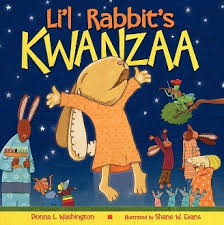
A picture book about the spirit of Kwanzaa!

Why have an African American inspired celebration?

African Americans have been an integral part of the history of America since the beginning.  Despite that, there are no national celebrations that recognize the contributions of African Americans to our country.  There have been and still are African American inventors, soldiers, entrepreneurs, cowboys, farmers, firemen, and America even has a black president.   In the '60's and all through my childhood, as a matter of fact, there was no acknowledgement that African Americans had much impact on the country at all before Martin Luther King was born!  Kwanzaa has two main components that encourage celebrants to consider their place in the world as well as reflect on the contributions of African Americans.  The first is the Nguzo Saba, and the second are reflective readings.


Kwanzaa is a truly American celebration.  it is based on First Fruits celebrations in different parts of Africa, but it is not like any of them.

So, That's as much history as I'm giving!  Now, on to the steps!


First you need a mat of some sort of natural fibers.

MKeka (M-ke'-kah) - this mat is the foundation of your Kwanzaa display and it is the foundation that we use to build our lives.  It represents the African American culture and traditions.

Mishuma Saba (Mish-oo'-ma So'-bah) - The candles.  Three green, three red, and one black.  These are the colors of the African American Flag.  The red is for the blood we all share no matter where our ancestors were born, the green is for the hope of new life and a better world, and the black is for the color of the African American ancestral heritage.

Kinara (kin-are'-ah) - The candle holder.  The proper way to set up the Kinara is to put three red candles on the left, three green candles on the right and the black candle in the middle.  You light the black one first.  On the second day you light the red one.  On the third day you light a green one.  You continue to alternate between red and green for the remainder of the festival.

Muhindi (moo-hin'-dee) - These are ears of corn, there should be one for each child in the home.  The corn should be dried.

Mazao (mu-zow') - These are fruits and vegetables added to the Mkeka that represent crops, the bounty of the earth, good things and plenty.

Kikombe Cha Umoja (ki'-cOm'-bA chah' oo'-mO-jah) - The unity cup.  We drink communally from this cup as well as pour a libation for the ancestors.  Honoring the ancestors, those who came before us is an important aspect of Kwanzaa.

Now that the Mkeka is set up it is time to get on with the celebration!

You can give Zawadi, (zu-wo'-dee), which are small presents, typically handmade, but they can also be things like books, but gifts are not the main thrust of Kwanza.

We begin our Kwanzaa day with the words, Habri Gani! (Hu-bar'-ee go'-nee).  It means what's the news?  The answer is the principle or Nguzo Saba of the day.  So what are the seven principles of Kwanzaa?  Here they are.

Umoja (oo-mO-jah) - Unity.  We must stand together if we are to overcome our difficulties

Kujichagulia (coo'-gee-chah-goo-lee-ah) - Self-Determination.  We must not let anyone else decide who we are.  We must speak for ourselves and not let others speak for us.  Just because someone says you are lazy or useless or worthless does not mean it is true!

Ujima (oo-gee'-mah) - Cooperative Work and Responsibility.  We must work together to build the world of which we wish to be a part.  We must look after each other and understand that we are responsible to ourselves, our families and our communities.

Ujamaa (oo-jah'-mah) - Cooperative Economics.  We shop at stores owned and run by African Americans to make sure that we are supporting small business.  (My family has opened this out to all small businesses in our area.  Mom and pop are under attack from Big Box.  Support small businesses when you can.)

Nia (nee'-uh) - Purpose.  We must move through our lives with purpose and we must understand that our lives have purpose.  Approach your life with goals and actions that help you achieve good things.

Kuumba (k-oom-bah) - Creativity.  Leave the world a more beautiful place than when you found it.

Karamu (kAr'-um-moo) - The feast of Kwanzaa where you eat traditional African American foods, sing, dance, tell stories and celebrate!

Imani (i-mah'-nee) - Faith.  You must have faith in yourself and in the hope that we can build a better world.  (You can apply this to religious faith if you like, but my family does not)

The last part of the celebration deals with reflection.  You can do readings of African American artists, poets, teachers, and philosophers.  You can discuss how you plan to make the Nguzo Saba a reality in your life.  You can talk about what you have done in the past year to live up to the principles of Kwanzaa.  That bit is up to you.  Here are some readings to get you started.


So, get out there and see if you can find a Kwanzaa event!  Reflect on what you can do to make the world a better place.


Happy Kwanzaa!

Monday, January 1, 2018

Day 7 of Kwanza - Imani - Faith!

Darith lighting the Kinara - Photo by Kat Heller


Habari Gani!


Imani (i-mah'-nee) - Faith.


Last night we had a Karamu - Our celebration. Here are some more pics from that. Thanks to our neighbor Kat Heller for taking some photos!


The last day of Kwanzaa is Imani. It means we have faith in ourselves, faith in each other, and faith in our communities. 

If you are religious, this would include your religious faith.


In 2017, we had challenges as a nation and community. Most people had personal challenges as well.

What did you face down in 2017?
What did you get through?
Who helped you?

What did you do to support your community in 2017?


Since it is New Year's Day, I chose two songs. One is for the hope that 2018 will bring us closer to a more equitable world where everyone has enough, and we do not exploit others. We might not get there, but we can work to make steps in that direction.

Stevie Wonder's Pastime Paradise.


The second song is upbeat and joyful. It is about having hopeful energy as we move into 2018. It is from the movie SING! It also features Stevie Wonder.


Reflection:

A man harbored great jealousy for his neighbor. He particularly wanted the man's horse. It was beautiful, and graceful, and the second he saw it, he had to have it.

One day, as he watched his neighbor riding the horse, he got an idea. He dressed himself as a man who looked to have been waylaid and beaten.

When his neighbor saw the abused traveler by the road, he stopped, got off of his horse at once, and went to aid him 

No sooner had he got off of his horse, than the man leapt up, pushed his neighbor aside, mounted the horse and rode away laughing. 

The neighbor was stunned to see the man laughing and taunting him. He beckoned for him to come back.

The man stood well out of reach with a satisfied grin on his face.

His neighbor gave him a tight smile. "Keep the horse, but tell no one how you tricked me to get it."

"Why not?" the man taunted. "Afraid of people calling you a fool?"

"No," said the neighbor. "if you tell people what you did, it will make others wary of helping those in need. No horse is worth breaking the faith of others." He turned and walked towards his home.

The man watched his neighbor go down the road, and he burned inside. He was now angry with himself. He rode to his neighbor, threw himself off of the horse, and handed him the reins.

Many years later, the two of them were sitting at a cafe. 

The man had never forgiven his neighbor for making him feel so guilty. "Do you remember all those years ago when I tricked you out of your horse?"

"I recall something of it," said his neighbor with a small smile.

"Did you mean it? Were you really afraid of destroying people's faith?"

The neighbor's eyebrows rose and he started laughing. "That day had nothing to do with anyone but you."

"I knew it!" the man shouted! "It had nothing to do with faith! You tricked me back!"

"Oh no," said his neighbor, "it was all about faith. Despite how you hide it sometimes, I have always known you were a good man."


Keep the Nguzo Saba with you all year, and we'll break it down once more at the end of 2018!


Happy Kwanzaa!
Happy New Year!


What is Kwanzaa?
Day 1 Umoja - Unity
Day 2 Kujichagulia - Self Determination
Day 3 Ujima - Cooperative Work and Responsibility
Day 4 Ujamaa - Cooperative Economics
Day 5 Nia - Purpose
Day 6 Kuumba - Creativity

Day 7: Imani - Faith


Sunday, December 31, 2017

Kwanzaa Day 6 - Kuumba - Creativity

My daughter drew this by hand for my parents for Christmas


Habari Gani?


Kuumba! It means creativity!


We must strive to leave the world a more beautiful place than we found it by using our creative gifts.


This is my favorite day of Kwanzaa!

It is also the night of Karamu - The feast of Kwanzaa.

This year we had Hoppin John, ham, candied sweet potatoes, pot roast, mashed potatoes, cornbread, spinach, and I made a chocolate cake just because.

We talked about how we used our various skills over the last year, and talked about what we did make beauty in the world.


Reflection:

There was a man with three sons. He said, "I shall leave this house to whichever of you can fill it."

The first son, the brightest, knew what he would do. He bought feathers. He bought carts and carts of feathers. He filled that house with feathers until there was not a corner that did not have feathers, but after a while, the feathers settled, and the house was not full.

The second son scoffed, but the eldest said, "It is not so easy. You will see."

The second son thought he had a better idea. He got straw. He filled that house with straw. He filled it until there was not a corner that did not have straw, but after a while, the straw settled, and the house was not full.

The youngest son couldn't help but laugh. He was a merry soul who was never taken all that seriously. The older brothers shook their head. "You will see that it is not so easy."

The youngest son went to town and got some of his friends. That evening, they took out their fiddles, banjos, and drums, and played and sang. No matter where you went in that house you could hear the merry sound.

At the end of the evening, their father announced that the youngest had surely won, for he'd filled the house from cellar to attic with music and laughter.

Happy Kwanzaa!

What is Kwanzaa?
Day 1 Umoja - Unity
Day 2 Kujichagulia - Self Determination
Day 3 Ujima - Cooperative Work and Responsibility
Day 4 Ujamaa - Cooperative Economics
Day 5 Nia - Purpose
Day 6 Kuumba - Creativity
Day 7: Imani - Faith