Showing posts with label The Boo Hag. Show all posts

Saturday, April 27, 2019

The Microphone Is Your Friend


Today I taught a workshop at Northlands Confabulation! 

It was all about using the microphone. I've written about this in the past, but mostly to encourage people to ask for one, and why.

 Today I had the joy of playing with the mic with some storytellers.


Let's begin at the beginning -

Why should you use the mic?


It allows you to be conversational with a large number of people. It also allows you to get volume without having to do so much work. It saves your voice.

You only work as long as your voice is intact if you are a voiced storyteller. If you are in multiple venues, use interesting vocal work, or want any kind of nuance, you need a mic. Without one, you are likely to hurt yourself from overstressing your voice over time.

You also lose so much texture and tone without a mic.

I gave examples of how different something sounds when you move the mic away. Still, there are those who stress their voices.

There are lots of articles about the care and feeding of your voice if you do have trouble. You can check out my hot tips about that here.

Next, we talked about movement with a standing mic - 

The story happens in the space all around you. Whenever you move into that space, you break the storytelling illusion. Trust the story to fill the stage. Here is a deeper discussion about that.

Our next discussion was about sound effects -

We talked about sound effects with a mic

I started with a little bit of the Boo Hag, which is one of my favorite ghosty tales to tell.

I shared the scene where she spins off her skin. Very creepy.

Then, we talked about two different types of sound effects.


Unvoiced sounds - 

These are the sounds you make with your lips, teeth, and tongue. They do not involve your vocal folds. When you use unvoiced sounds with a microphone, the thing that adds volume is the air that comes out of your mouth and interacts with the mic. The more air you use, the louder the sounds, but none of it involves your voice! This often requires practice, but it is a very effective way to make great noises that don't stress your voice.

We also spoke of effective lip placement to get the most out of unvoiced sound effects.

This requires stretching your lips forward and parting your lips wide enough to allow the air to flow.

Voiced Sounds. - 

Voiced sounds require you to engage your vocal folds, and they are the animal noises, squeaking, walking, and any other kind of sound that involves adding voiced sounds that are not narrative or conversational.

Microphones allow you to exploit using a small amount of effort to achieve a great amount of sound. Some of these sounds could hurt your voice if you power through them.


Then, we talked about my absolute favorite thing....Jump Stories!

Jump stories happen when you lull the audience into complacency by creating a soft, even hypnotic
Antonio Rocha
mood and then you assault them with a sound. The "Boo!" moment.

How do you set that moment up to get the jump?

1 - Don't broadcast it.
2 - Slow down, move into a comforting tone.
3 - Use air and voice to make a loud enough sound to cause the jump.
4 - Use a far more quiet voice leading into the jump
5 - Don't just use your voice - Give your body a percussive moment as well.


One of the things we discussed was connecting your body, voice, and face. When you put all of these elements together, you will be able to figure out what parts of your story need sound effects and which do not.


Controlling Loud and Soft Sounds


We moved on from jump stories to talking about how you use the microphone to control how loud you want voiced sounds to be, and how you go through a story using the distance from your mouth to the microphone to make appropriately loud or soft sounds.

Some you make into the microphone, some you make away from the microphone.

Your body doesn't move away from the mic, your head does. Some sounds, like a crying crocodile, I make away from the mic, and other sounds like the wind or a whisper, are made right into the mic.

We ended our session by talking about how you control an audience with a microphone.

Controlling An Audience

If you are in front of two hundred kids, you can either use the mic to tell them to come back to center, or you can start speaking soft enough to catch their ears.

With really little kids, you can make odd noises into the mic that catch their attention.

Ultimately, what I recommend is that you think about the age group of the students, and tell age-appropriate material crafted in a way that makes it easier for the audience to consume.

Here is an admittedly dense post about using the audience. It has links to some of my posts about choosing and executing stories for various age student audiences.


To everyone who shared the workshop with me: Thank You! I had a great time, and as always, I learned many things from you.

To everyone who just checked in to see what we did: Welcome! I hope this little summary offers you a bite or two at the apple we consumed today.

Happy Telling!


Saturday, February 17, 2018

Telling To The Sixth Grade: Stories to Reach The All Knowing

February is always an exhausting month for me. My running joke is that even people who didn't know they needed a performer of any kind suddenly need a black one in February!

I work with all kinds of audiences. Sixth grade is one of my favorites.

Sixth grade is a funky year for most kids.  It is a transitional year from childhood into the first blush of the teenage years. 


They are going through a hormonal obstacle course on the inside.  Some are changing drastically on the outside, others aren’t changing at all and everyone is noticing.  

All sorts of things that never bothered them before become of paramount importance.

For some, their arms and legs outgrow the rest of their bodies, leaving them awkward and clumsy.  Girls tend to sprout up, often leaving many of the boys behind.  Everybody starts developing towards full maturity and the blessings and curses of that tend to make pretty much everyone wish they were in someone else’s body.

This is the year some parents notice that their child is getting a bit more ‘sassy’.  These tweens need more space and less space and they vacillate between young people and children. 

"Cool Becomes Important" 
Their friends change as well.  Many become concerned about being ‘cool’, not fitting in properly and what their peers think about everything.  Their friendships often change and they start finding a niche where they can fit.  Some kids don’t go through any of this at all and remain untouched by such concerns until they are older.  All and all, it can be a maddening year.

I’ve often said that sixth graders do not belong with elementary kids and they have no place as of yet with the seventh and eighth graders.  In fact, most of them should be buried beneath the school. 


What on earth do you tell this transitional, morphing group of people?  Most think they are too old for stories and the stuff they think they want to hear is way too old for them.

The answer, for me, is pushing the boundaries just a bit. 

The set I offer for sixth grade is called ‘Hormonal Boys and Hyena Girls’.  It goes into the crazy stuff from the boys who think it is funny to hurt each other and don’t seem to understand how their rough play turns into an actual fight, to the girls who end up crying in the bathroom because somebody didn’t like their haircut.  

The kids are always amazed I know what they are dealing with.  It never occurs to any of them that we old folks really were in sixth grade once upon a time.

De Hag
This is the first group where I tell really scary ghost stories.  The caveat being that I gauge the students who seem to be the most freaked out and I ease back a bit so that things don’t get too scary.  Why do I tell these kids really scary stories?  This is the first age where none of them will be willing to admit to their parents they are scared.  

This means no aggrieved parents are going to call the school and complain.  Besides, they like these stories.

The second category of stories I tell to this group falls under the heading of gory and cerebral.

Morgan and the Pot of Brains is a good example of this.  A kid who is picked on until he shuts down completely goes on a lifelong quest to achieve his brains by cutting out the hearts of the things he loves best in the world.  It turns out all right in the end, but the very graphic, funny, sad and interesting twist to the ending is right up the alley for these emerging people.

The Debate in Sign Language is also a favorite of this group.


Here is a version of it that Mark Goldman shared in a classroom.

Once I lead them through a really dark story, I can tell them fun folktales and they love it.  They don’t even remember they are too old for stories.  The truth is this group will love anything as long as you package it right, but going at them through the truths of who they are is also a good way to get them to reflect, even if only cursorily, on their own situation.

Happy Telling!

Thursday, October 8, 2015

Scary Stories Anyone?: Hauntingly Good Stuff


Well, it is that time again.  Time to break out the spooky tales!

 Therefore it must be time for me to break out the annual spooky story post.

Last year I wrote about what you might want to consider telling to kids.

Just In Time For Halloween: Telling Spooky Tales 2.0


I love a good scary story.  In fact, it is my favorite kind of tale.  Edgar Allen Poe was one of my favorite authors when I was a kid.  I find scary stories delicious when told well.  I like a good jump, and I like to have a good shiver.

Now, let's be clear about this...I don't like scary movies all that much.  Most of the movies that are supposed to be scary are disgusting, and about sensationalism and less about story.

Road Train movie


I also love tales that I don't see coming.  I love sitting in an audience and watching something uncomfortable and creepy unfold through language.  

Carry Sue Ayvar told the chilling tale of Fellipa to a car full of rapt tellers on our way back to our lodgings from the Haunting in the Hills Festival.  The way she had the Bruja Madre  (bruja is witch, and you pronounce it brew-ha) say 'Fellipa' made my spine tingle.  It was very cool.

It was even cooler to realize that the base of this story she knew from Mexico had a core from a Baba Yaga tale from Russia.


Tried to put a source in for this one, but the
site where this picture is cached has a huge
alert on it!  Just had my computer diagnosed!
Enjoy the picture, but don't head to the site.

source


Baba Yaga lives in a house which walks around on chicken legs, her gate is decorated with skulls, and she is sometimes depicted with iron teeth.  I absolutely love witch stories.  If you have a chance to hear Carrie Sue tell Fellipa....take it!


One of my new favorite stories to tell is the Boo Hag.

source

I've known this story for some time, but only began telling it last year.  I tell it to sixth grade and older.  At the very end of the tale, the Boo Hag is caught without her skin, and she flies out over the swamp in a vain effort to find some place to hide.  Unfortunately, the early morning light strikes her true form and she explodes in mid-air.  The sixth graders often break into spontaneous applause when the Boo Hag is destroyed.


I love witches.  They are my favorite type of scary thing.  When I was a kid I always wanted to be one because they are so powerful.  I wanted magic at my fingertips, and the will to use that power.  I was always a little annoyed that they used their power for evil since I could see so much potential to do amazing things.  Still, every performer knows that it is always way more fun to play the evil character than the good one

Every Halloween


It goes without saying that I have gotten into trouble on numerous occasions with ghosty type stories.  Yes, I've had unhappy phone calls, and parents who demanded to know why I told this or that story.  Luckily, all of this is in my young, impetuous past...so far.  It is October, so there is still time for me to get some of these grumpy calls.

I told Mr. Fox to a group of students almost a decade ago, and the staff and kids loved it, but one of the parents who got the kid version of the tale lost her mind.  Sigh, what are you going to do?

That has not deterred me.  Kids love these tales.  These stories are part of our fascination with the darkness, the unknown, and the things that go bump in the night.  We tell them in a place where kids can go into the darkness, and then come out safe on the other side.  Scary stories are a rite of passage at sleep overs and campfires.  What I find is that there are ways to present them so that they are the fun, spine tingling events they are supposed to be.   In the face of being one phone call away from a ticked off adult, I persevere!


So, I tell spooky tales, witch stories, and a zombie story or two.  Here are the rules of thumb I follow for telling spooky stories to school aged audiences.


1.  Always ask if it is all right.   I'm talking about the administration, not the students.   Just because the students are in eighth grade, does not mean that the community into which you've come is going to think that their precious children can handle something scary.

2.  I always tell the students that the story is kind of scary, medium scary, or very scary.  I have this same rule for hot sauce.  It allows the listener to decide how much they want to participate in the telling, or if they just want to sit there with their fingers in their ears and their eyes shut.


3.  I make sure there is some levity in the tale to cut the fear factor.  I do this so that the kids can release the pressure.  If you give them a place where they can laugh, it lets them decide just how much tension they want to hold in their bodies.  If they are really intense, and they murmur, then you just keep going, if they pierce the bubble and laugh uproariously, then, you know they needed a break.

4.  I try to always make sure that the story is only as scary as the most terrified person in the audience.  I haven't always done this, and it makes for a terrible experience for some kids.  If I see that there are lots of group clusters clutching ,or someone who looks like they need a break, I ease off the scary.  Luckily, lots of scary stuff is just technique, and you can decide how you turn the phrase, how much drippy, squishy, growly bits you want to add, or adjust the tone of your voice, or the rapidity at which you are speaking.


5.  I often let kids vote about what kind of story they want.  Some kids do not want scary tales.  If they tell you they don't want one...listen!  For a group of kids who don't want a scary tale, then even the least scary thing is uncomfortable to them.

Here is the rub for all of it....

6.  Just because the kids and administrators have a good time with the stories, doesn't mean some parent isn't going to call and freak out about the version the kid tells when they get home!


"But, Donna," you might ask, "Why would you continue with this when it could potentially get you in trouble?"

Last week I was at a school in Apex, NC.  I told the 6th grade Morgan and the Pot of Brains, and the Boo Hag.  Between my second and third set of the day, I had a break, so I went into the library.  One of the women passing through the room stopped and stared at me, and then she walked over to where I was sitting.

"Are you the storyteller?"  She had a clipboard and a broad smile.
"Yes."
"I just want to tell you, I am the speech therapist.  I had a kid right after your set for the sixth grade.  He stutters, and he was so excited when he came to me, he couldn't talk.  He was stuttering like crazy.  Then, I got him to calm down and use his techniques.  Do you know, he told me both of your stories with so much detail and so much passion, and he didn't stutter hardly at all.  Normally he just gives me bare bones descriptions because he doesn't like to talk.  I want to thank you for making him love language so much today that he didn't want to stop talking."


So, get out there and have fun with the spine tinglers, the jump tales, the suspenseful stories, and most especially, those lovely, powerful witches!

Happy Spooking!


Monday, October 20, 2014

Just In Time For Halloween: Telling Spooky Tales 2.0

(Scary Pumpkin Fellow Photo Credit)


- There are lots and lots of wonderful spooky tales that you probably ought not tell young children.  

- There are lots and lots of wonderful spooky tales that you probably ought not tell in the dark.

- There are lots and lots of wonderful spooky tales that you probably ought not tell in certain religious settings.

- There are lots and lots of wonderful spooky tales that you should tell every chance you get.


How do you pick which is which and when you should do what?  

Easy!  Depends upon who is in your audience.

(Hint:  This is not a hardcore audience member!)


For starters, you can guarantee that most children between second and tenth grade think that what makes a story scary is telling it in the dark.  This is not actually true.  What makes a story scary is how well you get inside your audience's head.  

If you can freak them out behind their own eyeballs, you could be standing inside the sun, and they would still be scared out of their wits...provided you weren't all burnt alive.  

Here are some quick rules of thumb I use when choosing ghost stories for audiences.

1)  When dealing with really little kids, the stories should be way more funny than scary.  Usually, it is enough to tell the group that you are going to tell them a scary story.  Their imaginations will do the rest.  They will see 'scary' written in each element of the story right up until the time you make it funny. They may  announce afterwards that they weren't scared, but if you look into those giant, nervous eyes while you are setting up the tale, you will see that they aren't all that anxious to be frightened despite the bravado.  These kids do not want to be scared!  

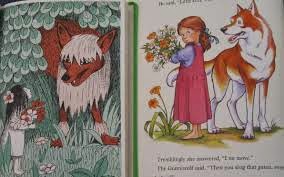
The Gunny Wolf is a perfect example for kids this age.


2)  From about third grade to fifth grade I tell 'scary stories for kids who just 'think they want a scary story, but not really'.  

This group actually thinks they want to be scared, but beware, for if you actually scare them, you will get phone calls from angry parents, principals, and teachers.  Jump tales are the name of the game with this crowd.

These kids are on the precipice that leads from the fears of young childhood i.e. monsters in the closet, things under the bed, creepy creatures waiting to spring out and grab them, and the beginnings of peer pressure fears about being teased, left out, and other more real world concerns.

There are plenty of great ghost type stories for this group.  Many traditional tales will serve.  They can be silly, a little creepy, have a jump or two, but don't do anything exotic...unless you have permission, or you don't mind adults freaking out on you.

Here is some Red, Red, Lips


Borrowed Black


Here are the tales I tell to this group most of the time.  A Little Shiver, not a great big scare.


I am sure you have plenty more!  If you want to share stories you tell in the comments section, it would be helpful for people who are just looking for stories.  You can also head over to Catch the Story Bug and go through Karen Chace's blog for more tales.


3)  Sixth grade is the first year I tell really scary stories.  Using lots of vocal technique and wild facial and body positions can make these stories really creepy, and they can benefit from some lighting.  This is the first group of kids who will probably not wake their parents, and demand to sleep in their bed, so it is safe to scare them. 

The rule I use with this group is that I try very hard to monitor what is happening, and if they get too scared I back off a bit.  They may be in large bodies, but they are still children.  The Boo Hag is a good tale for this group.

My version of The Boo Hag is on my CD Cup Of Blood.  You can download individual tracks if you are of a mind.


Want something scary?  Try Cup Of Blood


4) Once you get into high school, anything goes and you can tell those stories that are not fit for man nor beast.  Scare 'em.  Tell those stories that will peel the skin off of their hides, and make them look both ways when it gets dark.  Pull out your worst stuff and let it rip...unless you are in a school that makes a point of telling you how sheltered and innocent their students are.  If you get that song and dance from the person booking it, pull everything back a notch.  No matter how into the stories the kids might be, the grown ups will be in a faint and clutching their pearls if they think you've exposed their precious charges to something inappropriate, and they may never invite you back.  Appeal to your audience but remember who is paying your way.


5) Intergenerational audiences should probably stay in the 3 - 5th grade range unless you don't have any really young members of the group, then you can go with the sixth grade tales.  If you have an all adult audience let the blood drip, I say.


One of my favorite stories about a scary story set was one I did in upstate New York.  The guidance counselor took these two very big, somewhat disrespectful, tough looking boys out of the main body of the  audience, and made them sit with her.

 After the telling of The Lover's Promise, the guidance counselor came up to me trying not to laugh.  She said, "Did you see those two boys I had sitting with me?"  I nodded.  "When you asked if there was anybody who wasn't scared of anything they raised their hands.  After the story was over, one turned to the other and said, "I only jumped twice, how many times did you jump?"

The story I told them is called, The Lover's Promise, written by my son when he was just ten.  Here is a retelling of it.  It is a long story, fair warning!


Spooky stories require us to walk a fine line between what is appropriate and what is too much.  For some listeners, anything is too much, and for others, nothing is too much.  You can't please everyone, but these stories should also be fun, not just hair raising.

Get behind their eyeballs and they won't even remember whether the lights were on or not.

Happy Spooky Telling!