Showing posts with label Storyteller's Voice. Show all posts

Wednesday, January 29, 2020

Self-Care and the Traveling Storyteller: Touring Like a Beast!


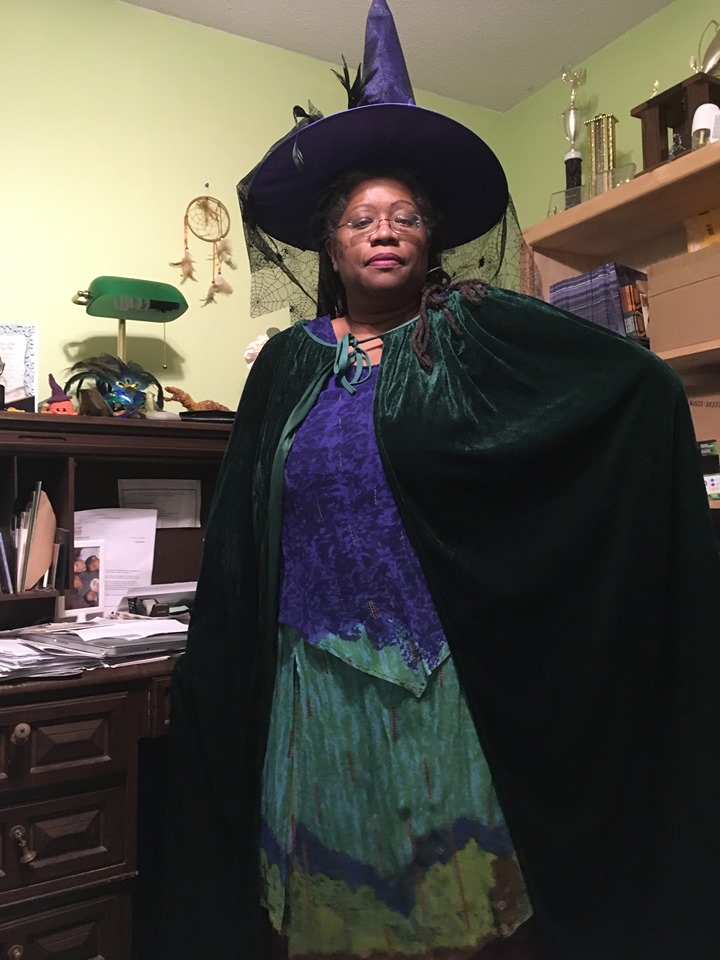
Yes, I do have a broomstick
I have had a lovely, slow couple of months. I slept late, went to the gym on a regular basis, had lovely home-cooked meals, and spent time writing, playing with my pets, and reading to The Mister.


February through May is just around the corner. I'm about to put some serious mileage on the broomstick.


I'll be in multiple states doing multiple venues - sometimes two or three in a day- until the school year comes to a close.


Touring can be like this sometimes. Self-care becomes a huge problem when you are going six days a week or more. Here is my checklist for getting ready to tour like a beast.


1. I keep a travel bag at the ready - If you don't have one of these and you tour regularly, I highly recommend it. It is just one less thing to think about.
The Travel Bag

2. Sleep - This is a great article by Kevin Kulp about the importance of making sure you get enough sleep and why.

3. Maintaining Your Voice - Your voice is an important, finite resource. Make sure you are doing your best to keep it healthy!

4. Maintaining Your Car! - If you don't have the skills or confidence to do this yourself...I don't, then make sure you get your car into a local shop or to your mechanic or to a dealership and have your chariot tuned and tightened.

Happy Car
5. Maintain your Stress Level - Even if you don't feel like you are stressed, if you have been touring, telling, driving, dealing with trains, planes, and automobiles, meeting tons of people, expending tons of energy, then you need to make sure you are stopping to smell the proverbial roses. Make time!

6. Snacks - I keep some snacks in the car to prevent from getting the munchies and buying things that are going to cause me headaches. I have a snack stash of nuts - usually pistachios, chocolate - I get interesting, fair trade chocolate bars and break them into snackable chunks. (If I don't break the candy bars up and separate them, I will just eat the whole thing.) I snack on orange segments, dried fruit, some kind of jerky, and chewing gum. I tend to bake myself some kind of lovely, gluten-free cookie.

7. Water - Make sure you are staying hydrated! Dehydration will cause all sorts of problems that will make you think you are ill! Drink enough water!

Bibliophiles Do It With Books
8. Books - I am an unabashed bibliophile. A personal preference, of course, but I always travel with at
least one long series and three stand-alone books. If I ever look to be in danger of reading them all, I can always swing by an independent bookstore!

I am sure you have other things you like to do. If you have ideas or suggestions, please share them. We do better when we support each other and reinforce best practices!

Happy Touring!


Saturday, April 27, 2019

The Microphone Is Your Friend


Today I taught a workshop at Northlands Confabulation! 

It was all about using the microphone. I've written about this in the past, but mostly to encourage people to ask for one, and why.

 Today I had the joy of playing with the mic with some storytellers.


Let's begin at the beginning -

Why should you use the mic?


It allows you to be conversational with a large number of people. It also allows you to get volume without having to do so much work. It saves your voice.

You only work as long as your voice is intact if you are a voiced storyteller. If you are in multiple venues, use interesting vocal work, or want any kind of nuance, you need a mic. Without one, you are likely to hurt yourself from overstressing your voice over time.

You also lose so much texture and tone without a mic.

I gave examples of how different something sounds when you move the mic away. Still, there are those who stress their voices.

There are lots of articles about the care and feeding of your voice if you do have trouble. You can check out my hot tips about that here.

Next, we talked about movement with a standing mic - 

The story happens in the space all around you. Whenever you move into that space, you break the storytelling illusion. Trust the story to fill the stage. Here is a deeper discussion about that.

Our next discussion was about sound effects -

We talked about sound effects with a mic

I started with a little bit of the Boo Hag, which is one of my favorite ghosty tales to tell.

I shared the scene where she spins off her skin. Very creepy.

Then, we talked about two different types of sound effects.


Unvoiced sounds - 

These are the sounds you make with your lips, teeth, and tongue. They do not involve your vocal folds. When you use unvoiced sounds with a microphone, the thing that adds volume is the air that comes out of your mouth and interacts with the mic. The more air you use, the louder the sounds, but none of it involves your voice! This often requires practice, but it is a very effective way to make great noises that don't stress your voice.

We also spoke of effective lip placement to get the most out of unvoiced sound effects.

This requires stretching your lips forward and parting your lips wide enough to allow the air to flow.

Voiced Sounds. - 

Voiced sounds require you to engage your vocal folds, and they are the animal noises, squeaking, walking, and any other kind of sound that involves adding voiced sounds that are not narrative or conversational.

Microphones allow you to exploit using a small amount of effort to achieve a great amount of sound. Some of these sounds could hurt your voice if you power through them.


Then, we talked about my absolute favorite thing....Jump Stories!

Jump stories happen when you lull the audience into complacency by creating a soft, even hypnotic
Antonio Rocha
mood and then you assault them with a sound. The "Boo!" moment.

How do you set that moment up to get the jump?

1 - Don't broadcast it.
2 - Slow down, move into a comforting tone.
3 - Use air and voice to make a loud enough sound to cause the jump.
4 - Use a far more quiet voice leading into the jump
5 - Don't just use your voice - Give your body a percussive moment as well.


One of the things we discussed was connecting your body, voice, and face. When you put all of these elements together, you will be able to figure out what parts of your story need sound effects and which do not.


Controlling Loud and Soft Sounds


We moved on from jump stories to talking about how you use the microphone to control how loud you want voiced sounds to be, and how you go through a story using the distance from your mouth to the microphone to make appropriately loud or soft sounds.

Some you make into the microphone, some you make away from the microphone.

Your body doesn't move away from the mic, your head does. Some sounds, like a crying crocodile, I make away from the mic, and other sounds like the wind or a whisper, are made right into the mic.

We ended our session by talking about how you control an audience with a microphone.

Controlling An Audience

If you are in front of two hundred kids, you can either use the mic to tell them to come back to center, or you can start speaking soft enough to catch their ears.

With really little kids, you can make odd noises into the mic that catch their attention.

Ultimately, what I recommend is that you think about the age group of the students, and tell age-appropriate material crafted in a way that makes it easier for the audience to consume.

Here is an admittedly dense post about using the audience. It has links to some of my posts about choosing and executing stories for various age student audiences.


To everyone who shared the workshop with me: Thank You! I had a great time, and as always, I learned many things from you.

To everyone who just checked in to see what we did: Welcome! I hope this little summary offers you a bite or two at the apple we consumed today.

Happy Telling!


Friday, October 20, 2017

Care And Feeding Of The Voice!!!!

On the road again!

I am perpetually on the road again!

This fall I am traveling, telling, teaching, and generally. doing all the things I can!

Meaning I am always on the road....again!

Yeah, I'm not a song writer.


I always use a microphone.  Always.  I have a pretty strong voice for speaking, and I can fill a space pretty well, but there is no need for it when we have such technological marvels as microphones. 

I often encounter people who are a bit annoyed by my request that the forum offer a microphone.  If they do not have a good sound system, I will bring my own, but I always ask for one.  There are some general responses when I ask for amplification.  They are as follows.

The space is not that big.

Our last performer didn't use a microphone.

There aren't that many children.

You have a pretty big voice.   


None of that has anything to do with why I want a microphone.  The fact of the matter is that a storyteller only works so long as their voice is intact.  If you over stress your vocal chords, you can cause yourself months of hurt. 

I am a trained speaker.  That means I have years of vocal training to help me get through a show if the mic should fail, but it is never my desire to power through forty five minutes of intricate vocal work while still being loud enough to be heard by two hundred people in a gymnasium, which was surely never built with acoustics perfect for a single performer.

So, with this in mind, here are some tips for those of us who work in the telling fields.  This is mostly beginner stuff, but it sometimes helps to be reminded.

1 - if you are doing something with your voice and it makes your throat a bit sore...stop.

2 - if you drink water during your set, room temperature water is best.  Your vocal chords are at their ease and move freely when they are warm.  Hitting them with cold water means you are straining them until they warm up again.  Don't fight yourself.


3 - Only you know how long it takes for your voice to recover after you hurt yourself.  Don't push it.  If you feel like you have to pull back from a story because it requires a bit more than you have, tell something else.

4 - If your throat is sore after a performance, unless you are ill, it means you are straining your vocal chords.  Get yourself a good reference book.  Better yet, contact Doug Lipman.  He should be able to point you in the right direction!

5 - Don't let someone talk you into hurting your voice.  Just because you can bring the power to fill a room doesn't mean you should.  Voices need a rest.  The older you get, the more that is true.  The microphone gives your voice more running time.  It also means you are directing less energy into the level of sound and you can devote that energy to the craft 
of the tale.

6 - Keep a supply of whatever thing makes your throat feel best with you in cold or drier months. Whether that is lozenges or gum drops.

7 - Wrap up that throat if you are out in the weather. Scarves are cool....okay, maybe not, but they can be necessities!

8 - Let it rest when you can. Listen to it when you need to. Nurse it before things get out of hand!

Fender Passport Sound System


Like I said, much of this is obvious, but every now and then, it is good to be reminded that if someone gets testy with you about amplification, it is okay to remind them that they are only getting one or two shows from you, but that is not the end of your obligations.  if you blow your voice out on Tuesday, is that fair to the four shows you have on Friday?


I am on the Road in Illinois Tonight at Dominican University!


Happy Telling!

Sunday, December 15, 2013

The Storyteller's Tool Kit: THE VOICE


The Storyteller's Toolkit is a simple way to talk about the elements that storyteller's use to present a story.  These do not include puppets, props, costumes or anything extraneous.  You can certainly use all of those things as a storyteller, but they are not standard tools in the toolkit.


The basics in the toolkit are as follows.

Voice:

Eyes:  If you missed the post, click here.

Face:  If you missed this pos, just click here.

Hands:  If you missed the post, click here.

Body:  If you missed the post, just click here


Easy enough.  In keeping with my new policy about blog entries.  We will deal with each of these one at a time.  Today's selection deals with voice.

Whether you are signing, speaking, singing, or using sound effects, your voice is an important part of the tale.  Not just the speaking element, but how you use your voice, and how you maintain vocal health.

Earlier this year I did a blog about the care and feeding of the voice.
Here are some other links about taking care of your voice.
Diane Bradon
Doug Lipman
Beth Lawrence


As a storyteller, I use lots of sound effects, character voices, and non-pedestrian sounds to convey my stories.  This is not necessary.  You can use lots of sound effects or none at all.  The choice must be yours.  Do not let someone pressure you to do something that makes you uncomfortable.  If you are uncomfortable, the audience will be uncomfortable.  Here is a clip of me telling 'The Monkey's Heart', a very vocal heavy story.


That clip is obviously an extreme example of putting sounds and voices into your stories, but there is no need to go that far to create a fun piece of storytelling.

Whether you use sound effects or not, there are some things you can definitely do to help your voice work with your stories.

1.  Pace

The flow at which your stories land on your audience can sweep them along, or hold them spell bound on the edge of their seats.    Play with the rate of speech to control the story and take the audience on a wild ride.

2.  Rhythm.

Find places to give your stories a rhythm.  The rhythm will set off a signal for your audience, and give them something to listen for.  It also allows you to build in some laughs or relief for the listeners.

3.  Volume.

Look for places to control how loud or soft your stories fall.  Draw your audience in with softer tones, hit them with power when you want them holding onto their seats.  Use your volume to  take your audience into the heart of your tale.

4.  Sounds.

Sounds help fill in background and build images that fill out your tales and give them textures.  Sounds don't have to be exotic.  It can be as simple as whistling into the mic, making the sound of the wind, sighing.  Do what you can.

5.  Pitch.

You can easily create character choices by simply changing the pitch of your voice.  Play with your voice and see what sorts of pitches you can easily make.

6.  The Pause.

Pinter knew what he was doing when he wrote those fantastic pauses.  Pausing allows an audience to catch on, consider what just happened, predict what is going to happen next, or laugh, scream, wiggle, or whatever they need to do.  They can also be used for comic relief, or to enhance suspense.

Remember:  DON'T EVER DO SOMETHING THAT HURTS YOUR VOICE!

There are lots of articles about the best way to find out who you are and what to do with your voice.  Here are a few if you really want to get into it.

Rachel Hedman
Anne Glover
Effective storytelling:  A Manual for Beginners

There are plenty of resources if you want to get ideas about using your storytelling voice.  Have fun, play with your voice, make sure you maintain its health, and figure out ways to challenge yourself.  Playing with stories can be lots of fun.  Discovering new ways to make your point of view and voice shine is exciting.

Empower yourself....Empower your listeners.

Happy Telling!