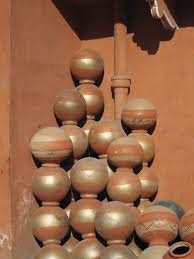
Showing posts with label The Pot Maker and The Tiger. Show all posts

Sunday, April 19, 2015

Crafting 101: Donkeys and Tigers and War Horses, Oh My!

There is a difference between crafting a story and just getting up and telling one.  Pretty much anyone who isn't afraid of speaking in public can get up and tell a story of some kind.  We share stories at weddings and funerals.  We share them during worship services, and amongst friends.  We share them on the radio and television. 


In this series of Blogs, I will look at a single story, and show the process I use to get from my first exposure to a tale all the way to the finished structure.

This is the fourth entry in the series.


The Pot Maker and The Tiger - The Story

1. Crafting 101: The Questions I Ask

2. Crafting 101:  Building The Structure

3. Crafting 101:  Flesh On The Bones

4  Crafting 101:  Donkey's and tigers and War Horses, Oh My!

5.  Crafting 101: There Are No Little Characters...

6.  Crafting 101:  Putting It Together

7.  Crafting 101:  Introductions!


The Pot Maker and The Tiger has a great cast of supporting characters.  Putting all of them in one post would make it unnecessarily long.  So, I'm dividing the support staff into two posts.  This one will deal with the animals.

I love it when I get a chance to work with animals in stories.  They make all sorts of great sounds.  The roar, screech, tweet, bellow, mew, and any number of interesting vocalizations.  They provide richness to a tale, and they make the characters real.  So, I have three animals to work with in this story.


Let us begin with the donkey.  He is the first animal we meet, and the one who starts the whole story in motion.  We are told the donkey is smart, and that it has the power to untie itself when needed.  In fact, it chooses to untie itself, and go home in the evenings.  The night the Pot Maker rides the tiger home, he is walking around in the rain with a rope...wait, there is something I seem to have forgotten from the remembered telling I got from Milbre.

On the night the Pot Maker rides the tiger home, he has tied the knot on the donkey's rope so elaborately that the donkey can't untie it, and chooses to simply back up and get out of its bridle, leaving the bridle, rope and all, tied to the post outside of the inn.  That's where the Pot Maker gets the rope to subdue the tiger.  All right.

So, the donkey chooses to leave the bridle rather than untie the impossible knot.  Does he try to untie the knot?  No.  He could, but I'm going to allow the donkey to have enough sense to forgo that part of the process.  He is smart, right?  Well, then does he struggle to get the bridle off, or does he do so calmly and logically.  Calmly, of course.  That would be funny, I think.  That means we could have a little personification that goes on with this donkey.

Okay, so, the Pot Maker ties the donkey to the post in an elaborate knot and says something like, "Get out of that, if you can." Flash from my childhood.  This is exactly what Prince John says to Sir Hiss in one of my favorite Disney movies when he ties him around a pole.  Keeping it because it evokes such a strong image in me!

 After the Pot Maker leaves, the donkey 'considers' the knot, and simply decides to leave the whole thing there.  This then is a wise donkey, not just smart, but shrewd.  Alas, having him make the donkey sound is probably not a good idea.  That sound is associated with stubbornness and foolishness and it is silly.  This dignified animal should not make such a sound...unless I can figure out how to make a dignified donkey sound.  Perhaps I could simply announce that he always was dignified, and so makes a much more subdued hee-haw sound.  Well, maybe, but probably not, though that would be funny to have a subdued, dignified hee-haw coming out of the donkey's mouth.


Now, let us move on to the Tiger.


Majestic, hungry for people, and the most personified of the animals in the story.  This tiger understands human speech.  He's used to being around people, and he has no problem coming near their homes.  When the woman starts freaking out about the insidious dripping, the tiger does not start  roaring on the porch.  He's too scared.  As his terror increases, he becomes much more needful of hiding than anything else.  When he gets so frightened he runs out into the rain, he is assailed by the Pot Maker, and he is far too terrified to make any noise at all.  That's what thinking like a human gets you.

So, the tiger isn't likely to roar either.  In fact, he's not even going to get an animal type body.  Other than becoming increasingly frightened, he doesn't need a tiger voice...well.  What about when he is thinking about the insidious dripping?  Could he have a tiger voice as he spoke out loud?  Well, that would make him sound kind of tough, and maybe dangerous, but the point is that he is almost in 'kitten' mode by the time he gets caught by the Pot Maker, so even if he begins with a gruff voice, he has to end with a squeaky, terrified one.  So, no roaring.

He will be funny, but not in any traditional way I usually make tigers funny.  This will require good timing with the old lady inside the house, and some major facial expression work more so than vocalization as a tiger.  Pauses are probably going to be huge here as well, while the audience watches the tiger's descent into blind terror.


This brings us to the war horse.

This character didn't get really developed until after I'd told the tale for the first time.  There was some things about him that I just really couldn't get behind.

Why does he run for the front?

Why doesn't he freak out when the Pot Maker is screaming on his back?

Why does he accept this poor rider?

Why does he run the scouting route instead of doing something else?  I mean, the horse has got to choose to scout the front, because the Pot Maker doesn't know how to do it, right?

The more I thought about the details of this animal, the more I got an idea about what to do with him.  Again, it took a couple of preliminary tellings before it came to me, and then, only in the midst of one of those tellings when I was feeling all of the characters, and all of these questions were still rolling around in my head.

Obviously the horse knew the route to scout, but what does the scout usually do?  The scout usually sneaks to the front, and tries not to be seen.  What if this horse is tired of that?  What if this horse wants to be a battle horse?  What if he feels like he should be a battle horse?

That's when it all came together.  This horse is descended from war horses.  His daddy was a war horse.  His granddaddy was a war horse.  His great-granddaddy was a war horse.  He, on the other hand, was only a scout horse.  Oh, how he longed to be in a battle with the horns blaring and the fight surging around him.  So, when the Pot Maker's wife slaps his rump, he rears, and the Pot Maker starts screaming, the horse thinks he is finally going to go to battle.

All right.  That means this horse is definitely making horse noises!  He's going to paw the air, shake his mane, and run for all he is worth.  Galloping noises!  Well, this is going to be dramatic, and it is the climax of the action in the story, so that's even better.  The Pot Maker can scream, and I can physicalize him holding onto the horse, and then holding the tree over his head, and the horse running for all its worth with its mane and tail flying, shouting its own war cry with the Pot Maker.  Now, there's a fun image!

So, despite wanting to ride into battle, the horse runs the scouting route, because that's all it has been trained to do.

Done.

Wow, that's a great deal to be practicing, incorporating and working with in three characters.  I didn't come to all of these conclusions in my first telling of this story.  I had some trial and error, and all of the characters are still evolving, but these are conclusions I came to after fleshing them out bit by bit, and trying to figure out what they need to fill in the background but not overpower the rest of the tale.

In the next installment, we'll deal with the people who have supporting roles.  There are no small parts...


Happy Crafting!


Friday, April 3, 2015

Crafting 101: The Questions I ask


There is a difference between crafting a story and just getting up and telling one.  Pretty much anyone who isn't afraid of speaking in public can get up and tell a story of some kind.  We share stories at weddings and funerals.  We share them during worship services, and amongst friends.  We share them on the radio and television.


In this series of Blogs, I will look at a single story, and show the process I use to get from my first exposure to a tale all the way to the finished structure.

This entry will deal with my first exposure and the questions I grapple with before I do anything else.


The first storytelling class I took was taught by Nancy Donoval.  She was putting together a piece of story theatre, and she needed actors who could also rock some storytelling.  It was fascinating and it opened me up to an entire art form I never even knew you could spend your life pursuing.

Nancy Donoval doing her thing
Rives Collins was my next teacher.  I spent two years at his feet soaking up any and all of the information he cared to offer.  He shaped my understanding of solid story structure, helped me begin to identify the types of stories that drew me, and gave me an incredible platform on which to build my career.

My mentor at Northwestern University, Rives Collins

My next teacher was Donald Davis.  I spent a summer as a scribe in one of Donald's classes.  I learned a great deal from watching him work a fictional story based on his life into a performance piece.  I also began to understand that this was not going to be a type of storytelling in which I would specialize.  As much as I enjoyed it, telling stories from my own life on stage does not interest me overly much.

The Amazing Donald Davis


I'm pretty sure that's because I like really far fetched fantastical stories.  The less reality the better.  That's the kind of literature I like to read.  Those are the movies I like to watch.  If I could see it on a street corner, I don't want to read about it, tell it or watch it.  This is just a personal preference.


A few years ago I took a master class with Bil Lepp on crafting, which I found fascinating since my brain doesn't work like that at all.  This coming summer I will be taking a class from Bill Harley mostly just because.  I mean, who doesn't want to spend a few hours playing with Bill Harley?


So, how do you craft a story?  Well, that depends entirely upon who you are and what kinds of stories you tell.  Here is the method I use.


First, I identify a tale I'd like to tell.  Some years ago I called Milbre Burch and asked if she had a story she could share with me.  She told me this old story called The Pot Maker and The Tiger.  Click the link to read a very quick and dirty version of the story.

The marvelous Milbre Burch


Okay, where to start?

- Do I like this story?  Yes.  This is important, and obvious.  Don't tell stories you don't like.

- Do you know any variants of this tale?  No. I'd never heard of this story before.  I liked the variant Milbre told me, so I decided to work on it from there before I went to find other sources.

When I get stories out of books, I like to read as many variants as I can, when I get them from people, I like to build on the feeling, cadence, and flow that they give me when I first get the story.  Later, I will go back and see if I can find some variants.  Sometimes I get new material from these written versions, but most of the time, I find the hardest bit of the work has already been done by the teller who gave me permission to tell the story, and the worst of the clunkiness is left on the page where it belongs.

- Do you connect with this story on some level?  Yes.  It tickled me a great deal, and I wanted to explore it.

Great!  Now I've got the story.  What's next?

First - Who is this story for?

Well, I wouldn't tell this tale to anybody below the 3rd grade because it has far too many plot twists in it.  Most little kids won't follow this very well.  Some can, certainly, but most will be lost.

There is also the fact that there are elements in this tale that require a certain amount of knowledge in order to be understood by an American audience.  How much background do I need to give, and can it be done in the body of the tale as I tell it?


Second - What are the beats in this tale?

Where are the obvious funny bits?

What kind of pacing does it need?

When does the audience need a break from all of this nonsense?

when do I need to drive a point home?


Third - What is the feel of this story?

What sort of tone does this tale have?  Does it need to be broken up into 'chapters' or is it a story told seamlessly.  In other words, is there some, 'Meanwhile' that actually needs to be said, or does it have more of an, all of this is happening over time feel?

Is it serious in places, or is the whole thing completely farcical?


Fourth - How much interior structure do I add as a teller to make this story feel authentic to me?

Do I need to add explanations?

How much character enhancement do I need?

How much do I do in the way of sound effects?

Are there parts that need more wallowing?

What sort of structure does this story need to be graspable by different ages?


Fifth - What is the audience's job during this tale?

Are they just watching the whole thing?

Is there some type of audience participation?

Is there some kind of repeating phrase or idea?


Sixth - Last and most important; how do I introduce this tale?

Does it need another story to introduce it?

Does it need some kind of personal narrative?

Does it need just some geographical info?

What do I think this story is about, and what do I want the audience to focus on in the back of their minds as I tell it?

So, before I stand it up and start telling it to myself, I begin grappling with these ideas.


Posts in Crafting 101

1. Questions I Ask
2. Crafting 101:  Building the Structure
3. Crafting 101:  Flesh On The Bones
4. Crafting 101:  Donkeys and tigers and War Horses., Oh My!
5.  Crafting 101:  There Are No Little Characters
6.  Crafting 101:  Putting It Together
7.  Crafting 101: Introductions!


Happy Crafting!!!


The Pot Maker and The Tiger: The subject of Crafting 101


A man who makes pots in a factory is a storyteller.  Spends his days making pots, telling his friends outlandish tales.  He has a smart donkey.  At the end of the day, he doesn't go home, but rides the donkey the local inn and drinks himself blind while still telling stories.  The donkey unties himself and goes home, and the man stumbles home.

At some point, there is a man eating tiger prowling around the village.  it is during the monsoon.  The tiger jumps up on a porch when the rain starts falling.  The porch belongs to a woman whose husband was once an indifferent carpenter, and the house is not very waterproof.  When it rains, water seeps into the roof and starts dripping all over the house.  She hates it.  She begins to complain and wail about the 'insidious dripping'.  The tiger, hearing this, becomes afraid that the insidious dripping is going to come and get him.


Meanwhile, the pot maker comes out of the inn, can't find the donkey and begins to curse and call out, "I'm going to get you, and when I do you are going to be sorry!"

The Tiger, fearful that the insidious dripping is coming to get him, runs out into the rain.  The drunk man, seeing a four legged creature running in the rain, proceeds to jump on said creature, and subdue him mostly because the tiger is so terrified, and rides him home.  he ties him to the front porch.

He realizes what he has done only after the fact.  The Rajah rewards the pot maker by making him an honorary general.

later, a warlike Rajah from a neighboring kingdom is going to invade.  The generals are frightened of this warlike Rajah, and they suggest sending the pot maker out to scout the front.

The kind sends the pot maker a warhorse.  The pot maker tries to play it off like it is no big deal, but once everyone leaves, he discovers he cannot get on this thing without falling off.  He bids his wife tie his feet beneath the horse, and his hands around the horse's neck.


She does as he wants, but when she hits the horse to get it moving, it charges straight for the front.  The pot maker, in terror, manages to get his hands free, but he has nothing with which to hold on and he is terrified and screaming at the top of his lungs.  The screams make the horse run faster.

They go through a banyan swamp, and the pot maker reaches out to grab a tree, hoping to slow the horse.  Unfortunately, he rips the tree out of the ground.  Luckily, he can hold it over his head to help his balance.


The enemy army knows a scout is supposed to be coming, but they haven't seen one yet.  When the scout does appear, he is screaming at the top of us lungs, brandishing a tree, on a rearing horse.  This terrifies the other army, and they desert en masse.

The pot maker is rewarded with more gold than he could ever hope to spend, but in the end, he goes back to the factory everyday and makes pots with his friends because that's what he really enjoys.  Now, of course, they totally believe all of his crazy stories.

This would be a fun story to share with adults, but I spend most of my time working in schools.  So, if I were going to add this tale to my repertoire, I'd have to craft it for schools.  Check out the posts in the series Crafting 101 to see the steps I follow.


1.  Crafting 101: Questions I ask

2.  Crafting 101: Building the Structure

3.  Crafting 101:  Flesh On The Bones

4. Crafting 101:  Donkeys and tigers and War Horses., Oh My!

5.  Crafting 101:  There Are No Little Characters...

6.  Crafting 101:  Putting It Together

7.  Crafting 101:  Introductions!

Happy Telling!