Showing posts with label Sherry Norfolk. Show all posts

Thursday, September 8, 2016

Branding: Do You Have A Logo?


My first logo


This is the second post in my series on Marketing.

1. Marketing 101: Part 1 - Questions.
2. Branding: Do you Have a Logo?
3. Is Your Business Card Working?
4. The Brochure
5. The Press Kit
6. Cohesion: Why Does It Matter?
7. Conclusion


I learned to write cursive in the third grade. I loved it. I watched as the elegant letters I'd always seen my mother make, come flowing out of my pen.

Words and how we use them have always fascinated me. Writing words and letters in interesting ways has been a passion of mine since I was little.

I am an unabashed logophile.

I started playing with different ways to express my initials somewhere around fourth grade, and within weeks of graduating from college, I put together the logo you see at the top of the post.

I put that logo on everything. I included a little graphic of it under my name when I applied for showcases or grants. For many years it was on everything I sent to anyone.

Now, some of you who have known me for a long time are staring at that thing and saying, "If you used this everywhere, how come I've never seen it?"

This brings up a good question. Do itinerate performers actually need a logo?

This short article by a company that generates logos doesn't think so.

"...ask yourself, do I really need a logo for my business?
Here’s how to tell…
Think about what a logo’s primary job is: to help customers distinguish between products on a shelf, or to tell one service apart from a competitors. For example, take a look at this glass of cola. Can you tell what kind it is?"

The image is a glass of brown liquid with ice. There is no way to tell what it is unless it had a logo.


So, I thought I'd go that way. A few images.

Who made this cap?


Who made this cap?


 What is in these bowls?


Is one of these pairs of shoes a knockoff? Maybe.


Obviously, branding matters when you have a shelf full of similar or possibly the exact same something, and you are trying to distinguish what is what.

Advertisers also use logos in order to subtly influence our brains for preferential treatment. They spend years telling us that their brand is different from other brands because they use 'better', 'stronger', more 'durable', 'tastier', 'organic', blah-de-blah-de-blah than their competitors.

We, as performers are not shoes, hats, or generic bowls of goo. Does having a logo make any difference in the world?

I would argue that while nobody is going to mistake me for Sherry Norfolk...
this is not me.


there is still a place for logos in our business.

The logo can be used to give your marketing materials a more professional look. Though nobody is going to look at a graphic and say, 'hey, that means that this is storyteller is more durable than that other one!' having a logo can make your marketing look fancier.

So, where could you find my logo?


I put it on my stationary. This is the same paper I used for my contracts, invoices, communication, and handwritten notes.

The little bit of writing you see on the left side of the page is something I said offhand once when someone was asking me a question about the veracity of my tales. It got a laugh, so I decided to keep it.

"Every story I tell is true...except for the parts I make up."


That little phrase has been used for so many introductions and bios that it is way more associated with me than the logo.

What is nice about the logo, however, is that it can be put on anything that is part of my work product. It gives my marketing cohesion.

One of the things I will talk about over the next few posts is having your marketing materials support each other.


Eight or nine years ago, The David and I decided to redo the marketing material. I had designed my business card and logo, but we chucked the works and rebranded the whole thing. We sent our old stuff to one of them slick marketing groups, told them what we were looking for, and they designed a brand new logo for me.

Simpler. Cleaner. I hated it at first.


This new logo arrived with mock-ups of all sorts of interesting things and a new look for the company. We redid the business cards, the stationary, and got new marketing toys. We even got a color scheme.

So, here are some of the things that changed after we put our marketing materials in the hands of people who actually know how to create stuff for marketing....


Stationary with contact info on the bottom


My new stationary doesn't have that little phrase on the side, but at the bottom, in that gorgeous purplish-red color is all of the contact information for the business.

We use this for contracts, invoices, letters, and anything else you would need for correspondence from the company.

There is a new addition to the stationary...that little frog. Don't forget him, he's everywhere.


The business card is less wordy, laid out in an easy to read manner, and my manager's name is  listed as the contact, not mine! Not only that...if you flip that sucker over....


My tagline is on the back, and there I am in technicolor so that it would be impossible for you to confuse me with Sherry Norfolk.


So, here is the thing about the logo. 

1. It isn't likely anyone is going to associate you with a particular logo since so much of our business is word of mouth, watching people on Youtube, or listening to CDs, mp3s, or finding us on the radio.

2. At some point, if you are working this as a business, it will be necessary for you to produce materials for marketing, legally binding agreements, or correspondence, so having a logo gives you something to put on all of that stuff.

3. If you don't want to create a logo, you don't need to do so. You are a unique performer, and there is no chance someone is going to distinguish you from someone else because you have a puppet theater emblazoned on your jacket. 


So, do you need a logo? Nope. Not a bit of it. Lots of people don't have them. You can have lovely marketing materials without using them. 

In our business, your name is far more important than your logo. Your name is your brand. All of this other stuff, well, that's just frosting on your cake.

Logophiles Unite!

Happy Marketing.


Thursday, March 17, 2016

In Residence at Stoneviille Elementary School: You Want Me To Work With What Age?


Stoneville, NC
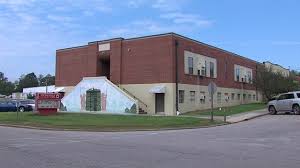
This week I am in residence in Stoneville, NC. This means that I am teaching all week at Stoneville Elementary school.

This means I have four classes a day. In some residencies, I get a core class, or I work with a single grade level.

I've got some fun residencies in my toolkit for grades three through twelve

 I have one about humans needing to leave the earth because it is dying. The residency is designed to get students to study the solar system, consider alternative energy, visualize technologies that do not exist, work together in small groups, research current technologies that are being considered for space exploration, as well as lots of arts and creative drama work.

I went into the classroom, explained who I was and what I was doing there. When I started the creative drama element of the residency by telling the group of fourth graders they were the last, best defense against the destruction of the world, about three quarters of the kids thought I was undercover from NASA. Some of them were pretty freaked out about it. The next day I had to explain once more that it was a creative drama experience. Despite realizing I really was not sent from NASA, the kids took the activity very seriously. All of the classes had a great time.


Basically, each class was divided into small groups, and each group came up with plans to evacuate the earth. I was cool with any plan they could concoct, and we would create the technology to make it work no matter how far fetched.

The students spent three days planning our escape. I came in on the fourth day, told them that there was bad news. Time was shorter than we knew. Not everyone could get off of the planet. A representative from each group came up and drew a slip of paper out of a bag. The slips with nothing on them meant the group got to leave, but the ones with red lines across them had to stay on the planet. We didn't have the resources to evacuate them. The groups that were going to be left behind were extremely bummed. There were some tears. We bucked up, however, and began to consider how to proceed.

Four days into a five day residency,  one or two groups in each room had to scrap all of their plans and begin to see if they could figure out a way to stay on the planet, and survive. On the fifth day, we spent most of our time in the evacuation stage, except for the abandoned groups...they threw themselves into saving our planet with such energy and fervor, that their ideas were extremely cool. The students participated in guided visualizations, drew pictures, and described the systems they designed.

The teachers had pulled books about the solar system earlier in the year, but nobody looked at them twice. That week, the books made the rounds in the rooms as student groups tried to pick a planet on which to live, and create life support systems to deal with the various drawbacks of their orbits, atmospheres, and proximity to the sun. The kids had a blast, and if it encouraged even one of them to think seriously about physics, the universe, science of any kind or alternative fuel sources...then it was worth it. If not, then it was still a blast and we got all sorts of arts impact out of it.

Ellis Island
I also run an involved five day residency about Ellis Island. A version of that residency can be found in the wonderful book by Sherry Norfolk and Jane Stenson entitled Storytelling in the Social Studies Classroom.

I have one residency on the start of the revolutionary war. I also teach a variety of writing residencies that are designed to help students with descriptive writing, and I've taught fantasy writing residencies as well.

Still and all, it is not my favorite way to spend a week.

Stoneville Elementary
This week I am in residence in Stoneville, NC.  No matter how long I do this job, there is always something new!

I have never quite done a residency like this. I am visiting every single class in the school once, and then I have a show at the end of the week. I am not seeing any class more than once! How can you build anything? You can't. You just offer up a sampling. It is not very satisfying, but I get why they want to do it this way. It allows for more arts exposure for every kid in the school.

This means I have to work with Kindergarten and First Grade. There are few things that can make my heart stop beating as quickly as knowing I have to spend an hour in a Kindergarten or first grade class.

I have no idea what you are supposed to do with little bitty kids in a classroom! I can tell stories to them all day long, but teaching them?  Just kill me now.

I don't know what people did about this sort of conundrum before the internet, luckily, I don't have that challenge. I had some ideas about what I might try that seemed a bit out there, so I reached out to our storytelling community online and asked, "what do I do?"

Our very supportive storytelling community was happy to offer up some ideas and encouragement. I finished my final classes with K and 1 today, and they were great.

What did I do?

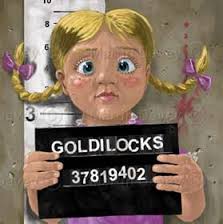
Well, I told a version of goldilocks where she is a really naughty person. We played it in drama space, acting out the story, and then we talked about story structure.


Luckily, this school has done a great deal of work helping students with story structure. This means they already know the beginning, middle, end organization of a tale. We looked at what images or ideas go in each part of the story. The part of the story they had the most trouble with was Resolution, but they got the hang of it.

With the Kindergarteners, I also played the Button Factory. This is how I learned it.

Hi! My name is Joe!
(The children repeat this line.)
And I work in a Button Factory!
(Repeat)
I have a house!
(Repeat)
And a dog!
(Repeat)
And a family!
(Repeat)
One Day, my boss came up to me.
(Repeat)
He said, "Joe are ya busy?"
(Repeat)
I said, "No."
(Repeat)
So he said, "Work with your right hand."

What happens here is I start making big circles with my right hand.

source


We go through the chorus again, and after Joe says 'no', the boss says, "Work With Your Left Hand"

The rest of the instructions are added onto the hand movements
Work with your right leg (Bring that leg up and down)
Work with your left leg (March)
Work with your bottom (wiggle while you march and move your hands)
Work with your nose! (Move your head back and forth or all around while you do the other movements)

At the end of this last chorus when the boss says, "Joe, are ya busy?" you say 'YES!"

Afterwards, we went through the button factory using our story structure chart, and focused on how that story broke down into characters, setting, a problem that vaults the character into action and then the resolution of the action.
The Monarch Butterfly


Two of my  kindergartens and one of my first grades were immersion classes, and so I broke out La Mariposa (the butterfly), a story I learned from Carrie Sue Ayvar.

Bilingual storytelling is fun! The kids who spoke Spanish enjoyed knowing what was happening a half step before their English speaking peers. All in all, it was a great time.

Tomorrow I am seeing all of the second graders at the same time, and then I have a show.

I'm in residence in Stoneville, NC. I'm learning so much about being in the classroom, managing kids, and gauging how they are doing.

I am recalling why I would be a terrible classroom teacher.

I am enjoying playing with the kids. I'm enjoying watching the kids focus on improving their concentration and visualization skills. I'm enjoying the teachers as they watch the process and make notes about follow up after I'm done.

It is good to do this every now and then as I write and think about brain function, but as much fun as I am having....I'm looking forward to being done tomorrow!


Happy Tell/Teaching!


Thursday, October 1, 2015

Storytelling: an On-Ramp to Learning by Sherry Norfolk

Sherry Norfolk


Stories are not one way we make sense of the world—they are the only way we make sense of it.1


Have you ever heard of Universal Design for Learning (UDL)? It’s “a set of principles for curriculum development that give all individuals equal opportunities to learn.”2 In other words (and this excellent metaphor is theirs, not mine), UDL provides an on-ramp for learning. They offer this example: if you build stairs, some people can use them; if you build a ramp, everyone can use it. Awesome!


Being a Storytelling Teaching Artist who works in inclusive and self-contained classrooms, I began to ask myself some questions:

Does storytelling create an on-ramp to learning?
 Is it accessible to everyone?
Does it provide learning experiences that allow every child – regardless of cognitive, language, learning, emotional, physical or behavioral disability – to succeed?   

In order to build that on-ramp, UDL principles encourage us to offer multiple opportunities for Engagement (motivation), Representation (content), and Expression (demonstrating understanding).  


Platypus Puppet
Of course, storytellers have a huge advantage in the Engagement department -- we can address all learning styles (visual, kinesthetic, auditory) at the same time! But is that enough? Usually – but not for every student. For instance, if you’re telling a story about a platypus to a child who is blind, providing a picture of a platypus won’t help him, but a 3-dimensional model such as a stuffed animal or puppet will. When you think about the needs of your audience and adjust accordingly, storytelling provides multiple opportunities for Engagement!


What about Representation? Well, thanks, to Kieran Egan and a lot of neurological research, we know that “stories are not one way we make sense of the world—they are the only way we make sense of it.” 

By presenting content through story, we help students make sense of, process, store and retrieve the information more readily. We can offer students an on-ramp to learning, but we may need to adjust our lesson plan. If our process requires students to do research or write (challenging for students with learning disabilities) or to work in small groups (difficult for children on the autism spectrum), we will need to provide flexible alternatives.  With some forethought, storytelling provides multiple opportunities for Representation!


Providing multiple opportunities for Expression – for demonstrating understanding – is easy when you are working with story! Just think of the many ways that storytelling is defined in our culture: oral telling, print, film, illustration, digital, etc.  Be ready with suggestions – perhaps a student can cartoon his story rather than writing or telling it, or can act it out with a partner, or tell it with props…or Express himself in a dozen different ways!


Link to the article about storytelling and science where I found this cool graphic.


Story is the ONLY way we make sense of the world. Think about how you can use storytelling as an on-ramp for learning for the kids in your world!


1.     Kieran Egan (2004). “The cognitive tools of children’s imagination.” Early Childhood Education, 36 (1), 4-10.
2.     National Center on Universal Design for Learning (http://www.udlcenter.org/)


BIO: Sherry Norfolk is an award-winning, internationally-acclaimed storyteller, teaching artist, and author, performing and leading residencies and professional development workshops across the United States and SE Asia. She was a presenter at the 2014 Kennedy Center-VSA Intersections Conference, “Leveling the Playing Field: Storytelling in the Special Needs Classroom,” and for the 2015 Kennedy Center-VSA webinar, “Teach Them to Fly: How Storytelling Gives Primary-age Children with Special Needs Their Wings.”   www.sherrynorfolk.com

Friday, September 25, 2015

Storytelling And Education...Sherry Norfolk is on Deck


The 2015-2016 season has begun!  The schools are open and lots of little tykes and big tykes are back in the classrooms where knowledge will rain down upon them, and if they are lucky, not all of it will slide off and be washed away by the janitors at the end of the day.

I had a rousing week last week in Kentucky and Tennessee working with the Haunting in the Hills Ghost Story Festival.  We filmed a ghost story special for KET, and worked in schools the week before the haunting on Saturday Night!  Mary Hamilton was our sponsor, guide, guru and all around amazing hostess  for the event.  She was brilliant.  if she does this role again next year, then whoever she asks should jump at it.  It was a great amount of fun!

P.S., the next time you are invited to the Wright/Hamilton household for dinner, request that Charles make Meatloaf.  You won't be sorry.

I am not what you'd call a rustic type of girl.......

All week, the park rangers escorted us through the area and introduced us at the schools.  The kids were fun, and loved storytelling.

We stayed in cabins on Pickett State Park.  Beautiful.


One night, right before I went to sleep, I saw a cave cricket in my room, and no husband in sight to capture the little guy and escort him to safety.  I just put my house shoes up on the dresser, as well as my tennis shoes, my skeletoes, and every other bag, purse or container I owned.  I gave him the floor.


I did a short hike with Megan Hicks, and wondered the entire time why people do it for fun.  I did see the Twin Arches.  Megan thought I was going to pass out half the time we were hiking.  The scenery was pretty, though.


Had great sets with Dan Kedding, Megan Hicks, and Carrie Sue Ayvar.  (I was sitting here for a few minutes racking my brain to remember who the fourth teller might have been, since there were four tellers on the bill, only to realize that I was the fourth teller.  Sometimes....)

One Night, I could hear something banging against the ceiling and the curtains, but couldn't locate what it might be.  Every time I turned on the light, the thing would vanish.  Finally, turned on the light to see a giant moth ghost past the lamp.  Freaked me out.  I opened the door and turned on the hall light for twenty minutes, but my noisy guest would not leave.  Finally, I just turned out the light and slept as much as I could while hearing something bump against the ceiling, curtains and glass every twenty minutes or so.


Saturday night during the ghost stories, twenty minutes into a thirty minute story, a snake made an appearance.  The snake was uninvited, freaked out the people closest to the stage, and proceeded to climb the hay bales that were in front of the stage as decoration.  I tried to ignore it, but the thing was agitated, ended up climbing all the way up on stage with me, and hiding behind the speakers.  I was going to let it be, but the head ranger came up on the stage informed me quietly it was a copperhead, therefore poisonous, and as a barefoot storyteller, I really needed to get off the stage.

Upstaged by nature.  

The rangers were terrific, and saved the day while being both polite and forceful.  I have decided that if I am ever in trouble, I totally want the Park Rangers to be the people I call.  Do I live near a national park?  No.  Do I still want Park Rangers to respond to my emergency?  Yes.

From now on, perhaps I will do my camping at the Hilton as the good lord intended.


This weekend I will be playing the Heart of NC Storytelling Festival in Greensboro.  I know it will be a fun if wet event, since it will be raining for the next couple of days.  If you are in the area, come out and play.  It will be dry and fun.


Next week I have another guest blogger.  She's one of my favorites.

Sherry Norfolk


I spend a lot of time buried in reading and research about using storytelling in education...not as much as Sherry Norfolk.

Sherry is one of the wells I go to draw from when I have a question.  If I need some advice about storytelling in classrooms or in education in general, she is a great source.

The kind of odd thing about Sherry is I have no idea when I met her.  Somehow, I feel like I've always just known her, but that can't be right.  She sort of slid right into my life, I looked up and she was just always there.  Perhaps it is because I knew her as an educator and writer, long before I ever saw her tell stories.

Her work in education and storytelling has been a gift to me as a teaching artist.  I am always honored when she agrees to do a little writing for me on the side, and her insights make me feel smarter.

She knows how to get underneath storytelling and education better than almost anyone else I've ever met, and she can tell a wonderful story as well.

Next week she is going to be featured in this space talking about Universal Design for Learning.  Yeah, I hadn't heard much about this before I read her piece.  Very cool stuff.

If you don't know Sherry's work, here is a brief bio:


Sherry Norfolk is an award-winning, internationally-acclaimed storyteller, teaching artist, and author, performing and leading residencies and professional development workshops across the United States and SE Asia. She was a presenter at the 2014 Kennedy Center-VSA Intersections Conference, “Leveling the Playing Field: Storytelling in the Special Needs Classroom,” and for the 2015 Kennedy Center-VSA webinar, “Teach Them to Fly: How Storytelling Gives Primary-age Children with Special Needs Their Wings.”   www.sherrynorfolk.com


Stop in next week!

Happy Teaching.