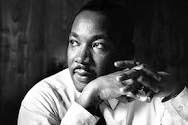
I was almost seven months old the day Martin Luther King Jr.
was killed. My mother was living in Beaumont,
TX with my elder brother and me. As a
young army wife, she was undoubtedly getting ready for her next move to Fort
Benning, Ga.
Most of my young life, I wondered why my parents didn’t take
part in the whole civil rights movement.
Why didn’t they march? Why don’t
they have stories about ‘being there’?
One of the most important movements in the history of our country, and
they missed it. What on earth were they doing?
My parents grew up in Texas.
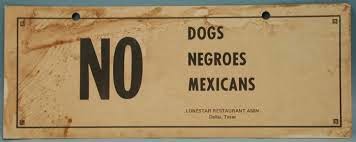
Both Beaumont and Ft. Worth were very segregated. They went to black schools. In elementary school it was a neighborhood
school. Middle and high school wasn’t
anywhere near their homes, and they had to get up early to take busses to those
schools. They passed many other schools
that were much closer. My mother always
points out that in the service of segregation, the southern states were happy
to bus black kids great distances to keep them separate, but when bussing was
instituted to desegregate the schools, suddenly it was a terrible thing.
My great grandmother raised my mother. Topsy Lewis didn’t grow up with Jim
Crow. Jim Crow was something that came
into vogue to make sure that black folks didn’t forget that they were
black. It burned my great grandmother no
end to have to sit in the back of the bus, so she took it as little as
possible. In fact, she stayed in her
neighborhood, a place called The Bottoms, rather than deal with the outside
world.
My great grandmother taught my mother a number of lessons. Here are a few of them.
-Your money is the same color as theirs. If you can’t go in the front door and spend
it, you don’t go in there at all.
My mother never went to restaurants or movies unless she
could go in, buy popcorn, and sit where she wanted. Guess how long it was before she went to a
movie?
-Don’t ever let anyone tell you that you aren’t good
enough. Anyone who would think that
about you doesn’t know you.
My mother took this to mean ‘don’t let anyone talk down to
you’. I remember one occasion in my
childhood where we’d gone into a store to buy something, and the clerk said
something offensive or condescending, so mom flashed her gold American Express,
gave the person a little smile, and left after making a comment about finding a
‘better’ place to shop.
-Nobody will ever give you anything, ever. No matter what else happens to you in life,
you are black, and they will never let you forget it. They would kill you before they would
acknowledge any part of this country belongs to you.
My mother took this to mean that you have to be one hundred
fifty percent better at whatever you do than the best white person just to be
considered worthy to be treated only slightly better than less than.
-Be careful. Be
wary. Don’t put yourself in harm’s way. Black people can’t get justice in this world.
My mother took this to mean that you stayed far from
anything you knew was dangerous. In my
great grandmother’s world, there were quite a few things black folks in general,
and black women in particular had to fear.
When the civil rights movement was happening in the 60's, it was not
changing anything that was going on in east Texas. My mother says they watched all that marching
and yelling and struggle like a television show, because that’s how it was
presented where she lived. It wasn’t
held up to be anything more than a few black folks getting above themselves,
and see how much pain they are experiencing because of it? If they would just
settle down, they’d stop getting hurt.
It made me think about the parts of the country that were
against making Martin Luther King Jr. Day a holiday. They argued that his work did not
rise to the level of national importance.
To this day, there are still those who don't want his legacy taught in schools.
If you look at the impact of Martin Luther King’s legacy on
our country, it is obvious his life’s work changed the course of our nation,
but if you watched the whole proceeding in certain parts of the country while
it was going down, you would have grown up thinking it didn’t accomplish much
of anything, and as an adult, you might actually be confused as to why this
bizarre little hiccup in history is getting so much play.

My mother taught us variations on what she learned from my
great grandmother. How could she not?
The world was a different place as we grew.
She raised us as an army officer’s wife, not a woman who took in washing
to help make ends meet. We always went
to excellent schools, not segregated schools where our books were five years
out of date, and the only time we got new materials was when the white schools
updated their stuff, and shipped the old things across town to the black
schools. We lived on army bases, and
basically left home first thing in the morning, spent the day riding, running,
swimming, walking with kids from all over the world who looked different, spoke
different languages, ate different foods, and had different ideas about how
things worked.
 |
| Military Bases Were A Tiny United Nations |
As we head into 2015, our country has already seen a spate of racial
violence. We are talking about race, and how we deal with it in society more
than we have in a generation. We are
beginning to confront the unspoken fears, hatreds, beliefs, and anger that we
have been unwilling to face because it is ugly, and it makes us look small and
pitiful.
What will we teach our children? What will be the lessons we give them because
of the struggle that Martin Luther King Jr. took upon himself?
Race relations in our country have never been better. You can point to all the terror and darkness
we see on the screen, and you can ask, ‘How can you say that?’
The answer is, once upon a time, we were
carefully taught you weren’t allowed to talk about it, and if you did, you were
only allowed to think about it one way.
That isn’t true anymore.
Once upon a time you couldn’t laugh at racists. You couldn’t call them out. You couldn’t even suggest they were doing
something heinous and wrong. If you
spoke about race, you had to do it in the context of comparing races and saying
which one was superior. Any other kind
of discussion about race made no sense.
These days we can’t shut up about race. We talk about it all the time. The difference is, talking about it
qualitatively will get you in trouble.
This has led to people trying to change the meaning of the
word racist.
Now, if you talk about race at all or try to put it in
context of a situation, there are those who will call you a racist or a race baiter. There are also those who just want to pretend
that race isn’t an issue at all, and if you say it is, you are promoting
racism.
Then there are the people who keep announcing we live in a post racial world. If only.
My parents raised my siblings and me to be proud of who we
are. They raised us to speak our
minds. They raised us to stand up for
what we believe.
They forgot to raise us to be afraid of people who were
different, or suspicious of different ideas.
They forgot
to tell us there were places we could not go or things we could not do.
 |
| From my trip to Hong Kong |
They even forgot to tell us that people would try to stop us
because we were black....this caused some strange conversations when we hit our
teenage years, encountered bouts of racism for the first time, and were utterly
baffled about it, but that’s another story.
All of these ‘don’ts’ seem to have slipped their mind when they raised us.
My mother never marched in a civil rights
demonstration. My father never picketed,
or crossed a bridge, or stood peacefully holding someone’s hand while
authorities or regular citizens of a different color abused him, spat on him or
called him names.
Still, I think they did their part. They taught their children. They taught us very carefully.
Happy MLK Day!
 I was recently asked why I thought folktales were a good vehicle to help people understand Martin Luther King Jr.’s legacy.
  The thing that Martin Luther King Jr. did for our nation was to retell our story including black and brown people in the narrative. Up until he came, we had no national story that included people of color that didn’t consider them as less than or worthless.

 Dr. King’s voice resonated not only with people of color but other citizens who had watched the systematic oppression of their fellow citizens and decided they could not let it stand.
  The universality of folklore also brings us closer together as we realize that our ancestors all wanted the same things no matter where they were in the world. They wanted us to find ways to live together. They wanted us to love and care for each other. They wanted us to learn from our mistakes, and they wanted us to think about the consequences of our actions.