Saturday, February 16, 2019

Day 16 - Otis Boykin - He Kept Hearts Beating

Otis Boykin


1920 - 1982


Who Was He?

Otis Boykin was born in Dallas, Texas. His mother was a maid and his father was a carptenter who later became a minister.

Otis was only a year old when his mother died of heart failure.

He graduated valedictorian from Booker T. Washington High School then went off to Fisk University in Illinois.


While at Fisk, he worked as an assistant in a nearby aerospace lab. In 1941, he got a job as a lab assistant testing automatic aircraft controls.

From those beginnings, he was hired by P.J. Nilsen's lab in Illinois. 

Boykin attempted to get a higher degree at the Illinois Institute of Technology, but (depending on the source you cite)  two years he either couldn't afford the tuition, or he left because he had a job opportunity too good to resist. 

He always meant to go back for that degree, but he never did. It wasn't too great a loss. Turns out he didn't need it.


What Did He Invent?

Boykin's work in the aerospace labs and with PJ Nilsen influenced the rest of his life. Boykin's thing was resistors in electronics.

Okay, let me see if I can explain this for the non-mechanical amongst us...I'm one of them.

Resistors
The purpose of a resistor is to control a current of electricity. It can reduce the amount flowing through a circuit, split it, release the energy as heat energy to help cool things down, and anything else that would somehow change the current of electricity flowing through a circuit.

Boykin's contribution was to make very effective resistors that were cheap and easy to produce. His first patent for resistors was granted in 1959.

Why is this such a huge thing? Well, because every single electrical thing we have uses them. 
Every. Single. One.

Boykin's first resistors were excellent at splitting currents. These ended up in televisions and radios everywhere.

Two years later, in 1961, he created another resistor. This one was even cheaper to produce, very durable and could keep its efficacy despite huge changes in temperature, pressure and being thrown about and battered.

The Department of Defense put those resistors into their new generation of guided missiles and aircraft.

IBM put them into computers.

All of the nascent high tech industries of the day wanted Boykin's resistors.

In 1964, Boykin moved to Paris. He had a company called Boykin-Furth Inc. 

source


The most famous of Boykin's resistors is the one that is used in pacemakers.


This little device has saved millions of people's lives.


His Legacy?


The resistors he devised changed the world of electronics from war - military airplanes and guided missiles - to industry - IBM.

He contributed to the development of better radios and televisions.

Boykin created the resistors for a device that millions of people rely on to keep their heart regulated - the pacemaker.

This inventor saw great financial gain from his inventions and lived a comfortable life.

He died in Chicago in 1982...of heart failure. At the time of his demise, he'd accumulated twenty-six patents.


So, a big thank you to Otis Boykin for all of the hearts that are still beating that would have stopped.


Celebrate Black History!

Day 1 - The ABC's of Black History Month
Day 6 - Ernest Everett Just - Biologist, Zoologist, Cell man
Day 7 - Frederick McKinley Jones - The Coolest Man in Modern History
Day 8 - Sarah Goode - A Practical Bed For Small Spaces
Day 9 - William Henry Cling - Did He Invent The Hospital Bed Before Gatch?
Day 10 - Inez Beverly Prosser and Brown V.S. The Board of Education
Day 11 - Jan Ernst Mateliger - Mechanical Engineer/Sole Man
Day 12 - Samuel L. Kountz Jr. - Revolutionized Transplant Surgery
Day 13 - Lewis Howard Latimer - Incandescent Inventor
Day 14 - Marie Van Brittan Brown - Home Security
Day 15 - Norbert Rillieux - Sugar Man
Day 16 - Otis Boykin - He Kept Hearts Beating
Day 17 - Alice H. Parker - Heating It Up!
Day 18 - Lloyd Quarterman - Chemist and Atom Man
Day 19 - Robert F. Flemming Jr. - Guitar Man
Day 20 - Charles S. L. Baker - The Friction Radiator 
Day 21 - Granville T. Woods - The Black Edison
Day 22 - Alfred L. Cralle - Next Time You Have Ice Cream...
Day 23 - Ellen Elgin - Through The Wringer
Day 24 - Dr. Daniel Hale Williams - Holding A Heart In the Palm of His Hands
Day 25 - Benjamin Bradley - Steam Engine Dominance
Day 26 - Elijah McCoy - The Real One
Day 27 - Alexander Miles - Hold The Door, Please!

Friday, February 15, 2019

Day 15 - Norbert Rillieux - Sugar Man

Norbert Rillieux


       1806 - 1894


Who Was He?


Norbert Rillieux was born to a plantation owner and a free person of color in New Orleans. I learned a new term researching this man. His mother was a plaçage. This means that even thought inter-racial marriage was illegal, Norbert's parents were as married as was possible to be. Vincent Rillieux not only claimed his son but helped take care of him.

Side Note: Lousiana was a weird mixture of people in the antebellum south. There were all sorts of categories of black folks from enslaved to free. There was a subculture of wealthy people of color who had influence and some acceptance. 

Back to our subject.

Norbert was a Creole of color with a rich father. That meant he had more privileges than less affluent people of color. He was baptized Catholic and attended Catholic schools.

Rillieux was a smart kid, and his inventiveness was easy to see. His father decided to send him to France to study.

In the early 1820s, Norbert went to Ecole Centrale Paris, one of the top engineering schools in France. He studied physics, engineering, and mechanics. While he was there, he became interested in steam.

Steam Engines Changed The World


Now, this might seem odd, but in the 1800s steam was king. It ushered in the Industrial Age.


By the age of 24, Norbert was an instructor in applied mechanics at the Ecole Centrale Paris. He had not lost his fascination with steam.

Around the 1830s, he published a series of papers on steam engines and steam power.


What Did He Invent?

Rillieux's fascination with steam led to an invention that I have been trying to figure out how to explain in words and in ways that will make sense. So, let me give it a go.

Add caption


The thing Norbert Rillieux invented is called a Multiple Effect Evaporator.

Basically, you heat something to a certain temperature and capture the steam in order to get the purest version of the thing you are heating. You burn off the impurities.
This apparatus controlled the temperature and kept it stable.

Norbert applied this apparatus to sugar. For the very first time in history, the human race got pure, refined sugar.

The quality was amazing. It was a huge improvement on the amount of labor that had been required to produce sugar, and there was very little waste in this new process. It was also way cheaper.


This invention revolutionized the sugar industry.

This evaporation process was so instrumental in changing the way industries purified things, that Norbert Rillieux has been called the world's first ever Chemical Engineer.

souce
Rillieux became a fixture in New Orleans society after inventing the Evaporator. He started installing them in sugar plantations in Louisianna. This caused some problems.

There was no suggestion that Norbert should be housed with the enslaved people, but there was no way he could be housed in the big house with the white folks. That could not be allowed under any circumstances, so, they would build him a little house for himself.

Rillieux made a tidy fortune off of his invention, and right before the Civil War, as Ante Bellum Louisianna began to take the rights of Free People of Color away, Norbert decided America was not for him and he returned to France where he spent the rest of his life.

His Legacy?

Norbert Rillieux was the first Chemical Engineer.
A Modern Day Evaporator

His Evaporator transformed not only the sugar industry but any type of industrial process that needs to purify a product using evaporation.

 Here is the explanation of the process from a website from a company that produces these giant evaporators.


"Swenson Technology is a global leader in the design and supply of chemical process equipment for separation. We specialize in designing and installing innovative systems to convert liquid solutions into dry solids using evaporation, crystallization and drying."


Thank you Norbert Rillieux - The world's first Chemical Engineer!

Who am I kidding? This is his real legacy...


Sweet Things


Day 1 - The ABC's of Black History Month
Day 6 - Ernest Everett Just - Biologist, Zoologist, Cell man
Day 7 - Frederick McKinley Jones - The Coolest Man in Modern History
Day 8 - Sarah Goode - A Practical Bed For Small Spaces
Day 9 - William Henry Cling - Did He Invent The Hospital Bed Before Gatch?
Day 10 - Inez Beverly Prosser and Brown V.S. The Board of Education
Day 11 - Jan Ernst Mateliger - Mechanical Engineer/Sole Man
Day 12 - Samuel L. Kountz Jr. - Revolutionized Transplant Surgery
Day 13 - Lewis Howard Latimer - Incandescent Inventor
Day 14 - Marie Van Brittan Brown - Home Security
Day 15 - Norbert Rillieux - Sugar Man
Day 16 - Otis Boykin - He Kept Hearts Beating
Day 17 - Alice H. Parker - Heating It Up!
Day 18 - Lloyd Quarterman - Chemist and Atom Man
Day 19 - Robert F. Flemming Jr. - Guitar Man
Day 20 - Charles S. L. Baker - The Friction Radiator 
Day 21 - Granville T. Woods - The Black Edison
Day 22 - Alfred L. Cralle - Next Time You Have Ice Cream...
Day 23 - Ellen Elgin - Through The Wringer
Day 24 - Dr. Daniel Hale Williams - Holding A Heart In the Palm of His Hands
Day 25 - Benjamin Bradley - Steam Engine Dominance
Day 26 - Elijah McCoy - The Real One
Day 27 - Alexander Miles - Hold The Door, Please!


Thursday, February 14, 2019

Day 14 - Marie Van Brittan Brown - Home Security

Marie Van Brittan Brown and Albert

1922 - 1999


Who Was She?

Born in Jamaica Queens, NY, Marie Van Brittan lived there all of her life.

She became a nurse and married a man named Albert Brown. As the years passed, her neighborhood changed. The crime rate went up and the police response was delayed.

Nurses do not have 9 - 5 schedules and Marie was often out at odd times. Albert didn't have a 9 - 5 job either. He was an electronics technician, and he worried about his wife's safety when he wasn't home.

One of Marie's biggest concerns was knowing whether or not it was safe to open the door when someone knocked.

Marie began to consider how she could create something that would give her and Albert some piece of mind.


What Did She Invent?

In 1966, Marie and Albert started designing a system that would allow them to see who was at the door. They had peepholes at three different levels for really tall people, average-sized people, and a lower one for people who might be in wheelchairs, or children. 

They connected this system to a camera that could be moved to show who was at the door and send that image to a closed circuit television system. 

Marie also wanted to make sure that if there was a problem, help could be contacted with just the push of a button.

Marie and Albert invented the very first home security system.

source
Their patent was approved in 1969.

Though every home security system in use today is based on the system Marie and Albert patented...they never saw a dime for their invention.


Her Legacy?


If you have a security system in your house, been into any small business with a security system, gone into a grocery store and seen a screen watching you, or been in a hotel where you see their monitor, you have Marie Van Brittan Brown to thank for it.

Celebrate Black History! -


Day 1 - The ABC's of Black History Month
Day 6 - Ernest Everett Just - Biologist, Zoologist, Cell man
Day 7 - Frederick McKinley Jones - The Coolest Man in Modern History
Day 8 - Sarah Goode - A Practical Bed For Small Spaces
Day 9 - William Henry Cling - Did He Invent The Hospital Bed Before Gatch?
Day 10 - Inez Beverly Prosser and Brown V.S. The Board of Education
Day 11 - Jan Ernst Mateliger - Mechanical Engineer/Sole Man
Day 12 - Samuel L. Kountz Jr. - Revolutionized Transplant Surgery
Day 13 - Lewis Howard Latimer - Incandescent Inventor
Day 14 - Marie Van Brittan Brown - Home Security
Day 15 - Norbert Rillieux - Sugar Man
Day 16 - Otis Boykin - He Kept Hearts Beating
Day 17 - Alice H. Parker - Heating It Up!
Day 18 - Lloyd Quarterman - Chemist and Atom Man
Day 19 - Robert F. Flemming Jr. - Guitar Man
Day 20 - Charles S. L. Baker - The Friction Radiator 
Day 21 - Granville T. Woods - The Black Edison
Day 22 - Alfred L. Cralle - Next Time You Have Ice Cream...
Day 23 - Ellen Elgin - Through The Wringer
Day 24 - Dr. Daniel Hale Williams - Holding A Heart In the Palm of His Hands
Day 25 - Benjamin Bradley - Steam Engine Dominance
Day 26 - Elijah McCoy - The Real One
Day 27 - Alexander Miles - Hold The Door, Please!

Wednesday, February 13, 2019

Day 13 - Lewis Howard Latimer - Incandescent Inventor

Lewis Howard Latimer


Lewis Howard Latimer

1848 - 1928


Who Was He?


Lewis Howard Latimer was born in Chelsea, MA in 1848 to parents who had escaped slavery in Virginia.

The slaver had them arrested and tried under the Fugitive Slave Act. Luckily, Frederick Douglass and other abolitionists came to their defense, and a minister helped raise four hundred dollars to pay off the slaver.

After the Dred Scott Decision, Latimer's father left the family. Some sources speculate that he became fearful that he would be found and forced back into slavery, and he disappeared, leaving Rebecca, his wife, to raise their children alone.

Lewis Latimer only received a basic education and at a young age he got a job to help his mother support the family.

Because of  his parent's history, Latimer was keen to fight for the abolition of slavery when the Civil War started. At fifteen (or sixteen depending on the source you cite), he lied about his age and joined the Union Navy. At the end of the war, he was given an honorable discharge, and went home to Chelsea.

Crosby and Gould
His first job after the war was as an office boy at Crosby and Gould, a patent law firm. He was making about three dollars a week.

Lewis had never used a ruler or any of the other tools of a draftsman, and he was fascinated by the whole process.
vintage Draftsman Tools


He went to the library - Shout out to the necessity of public libraries - and got books on drafting. He learned everything he could from reading. watched the draftsmen work during the day, and practiced at home with third hand materials he could afford.

Lewis started doing some sketching at work, and his skills were noticed by the the firm. He was promoted to draftsman, and his salary went from three dollars a week, to twenty.

He married Mary Wilson Lewis in 1873, and life didn't seem like it could get any sweeter. 

Then, the draftsman went from making designs for other people's inventions to making designs of his his own.

What Did He Invent?

In 1874, the year after he got married, Latimer and Charles W. Brown co-patented a toilet system for the railroad. That was just the beginning.

Latimer's work was noticed by some of the top inventors of the day. 

In 1876, Alexander Graham Bell employed Latimer as a draftsman at his patent firm. At Bell's request, Latimer not only drafted the designs, but helped Bell fill out and organize all of the proper documents to get the telephone patented. This led to some people claiming that Latimer had actually helped Bell invent the telephone, but throughout his life, when anybody ever suggested this, Latimer set them straight.

He never even suggested he'd invented the Bell Telephone.

After moving to Bridgeport, Connecticut in 1879 to take a job with US Electric Lighting Company at the invitation of its owner, Hiram Maxim, Latimer became an assistant manager as well as a draftsman.

The company was selling Thomas Edison's lightbulbs, which were the only ones around at that time. These lightbulbs used a paper filament that burnt out quickly. Latimer thought there might be a better way to do it.

The Carbon Filament Light Bulb


In 1881, Latimer experimented, produced and then co-patented the carbon filament light bulb with a man named Joseph Nichols. They sold the patent to the US Electrical Lighting Company later that year. 

1882 arrived with a new patent with a Latimer for an improved process for making the carbon filaments.

Two years later, in 1884, Latimer found himself in New York City working for The Edison Electric Light Company. By this time, he was not only hired as an expert draftsman, but an expert witness in patent litigation concerning lightbulbs.

Latimer's Book
Lewis Latimer wrote the first book about electric lighting. 


His Legacy?

If you've ever traveled by train and had to take a pit stop...you can say thank you to Latimer.

Lewis Howard Latimer supervised the installation of public lighting in New York, Montreal, London, and Philadelphia.

In his day he was celebrated as an expert on patent law.


There are scholarships named after him, elementary schools, he was inducted into the Inventor's Hall of Fame, and MIT has an invention program named after him.

Latimer's carbon filament made electric light practical for public places as well as a necessity in the home.

He also tutored immigrants in English and helped them learn drafting skills. Latimer also wrote poetry and plays, as well as playing the flute.

Here is one of his poems:

EBON VENUS

Let others boast of maidens fair,
Of eyes of blue and golden hair;
My heart like needles ever true
Turns to the maid of ebon hue.
I love her form of matchless grace,
The dark brown beauty of her face,
Her lips that speak of love's delight,
Her eyes that gleam as stars at night.
O'er marble Venus let them rage,
Who sets the fashions of the age;
Each to his taste, but as for me,
My Venus shall be ebony.

Lewis H. Latimer


He invented some other things too, including the earliest air conditioner, but we'll leave that right here!

Thank you, Lewis Latimer for helping us turn on the light and keep it burning!

Celebrate Black History.


Day 1 - The ABC's of Black History Month
Day 6 - Ernest Everett Just - Biologist, Zoologist, Cell man
Day 7 - Frederick McKinley Jones - The Coolest Man in Modern History
Day 8 - Sarah Goode - A Practical Bed For Small Spaces
Day 9 - William Henry Cling - Did He Invent The Hospital Bed Before Gatch?
Day 10 - Inez Beverly Prosser and Brown V.S. The Board of Education
Day 11 - Jan Ernst Mateliger - Mechanical Engineer/Sole Man
Day 12 - Samuel L. Kountz Jr. - Revolutionized Transplant Surgery
Day 13 - Lewis Howard Latimer - Incandescent Inventor
Day 14 - Marie Van Brittan Brown - Home Security
Day 15 - Norbert Rillieux - Sugar Man
Day 16 - Otis Boykin - He Kept Hearts Beating
Day 17 - Alice H. Parker - Heating It Up!
Day 18 - Lloyd Quarterman - Chemist and Atom Man
Day 19 - Robert F. Flemming Jr. - Guitar Man
Day 20 - Charles S. L. Baker - The Friction Radiator 
Day 21 - Granville T. Woods - The Black Edison
Day 22 - Alfred L. Cralle - Next Time You Have Ice Cream...
Day 23 - Ellen Elgin - Through The Wringer
Day 24 - Dr. Daniel Hale Williams - Holding A Heart In the Palm of His Hands
Day 25 - Benjamin Bradley - Steam Engine Dominance
Day 26 - Elijah McCoy - The Real One
Day 27 - Alexander Miles - Hold The Door, Please!

Tuesday, February 12, 2019

Day 12 - Samuel L. Kountz Jr. - Revolutionized Transplant Surgery

Samuel L Kountz Jr.


  In 2001, my father-in-law's kidney's began to fail. My sister-in-law gave him one of hers. If not for Samuel Kountz, it might never have happened.


Samuel L. Kountz Jr.

1930 - 1981


Who Was He?


Samuel was born in Lexa, Arkansas. Lexa was an incredibly poverty-stricken area. His father was a Baptist minister, and his mother was a midwife. There was no doctor in the area, so his mother did her best to attend to the injuries people suffered, and his father played the role of nurse.

At the age of eight, Samuel decided that he wanted to be a doctor to relieve people's pain and suffering.

As with many African Americans in the early 1900s, most of the top medical schools in the country were closed to him, and many of the primary and secondary schools he could attend were both segregated and offered substandard education.

After graduation from high school, Kountz discovered his course work had been remedial, and he had to take extra classes to bring his level up high enough to get into college.

University of Arkansas at Pine Bluff


During his senior year at university, he met Senator J. William Fulbright. When Fulbright found out that Kountz was planning to apply to black medical schools after graduation, he encouraged him to apply to the University of Arkansas in Little Rock. 

Kountz followed this advice only to find out that the University of Arkansas Medical School did not accept black people into their program.

He did get a degree in chemistry at the University's Fayetteville branch. 

In 1956, Kountz earned his masters in chemistry, and his work was so excellent, the University of Arkansas changed its mind about letting him into the medical school, and in 1958 he became the first African American to graduate from the University of Arkansas Medical School.

After graduating, Kountz got a very prestigious internship at the San Francisco General Hospital. 

In 1959, he began his surgical training at Stanford University School of Medicine. It was here he decided to specialize in transplant surgery.


What Did He Do?

In 1961 while still in residence, Samuel Kountz made medical history when he conducted the first ever kidney transplant from a non-twin donor. It was a mother-daughter donor set.  

He figured out how to keep the body from rejecting a donated organ.

Kountz did groundbreaking work on human tissues to aid in finding good candidate matches for donors.

He developed the prototype for the Belzer Perfusion Kidney Machine that can keep kidneys alive for up to 50 hours.

He spent his life encouraging people to donate a kidney to help save the lives of others.


Over the course of his life, Kountz performed 500 kidney transplants, the most of any doctor at the time.

He traveled the world lecturing, teaching, and saving people's lives. 

Kountz developed the largest kidney transplant and research program in the country at the University of California in San Francisco.

In 1977, he was touring through South Africa and contracted a debilitating illness. He died in 1981. 


His Legacy?


What was once a dangerous, risky, scary and usually unsuccessful surgery (the transplantation of kidneys) is now practiced successfully in over 80 countries. 

Transplanting kidneys is not the last resort, it is the first line of treatment for someone whose kidneys are failing.


Kountz's work has saved countless lives, including my father-in-law's.


Samuel L. Kountz


Thank you, Samuel L. Kountz Jr. for making it possible for us to share the gift of life even if we don't have an identical twin.


Celebrate Black History!


Day 1 - The ABC's of Black History Month
Day 6 - Ernest Everett Just - Biologist, Zoologist, Cell man
Day 7 - Frederick McKinley Jones - The Coolest Man in Modern History
Day 8 - Sarah Goode - A Practical Bed For Small Spaces
Day 9 - William Henry Cling - Did He Invent The Hospital Bed Before Gatch?
Day 10 - Inez Beverly Prosser and Brown V.S. The Board of Education
Day 11 - Jan Ernst Mateliger - Mechanical Engineer/Sole Man
Day 12 - Samuel L. Kountz Jr. - Revolutionized Transplant Surgery
Day 13 - Lewis Howard Latimer - Incandescent Inventor
Day 14 - Marie Van Brittan Brown - Home Security
Day 15 - Norbert Rillieux - Sugar Man
Day 16 - Otis Boykin - He Kept Hearts Beating
Day 17 - Alice H. Parker - Heating It Up!
Day 18 - Lloyd Quarterman - Chemist and Atom Man
Day 19 - Robert F. Flemming Jr. - Guitar Man
Day 20 - Charles S. L. Baker - The Friction Radiator 
Day 21 - Granville T. Woods - The Black Edison
Day 22 - Alfred L. Cralle - Next Time You Have Ice Cream...
Day 23 - Ellen Elgin - Through The Wringer
Day 24 - Dr. Daniel Hale Williams - Holding A Heart In the Palm of His Hands
Day 25 - Benjamin Bradley - Steam Engine Dominance
Day 26 - Elijah McCoy - The Real One
Day 27 - Alexander Miles - Hold The Door, Please!

Monday, February 11, 2019

Day 11 - Jan Ernst Matzeliger - Mechanical Engineer/Sole Man

Jan Ernst Matzeliger


1852 - 1889


Who Was He?


Jan Ernst Matzeliger was born in 1852 on a coffee plantation in Dutch Guiana. His father owned the land and his mother was enslaved. 


At the age of 10, he was apprenticed in the colonial ship works in Paramaribo. 

While working in the shipyards, he showed early skill and a deft hand with mechanical things.

Merchant Ship


At 19 he left Dutch Guiana and worked as a mechanic for the Dutch East Indies Company on a merchant ship.


By 1877 he had mastered English sufficiently to get off the ship in Philadelphia and stay put.


While he was in Philly, he got into the shoe trade.


The Shoe Trade

The making of shoes is big business. It always has been. Since mankind decided to be shod, he needed someone to make shoes. In the old days, before the mechanization of the shoe industry, shoemakers were called cordwainers. A cobbler did not make shoes. They repaired them. In fact, cobblers were forbidden to make shoes because they were considered a lesser skilled person. 

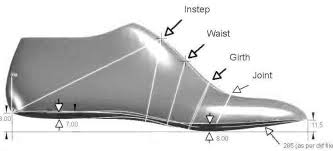
A Shoe Last
The process of making shoes used to be an art form or handicraft. First, the cordwainer had to make a last. The last is the mold that tells the shoemaker what shape and size shoe to make. Cordwainers kept the lasts and if you needed a new pair of shoes, you could go and see the local cordwainer. 

Up until the advent of the industrial age, shoes were made by hand. Slowly over the course of the 1800s more and more mechanization was added to the process. People were using sewing machines instead of doing all the intricate hand stitching, and they used machines to shape the shoes. 

There was one last bit of mechanization that had not yet arrived. The upper shoe had to be attached to the sole. If this is not done properly, it will result in an ill fitting shoe that will not last long.

When Jan Matzeliger joined the shoe trade, the upper shoe and the sole were still being sewn together by hand. 

That meant that every single person in the shoe trade could be held hostage by the men who assembled the final product. These cardwainers were the bane of the business. They could stop production in its tracks. 

They could also extort the companies for whatever they could get. This meant shoes were unnecessarily expensive.

Matzeliger decided to do something about that. He took classes in English until he was fluent enough to study physics and mechanical engineering books.


What Did He Invent?


Jan spent five years working to create a mechanized shoe laster. During this time he did not take very good care of himself. He poured every waking second into this machine. He forewent eating and sleeping to squeeze as much time as possible into creating his masterpiece.

The Shoe Lasting Machine


An Automated Method For Lasting A Shoe.


This machine revolutionized the making of shoes.

The cardwainer could maybe make fifty shoes a day working flat out.

This machine could produce up to 700.

The demand for this machine was incredible, and within two year of its invention, the shoe industry was changed forever. 


Not surprisingly, this device was in high demand. A company was formed to churn them out.

Jan Matzeliger put his heart, soul, and health into his inventions. By the end of his life he held five patents for machines to improve the shoe industry.

The cardwainers who had previously held sway over the very last ounce of how many shoes could be produced and how much they would cost lost their place in the shoe industry.

Incidentally, many of them became cobblers and immediately changed the conotaion of what it meant to be a cobbler. 

Unfortunately, the year the company was formed to make his shoe laster, Matzeliger caught a severe cold. Because he had neglected his health, the cold would not break and he was eventually diagnosed with tuberculosis. 

Jan Ernst Matzeliger died at the age of 37 in 1889 before he got to see just how drastically he'd changed the world. 

Up until recently, there was no mention of who actually made this device in most of the histories about shoes. Wouldn't you know it?


His Legacy?

Every shoe in your closet.
Every shoe you have ever owned.
Every shoe you will ever own.


Thank you Jan Ernst Matzeliger - For our shoes.

Celebrate Black History!

Day 1 - The ABC's of Black History Month
Day 6 - Ernest Everett Just - Biologist, Zoologist, Cell man
Day 7 - Frederick McKinley Jones - The Coolest Man in Modern History
Day 8 - Sarah Goode - A Practical Bed For Small Spaces
Day 9 - William Henry Cling - Did He Invent The Hospital Bed Before Gatch?
Day 10 - Inez Beverly Prosser and Brown V.S. The Board of Education
Day 11 - Jan Ernst Mateliger - Mechanical Engineer/Sole Man
Day 12 - Samuel L. Kountz Jr. - Revolutionized Transplant Surgery
Day 13 - Lewis Howard Latimer - Incandescent Inventor
Day 14 - Marie Van Brittan Brown - Home Security
Day 15 - Norbert Rillieux - Sugar Man
Day 16 - Otis Boykin - He Kept Hearts Beating
Day 17 - Alice H. Parker - Heating It Up!
Day 18 - Lloyd Quarterman - Chemist and Atom Man
Day 19 - Robert F. Flemming Jr. - Guitar Man
Day 20 - Charles S. L. Baker - The Friction Radiator 
Day 21 - Granville T. Woods - The Black Edison
Day 22 - Alfred L. Cralle - Next Time You Have Ice Cream...
Day 23 - Ellen Elgin - Through The Wringer
Day 24 - Dr. Daniel Hale Williams - Holding A Heart In the Palm of His Hands
Day 25 - Benjamin Bradley - Steam Engine Dominance
Day 26 - Elijah McCoy - The Real One
Day 27 - Alexander Miles - Hold The Door, Please!