Wednesday, April 15, 2015

Crafting 101: Flesh on the Bones


There is a difference between crafting a story and just getting up and telling one.  Pretty much anyone who isn't afraid of speaking in public can get up and tell a story of some kind.  We share stories at weddings and funerals.  We share them during worship services, and amongst friends.  We share them on the radio and television. 


In this series of Blogs, I will look at a single story, and show the process I use to get from my first exposure to a tale all the way to the finished structure.

This is the third entry in the series.


The Pot Maker and The Tiger - The Story

1. Crafting 101: The Questions I Ask

2. Crafting 101:  Building The Structure

3. Flesh On The Bones

4. Crafting 101:  Donkeys and tigers and War Horses., Oh My!

5.  Crafting 101:  There Are No Little Characters...

6.  Crafting 101:  Putting It Together

7.  Crafting 101:  Introductions


Now that I have some structures on which to flesh out my story, I begin to compose the possibilities.  This means I have to flesh out each of the different relationships that interest me, play with the characters, and see what I come up with in the end.


My first cut and dry possibilities, generated by the structures I identified are as follows:


1.  The pot maker is somewhat of a hapless fellow.  He accidentally rides the tiger home.  His wife realizes the potential for fame or gain, and sends word to the Raja about the tiger.  The pot maker is rewarded for his bravery and made an honorary general.  When the army comes to attack, and he is recruited to become an actual general and scout the front, his wife convinces him he can do it.  He falls in line with the story, and scouts the front with the tree, becomes a hero in spite of his shortcomings.  At the end, the wife takes a victory lap, the husband is also happy, and goes back to the factory where everyone appreciates him even more.


2.  The pot maker is a good natured fellow who accidentally rides the tiger home.  He lies about how he captured it.  His wife warns him that such lies will only get him into trouble.  He dismisses her concerns, 'What trouble can come from this?'  The story he tells gets bigger during the telling until the Raja himself hears of it, rewards the Pot Maker, and promotes him to honorary general.  His wife points out that this is just the sort of trouble she feared.  The Pot Maker dismisses her concern, 'What trouble can come from this?'.  When the army comes, he is in despair. His wife once again points out that this is the type of trouble she feared, but now he agrees.  Between them, they concoct a plan so that he will not have to scout the front.  Unfortunately, when his wife slaps the back of the horse, instead of just moving, it takes off for the front, and he accidentally scouts the front despite his best efforts.  After the war is over, the two of them are happy to be alive and the Pot Maker goes back to the factory, a little wiser but full of many more stories.


3.  The pot maker is a braggart who accidentally rides the tiger home.  Full of himself, he begins to believe the stories he tells about how he captured the tiger.  He sends a message to the Raja, telling some wild tale about how he caught the tiger.  The Raja sends for him, makes him an honorary general.  His wife goes along with it, but warns him it could be dangerous to put himself forward like this.  When he is made a general, and made to scout the front, she does an I told you so, which makes the pot maker more determined than ever to scout the front.  Despite his bravado, he is terrified, and can't ride the horse without her help.  She does help him and he scouts the front with the tree, accidentally stops the war, and comes home a hero.  His wife doesn't get on his case as much, but he, realizing that he dodged the proverbial bullet, becomes a more humble person who has a mostly real story to tell.


4.  The pot maker is a storyteller who tells amusing tales.  He rides the tiger home by accident; tells a good story about the how and why of his capture.  His wife is exasperated, but she sees no harm in it, and lets it stand. Story gets to the Raja.  Raja makes him an honorary general.  When the scout horse comes, his wife is exasperated again, but the pot maker comes up with a plan to not scout the front.  Unfortunately, his plan goes awry, he ends up scouting the front anyway, stops the war and becomes a hero.  He goes back to the factory, a hero who now has a rapt audience, and what storyteller doesn't want that?

5.  The pot maker's wife believes he is capable of anything, and worships the ground on which he walks.  The day after he rides the tiger home, she makes him out to be a hero to their neighbors.  The story spreads until the Raja comes to hear of it.  He calls the pot maker to the palace and makes him an honorary general.  The pot maker can hardly believe the tale that is told of him, but since he likes a good story, he doesn't quibble with the details.  When the Raja sends the scout horse, the wife lets everyone know her husband is more than up to the task.  Trying to live up to the impossible image she has, he agrees to scout the front, but he needs her to tie him to the horse.  She does, and sends him off at top speed.  He scouts the front, becomes a hero, and she is the only one who isn't surprised, because she has always believed in him.  He goes back to making pots, telling tales, laughing at strangeness of life, and everyone is happy.


There are, obviously, other variants you could wrest from the story, but these are the ones I explored
Putting the flesh on these bones takes much longer than any other part of the process; for me anyway.

I don't worry about how long the tale is during the fleshing out phase.  I'm not even trying to tell the story as a whole.  I may spend several days telling just a piece of it to myself, and trying to visualize the images and get the characters and place set in my mind.

I will practice dialogue runs that I know aren't going to make it into the story, but listening to the characters interact can help me figure out what bits of business, types of language, and physical characteristics to give the characters.

 This is the phase of story crafting that convinces the outside world that my elevator doesn't go all the way to the top floor.  I tell to myself in the car, mopping the floor, doing dishes, putting away the laundry, and anyplace else I happen to be.  My family doesn't even ask anymore; they understand I'm crafting out loud.

There are some people who write out their stories word for word, but I do not do that at this phase, or sometimes at all.  I need the characters to remain fluid so I can explore, change, and experience them.  If I want them to be real on stage and in my body, then I have to make them real for me, and get my body to shape itself into theirs.


Here are the steps.


Step 1: Explore the characters: what makes sense?

This is about how these characters interact.  I may very well spend an hour while I'm mopping the floor imagining arguments, outings, or what sort of life the pot maker and his wife have with each other.  This is when I'll decide how old they are, what sort of relationship they have, what their home looks like, what sorts of things the do, how their neighbors regard them, and lots of other things that will come into play on what choices the characters make later.  I'll create arguments, how they met, whether they were happy about their arranged match...which is what it most likely was, or if they chose each other, and what sort of dreams they may or may not have had.  I am a writer, and I like to play with characters.  It is what makes them very real for me.

Step 2: Explore the scenarios: What flows from all of the info I have about the two of them?

While considering the various scenarios, I think about the fact that when I first heard this story it was funny.  I liked the fact that it was funny.  Some of the scenarios lend themselves to be funny, some do not.  I could certainly make this story more serious, which I discovered when I started running down the scenarios with different types of personality traits and marital choices between the pot maker and his wife.  I also discovered that the pot maker and his wife could turn into conniving, scheming, really unlikable characters.  You never know where a scenario can take you until you go far down the path, and take it to pretty bizarre lengths.  Staying out of the dark was an important thing for me with this tale.  I do have some really dark material, but that is not what I am going for in this tale.

Step 3:  Begin shaping the story incorporating the various choices that seemed to work best

Start putting the actual scenario in the story together using the tone I want, the characteristics of the main characters that feel right, and incorporate the relationship between husband and wife that I think move the story along while remembering that this story is funny, and I want it to remain so.


It is not uncommon for me to change my mind pretty frequently about what the main characters are doing or saying while in this stage.  Their conversations are much longer than what will make it into the actual story, and I linger here to make sure that when I start cutting things down to two or three line exchanges you still get what kind of relationship you are seeing.

Sometimes this is a very cut and dry experience, done in a few hours, and sometimes this process can take me years.  I sat on the Pot Maker and the Tiger for almost three years before I started telling it.

The longer I work with the characters of a given range of story possibilities, they begin to blend and change until I've got some characteristics of each scenario blended into the relationship that seems to work best to me.

So, at this point I have answered a number of my primary questions, I've built some structure, I've set the main character and his primary relationship pretty firmly in my head, and I'm pretty sure I know how the Pot Maker got into this situation, and why he did what he did.  Excellent!

What's next?

Time to bring in the secondary characters, and figure out just how much characterization of each of them I need or want in this tale.  Voices, sound effects, characterizations and more.


Happy Crafting!

Wednesday, April 8, 2015

Crafting 101: Building The Structure


There is a difference between crafting a story and just getting up and telling one.  Pretty much anyone who isn't afraid of speaking in public can get up and tell a story of some kind.  We share stories at weddings and funerals.  We share them during worship services, and amongst friends.  We share them on the radio and television. 


In this series of Blogs, I will look at a single story, and show the process I use to get from my first exposure to a tale all the way to the finished structure.

This is the second entry in the series.


The Pot Maker and The Tiger - The Story

1. Crafting 101: The Questions I Ask

2. Crafting 101:  Building The Structure

3. Crafting 101:  Flesh On The Bones

4. Crafting 101:  Donkeys and tigers and War Horses., Oh My!

5.  Crafting 101:  There Are No Little Characters....

6.  Crafting 101:  Putting It Together

7.  Crafting 101:  Introductions!


In order to build structure in a story, I consider all of the characters, the theme of the story, and what I think the story could be trying to say.  This requires me to think about the main characters in several different incarnations, and consider what makes the story work.  I also need to consider what direction I want to take the tale.  


Now for the blueprints of my tale


1.  What do I know about the main character in this story?

He likes to tell stories.  He makes pots.  He actually becomes the hero of a story.  He goes back to making pots. 

Is he a braggart? Is he a bully?  He might be, but I don't like telling stories where mean people barge their way into fame and fortune.

Is he hapless?  He could be, but I'm not interested in telling stories about hapless characters.

Is he someone who gets himself into a situation and rises to the occasion, albeit in a hilarious way?  Maybe.  

Unlikely hero stuff would work for this story.  In the end, he scouts the front to the best of his ability - he just doesn't have much ability.

His bite is worse than his bark.

When he is faced with scouting the front, he decides to do his best, and it works out for the best.  

Then again, maybe he is a bit hapless.  Maybe he blunders into his situation.

Perhaps he never rises to the occasion at all.  Maybe he is a good natured fellow who bites off more than he can chew and circumstance runs away with him.  Maybe he just can't resist a good story, and when he finds himself in this one, it carries him off before he realizes what is happening.

Why would he actually scout the front?  Bravery?  Bravado?  They might kill him, after all, and I doubt he would really want that to happen.

Is he willing to die for his stories?  I don't know.

Wait.  Maybe this poor guy is just the victim of a couple of accidents.  What if scouting the front was an accident, just like riding the tiger? At least that's consistent.  

Where does that take me?

What if he didn't mean to scout the front?  What if he had enough sense to know he wasn't qualified for the job, but was trying to put the best face on it?

What if he was going to not scout the front, and rely on his storytelling skills to pretend he had?

Hmmmm....


This was definitely an accident, but what about my pot maker?


So, I have some places to begin.  Some of the above scenarios have some potential.  Let's see what else is in this story. 


2. What is the natural frame of this story?


In the beginning there is a man who makes pots and tells stories.  A whole bunch of stuff happens to him.  In the end there is a man who makes pots and tells stories.

Okay, well that's easy for me.  This is the whole 'there's no place like home' thing.


3.  Supporting Cast


Now, with some possible places to take the main character, and a frame, I start looking at the supporting cast, and see what I can make of them.

The donkey.  

He's a smart donkey.  He stays at the factory, but he comes home when tied to the inn.  Why?  Is he tired?  Annoyed?  Why does he stay at the factory all day?  Do I need to articulate any of this to an audience or can I just introduce him and make him smart?  The fact that he unties himself in the evening is funny.  Do I actually need to know what he does at the factory?  Can I just let him be a funny donkey who unties himself, setting up the gag of the pot maker riding the tiger home?  Don't need to know that right now.  After I start telling the story I'll see how the donkey shapes up, but I can always revisit any of this.  Of course, it might make the set up of the story take too long.  Sheesh, I'll keep it bare boned for now.


The Wife
  
Is she one of those women who laments that her husband has no ambition?

Does she lament her husband's storytelling?
Is she good natured about it, or is she fed up?
Is she long suffering?
Is she playful?
Does she encourage his daydreaming?
Has she bought into the stories?
Does she expect him to be a hero, her hero?
Does she believe in everything he does?
Is she looking to make him get ahead in life?

The wife could have a much bigger and more interesting role in this tale if I cast her in specific ways. 

It would be fun to have her be the one to send the Raja the letter explaining about the tiger, or stepping in and announcing that her husband is the best scout in the area.

Maybe she's as big or bigger of a storyteller than he is.  

She could even be the one who gives the pot maker whatever plan he is going to try other than scouting the front.


She could even have a recurring complaint or refrain.  Perhaps she could throw her hands up and say, 'Get your head out of the clouds!' or 'What were you thinking?' or 'Dream bigger!' or 'If only we did live in a story!' or  'Tomorrow could be better!'  

Wait!  Maybe the pot maker himself could have a repeating refrain of 'Tomorrow could be better!'  Or something like that!  Yes.....

Wait, I've gone far afield.  


This story is full of disparate elements, and non repetitious events.  I could add some kind of repetition for the audience to pull it together, but unless I'm presenting this to elementary audiences, I don't think it will add anything to the story. 

Repetitive elements would cue a younger audience when an episode is about to change.  This is a great 'reading strategy device' that helps emerging readers learn to recognize patterns in different kinds of literature.  So, am I developing this story with some elements of working with elementary kids in mind?

Do I want to try this on with elementary?  I don't think so.  I like it for a slightly older audience.

So I'm not even going to try elementary school?  Okay.  That makes things easier.  We'll assume that sixth grade is the youngest group who will encounter this tale.

Well, if I am dropping this in middle school, then I will stop the audience participation.  it isn't that you can't get middle school kids to participate, I have a number of tales where they do, but this one doesn't really need it. 

Then again, Just because I don't see it playing younger than 11 doesn't mean it won't.  It just means that at this juncture I can't see it. 

Back to building.

The tiger?  

Well, he's full of himself and unafraid right up until the time he hears the woman begin to complain about the insidious dripping.  That one, at least, is easy.


The old woman with the dripping roof needs some moxie.   She's got a quavery voice, and she is grouchy.  She starts out muttering, but her voice gets louder and louder as she prepares for the dripping to start.


The Scout Horse.  Well, we know what he does, he goes tearing up to the front at top speed.

Finally, what terms or words might need some explanation in the body of the text?

Monsoon

What does a scout do?

Raja

What kind of pots does this pot maker make, and why do they have a factory for it?

Man eating tigers?  Most people won't have a problem with this, but we'll see


Okay, now I've got some places to start building.  At this point I have no idea how the story is going to shape itself into a tale since I have so many different ways I could go. 

By the way, which way would you take this? 

Happy Crafting!


Friday, April 3, 2015

Crafting 101: The Questions I ask


There is a difference between crafting a story and just getting up and telling one.  Pretty much anyone who isn't afraid of speaking in public can get up and tell a story of some kind.  We share stories at weddings and funerals.  We share them during worship services, and amongst friends.  We share them on the radio and television.


In this series of Blogs, I will look at a single story, and show the process I use to get from my first exposure to a tale all the way to the finished structure.

This entry will deal with my first exposure and the questions I grapple with before I do anything else.


The first storytelling class I took was taught by Nancy Donoval.  She was putting together a piece of story theatre, and she needed actors who could also rock some storytelling.  It was fascinating and it opened me up to an entire art form I never even knew you could spend your life pursuing.

Nancy Donoval doing her thing
Rives Collins was my next teacher.  I spent two years at his feet soaking up any and all of the information he cared to offer.  He shaped my understanding of solid story structure, helped me begin to identify the types of stories that drew me, and gave me an incredible platform on which to build my career.

My mentor at Northwestern University, Rives Collins

My next teacher was Donald Davis.  I spent a summer as a scribe in one of Donald's classes.  I learned a great deal from watching him work a fictional story based on his life into a performance piece.  I also began to understand that this was not going to be a type of storytelling in which I would specialize.  As much as I enjoyed it, telling stories from my own life on stage does not interest me overly much.

The Amazing Donald Davis


I'm pretty sure that's because I like really far fetched fantastical stories.  The less reality the better.  That's the kind of literature I like to read.  Those are the movies I like to watch.  If I could see it on a street corner, I don't want to read about it, tell it or watch it.  This is just a personal preference.


A few years ago I took a master class with Bil Lepp on crafting, which I found fascinating since my brain doesn't work like that at all.  This coming summer I will be taking a class from Bill Harley mostly just because.  I mean, who doesn't want to spend a few hours playing with Bill Harley?


So, how do you craft a story?  Well, that depends entirely upon who you are and what kinds of stories you tell.  Here is the method I use.


First, I identify a tale I'd like to tell.  Some years ago I called Milbre Burch and asked if she had a story she could share with me.  She told me this old story called The Pot Maker and The Tiger.  Click the link to read a very quick and dirty version of the story.

The marvelous Milbre Burch


Okay, where to start?

- Do I like this story?  Yes.  This is important, and obvious.  Don't tell stories you don't like.

- Do you know any variants of this tale?  No. I'd never heard of this story before.  I liked the variant Milbre told me, so I decided to work on it from there before I went to find other sources.

When I get stories out of books, I like to read as many variants as I can, when I get them from people, I like to build on the feeling, cadence, and flow that they give me when I first get the story.  Later, I will go back and see if I can find some variants.  Sometimes I get new material from these written versions, but most of the time, I find the hardest bit of the work has already been done by the teller who gave me permission to tell the story, and the worst of the clunkiness is left on the page where it belongs.

- Do you connect with this story on some level?  Yes.  It tickled me a great deal, and I wanted to explore it.

Great!  Now I've got the story.  What's next?

First - Who is this story for?

Well, I wouldn't tell this tale to anybody below the 3rd grade because it has far too many plot twists in it.  Most little kids won't follow this very well.  Some can, certainly, but most will be lost.

There is also the fact that there are elements in this tale that require a certain amount of knowledge in order to be understood by an American audience.  How much background do I need to give, and can it be done in the body of the tale as I tell it?


Second - What are the beats in this tale?

Where are the obvious funny bits?

What kind of pacing does it need?

When does the audience need a break from all of this nonsense?

when do I need to drive a point home?


Third - What is the feel of this story?

What sort of tone does this tale have?  Does it need to be broken up into 'chapters' or is it a story told seamlessly.  In other words, is there some, 'Meanwhile' that actually needs to be said, or does it have more of an, all of this is happening over time feel?

Is it serious in places, or is the whole thing completely farcical?


Fourth - How much interior structure do I add as a teller to make this story feel authentic to me?

Do I need to add explanations?

How much character enhancement do I need?

How much do I do in the way of sound effects?

Are there parts that need more wallowing?

What sort of structure does this story need to be graspable by different ages?


Fifth - What is the audience's job during this tale?

Are they just watching the whole thing?

Is there some type of audience participation?

Is there some kind of repeating phrase or idea?


Sixth - Last and most important; how do I introduce this tale?

Does it need another story to introduce it?

Does it need some kind of personal narrative?

Does it need just some geographical info?

What do I think this story is about, and what do I want the audience to focus on in the back of their minds as I tell it?

So, before I stand it up and start telling it to myself, I begin grappling with these ideas.


Posts in Crafting 101

1. Questions I Ask
2. Crafting 101:  Building the Structure
3. Crafting 101:  Flesh On The Bones
4. Crafting 101:  Donkeys and tigers and War Horses., Oh My!
5.  Crafting 101:  There Are No Little Characters
6.  Crafting 101:  Putting It Together
7.  Crafting 101: Introductions!


Happy Crafting!!!


The Pot Maker and The Tiger: The subject of Crafting 101


A man who makes pots in a factory is a storyteller.  Spends his days making pots, telling his friends outlandish tales.  He has a smart donkey.  At the end of the day, he doesn't go home, but rides the donkey the local inn and drinks himself blind while still telling stories.  The donkey unties himself and goes home, and the man stumbles home.

At some point, there is a man eating tiger prowling around the village.  it is during the monsoon.  The tiger jumps up on a porch when the rain starts falling.  The porch belongs to a woman whose husband was once an indifferent carpenter, and the house is not very waterproof.  When it rains, water seeps into the roof and starts dripping all over the house.  She hates it.  She begins to complain and wail about the 'insidious dripping'.  The tiger, hearing this, becomes afraid that the insidious dripping is going to come and get him.


Meanwhile, the pot maker comes out of the inn, can't find the donkey and begins to curse and call out, "I'm going to get you, and when I do you are going to be sorry!"

The Tiger, fearful that the insidious dripping is coming to get him, runs out into the rain.  The drunk man, seeing a four legged creature running in the rain, proceeds to jump on said creature, and subdue him mostly because the tiger is so terrified, and rides him home.  he ties him to the front porch.

He realizes what he has done only after the fact.  The Rajah rewards the pot maker by making him an honorary general.

later, a warlike Rajah from a neighboring kingdom is going to invade.  The generals are frightened of this warlike Rajah, and they suggest sending the pot maker out to scout the front.

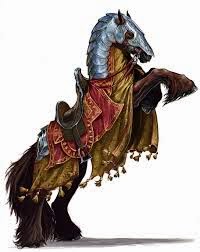
The kind sends the pot maker a warhorse.  The pot maker tries to play it off like it is no big deal, but once everyone leaves, he discovers he cannot get on this thing without falling off.  He bids his wife tie his feet beneath the horse, and his hands around the horse's neck.


She does as he wants, but when she hits the horse to get it moving, it charges straight for the front.  The pot maker, in terror, manages to get his hands free, but he has nothing with which to hold on and he is terrified and screaming at the top of his lungs.  The screams make the horse run faster.

They go through a banyan swamp, and the pot maker reaches out to grab a tree, hoping to slow the horse.  Unfortunately, he rips the tree out of the ground.  Luckily, he can hold it over his head to help his balance.


The enemy army knows a scout is supposed to be coming, but they haven't seen one yet.  When the scout does appear, he is screaming at the top of us lungs, brandishing a tree, on a rearing horse.  This terrifies the other army, and they desert en masse.

The pot maker is rewarded with more gold than he could ever hope to spend, but in the end, he goes back to the factory everyday and makes pots with his friends because that's what he really enjoys.  Now, of course, they totally believe all of his crazy stories.

This would be a fun story to share with adults, but I spend most of my time working in schools.  So, if I were going to add this tale to my repertoire, I'd have to craft it for schools.  Check out the posts in the series Crafting 101 to see the steps I follow.


1.  Crafting 101: Questions I ask

2.  Crafting 101: Building the Structure

3.  Crafting 101:  Flesh On The Bones

4. Crafting 101:  Donkeys and tigers and War Horses., Oh My!

5.  Crafting 101:  There Are No Little Characters...

6.  Crafting 101:  Putting It Together

7.  Crafting 101:  Introductions!

Happy Telling!

Thursday, March 26, 2015

Storytelling: The Beauty and the Magic


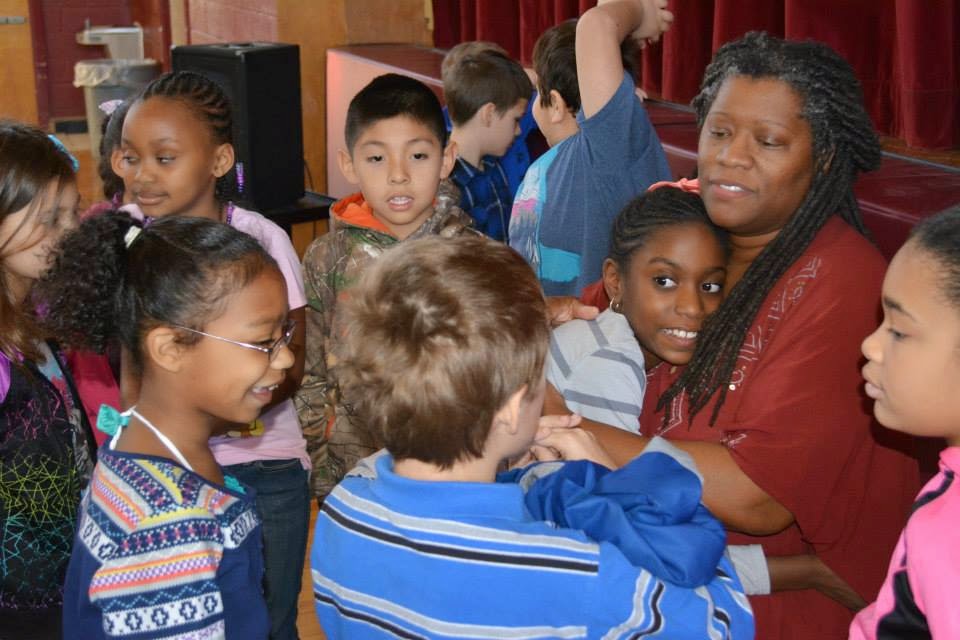
Johnsonville Elementary 2015


I spend a great deal of time talking about the trials and tribulations of being a professional storyteller, but there is obviously another side to it or we wouldn't do it.

Storytelling is awesome.

When I use the word 'awesome' I don't mean it in the frivolous way that we toss that word around in our everyday vernacular.  'This shake is awesome.  That color is awesome.  The episode of that show was awesome'.

I mean it in the way Wesbster defined it; causing feelings of fear and wonder : causing feelings of awe.

I have wonderful experiences with audiences all the time that put a big grin on my face and make my heart soar.

Johnsonville Elementary March 2015


There are too many to list, and far too many to share, but I will endeavor to put forth the most common ones.

One of the fun things that happens is that I am lost in story when I tell.  I am surrounded by it and carried by it.  When I tell Sody Saluradus, I have a section where I sing the Saluradus Song with my eyes closed.  I can see the road, the morning sun filtering through the trees, and smell the fresh air.  When I open my eyes and see the audience, I am always a little surprised.  I know they are there, but I almost expect to see the country road I'm traveling.  I've been telling this story so long one would think I would get used to opening my eyes and being in an auditorium instead of in the woods, but I am always surprised!


It is not uncommon for the audience to want to reflect the story back at me.  I see them doing the hand movements, voicing the words, and watching their bodies and faces get as lost in the story as I am.  over the years I've watched people try desperately to sit on their hands during a storytelling set, so I have added more and more audience participation.  I know what it is like to want to move around in a story, and how hard it is to stop once you start!  I actively invite the audience to play.


It is always terrific when the audience members lose it during a story and surprise themselves.  it is equally cool when an audience figures something out at the same time and the share an 'aha!' moment.


I love watching lightbulbs go off across the audience in waves.


Having little voices, and adolescent voices demand to know when you will be returning is also fun.  They always want to know when I am coming back for more stories.  "Are you coming back on Monday?  Will you be here next week?  Are you coming back next year?"  Both kids and teachers will ask this question.

It is cool to connect with someone only to have them realize they've seen you on stage somewhere years ago.  It happens all over the place.  Apparently, when I am in my civilian clothes, it is hard to recognize me!


It is fun to have some giant, adult man who can look down at the top of my head realize I told him stories when he was in third grade, and he totally geeks out about it.

I actually attend services with a fellow who occasionally reminds me that he used to listen to my stories when he was in second grade back in Pennsylvania and it is still wild to him that he knows me in person.

It is fun to have teachers amazed that students would sit and listen to you for 45 minutes to an hour without stop, and still have a good time.

"You got fifth graders to give up PE and not care.  That's amazing!"


it is really wonderful to have people tell me that I remind them of Jackie Torrence, one of my heroes and an early mentor when I was just beginning.


It is cool to spend time talking to the kids and learning things from them.


It is neat to have someone decide that they absolutely love storytelling.


It is wonderful for kids to tell me that they know stories, or someone in their lives tells them stories.

The list of things that happens when you go into a school, the amazing things kids say, the joy people have at sharing stories, the bonds you build with an audience, the amount of joy and laughing you bring, the thought provoking stories you share, the times when the audience makes you laugh as much as you make them laugh, and the sharing of tales.

'My books circulate when you come to tell stories!' The media specialists tell me.

'Kids demanded to see the videos on Bookhive  and Youtube when we got back into the room!' Teachers tell me.

Do the monkey noise!  Talk like the mouse!  Do the owl!  Can we hear another tongue twister?


There are lots and lots of things that can be said about being a storyteller.  It is extremely fun, full of its own kind of magic, and it feeds your soul.  It is a roller coaster ride of laughter and surprise.


About a week ago, I found a site that catalogued all of the Let's Pretend records from my youth.  I was shocked.  The MP3s were free, and I downloaded all of them .  The song wasn't there, but the tales were just as I remembered them.

The magic of those Let's Pretend stories are with me still.  I love the fact that I get to share that kind of magic with children all over the world.

Storytelling is amazing....but don't be fooled, it really is hard work!

Happy Telling!

Wednesday, March 18, 2015

A Tale Of Two Schools: Same County, 7 Miles, A World Apart

NC State House

I think that there should be a law that states: Before any politician can cut funding to schools, they should be forced to teach in the most vulnerable school in their district for two weeks, and figure out how their legislation is going to impact those kids. 


Take what happened recently.  I worked in two schools on the same day.  One school was in an old, so last century building that desperately needs to be rehabbed or closed and possibly rebuilt.  It is understaffed, doesn't have adequate services for the special needs kids, does not often have assemblies, and clearly needs more support for the teachers. 


Less than ten miles from the first school, in the same county, I worked in a second school.  This school is gorgeous.  The building is beautiful, there is plenty of staff for the students who need special attention, the kids are relaxed, the staff is less stressed, everyone is more cooperative, and the kids are obviously getting more support.
this is not the actual school, but you get the picture...nice and new


When I arrived at the first school, I had an interesting conversation with a staff member.  I asked a question I often ask when I come into a school.

“What is your demographic here?”  There happened to be an African American girl walking through the gym. 

The teacher pointed to the girl and whispered, “They’re mostly like that.  African American.  But they’re pretty good.  They can be respectful.”  This person continued to talk about ‘them’ and how it is to work with 'them'.  Several other comments were made to suggest that these students were doing projects that were not all that impressive, but impressive enough for students like 'them'.

I had a moment.  I thought, ‘Doesn’t this person realize I am an African American?’  It never came up.

I couldn’t decide how to respond to this.  Instead, I just watched.  As the students came into the gym, this teacher was quite wonderful, and the children enjoyed this person.

There were several students who were taken out of the area even before the show started because they needed extra support, and the school did not offer it.

During the course of the first show, the students were told under dire penalty that they must be quiet and pay attention.  Only thing is, many of the teachers didn’t bother to model this behavior, and spent most of their time talking to each other during the assembly.  Others took this time to stare at their phones and surf the internet.  There were some teachers who actually participated, but they were not in the majority.  There was a buzz going on during the show, but it was not the kids.

My apologies to these chatting teachers, who are probably not disrupting an assembly!


At first, I attempted to get the teachers to participate with me, but they actively ignored me and my concern was that if the kids saw how disrespectful most of the teachers were being, they would decide to follow suit.  Some of them did, and the teachers swooped down on them and corrected them quite harshly.  It was madness.

The second set was better.  The teachers participated, did not talk, and most of the kids were all right.  I attempted to get a couple of girls to straighten up for the last story, and they turned around, but because I corrected them from the stage, they were escorted out of the assembly.  They had a substitute, and that person was enjoying his phone, and didn't bother to do any discipline with the kids.  It was kind of a mess.


Then, I had my two shows in the afternoon.  It was so much fun.  The kids had a great time.  There was a small group of kids in the back who had various issues, but were able to stay in the assembly because there was staffing to sit with them, and help them be successful.

With a bit of minor correction, which you have to expect, the kids were very successful, and we had a wonderful show.

I'm in Martinsville here, not today, but I am having a great show!


The make up of these schools wasn’t appreciably different.  The first school was probably 85% African American; the second school was maybe 75%.  The economic status of these kids was pretty much the same.  All of these kids will be attending the same Middle School, which is also gorgeous and new with all the bells and whistles.  So, at least there is that. 

There were many problems at the first school that went from the strange application of discipline, the way the staff interacted with the students, the students' reactions to each other, the atmosphere in the building, and so many other things.

There were also wonderful teachers at the first school who are clearly doing a great job.  There were enthusiastic, helpful staff members who were wonderful.  I have no doubt most of the teachers are doing what they can.  I love teachers, and salute them because I would suck at being a classroom teacher, and I appreciate people who do this work.  Sometimes, however,  I stare in amazement at the choices some of them make.

I am always exhausted after days like this.  I consider how much funding is being cut from schools.  I can only imagine what these cuts will do to the schools that already suffer from a lack of support for their students, EC students, kids who need writing or reading recovery, those who lag behind in math or science, and those who need extra material because they are bored.

I am thankful for the arts councils that bring me into the schools.  I wish there was much more funding for arts councils so more kids could spend time with professional writers, singers, performers and visual artists of all types.  I wish every kid had enough support to be successful whether they need more challenges, or because every day they struggle with challenges of their own.  We owe it to them.  We owe it to ourselves.  We owe it to the future.


Fund Our Schools!!!