Tuesday, February 4, 2020

Day 4 - Charles W Chappelle - A Man For His Age

The United States Aeronautical Reserve
Charles Ward Chappelle was born in Eatonton, GA in 1872 seven years after the end of the Civil War.

His father, Reverend George W Chappelle belonged to the African Methodist Episcopal Church. His mother, Anna Johnson Chappelle was a homemaker, Reverend's wife, and the bearer of eighteen children.

Perhaps it was the rough and tumble of growing up in the midst of this brood that gave Charles his drive to set himself apart.

He started working odd jobs by the age of ten. He worked in lumber yards, laying brick, and any other type of work a ten-year-old could find. Effective child labor laws would not go into effect until the 1930s, so there were plenty of things he could do to earn money and help his family.

The Knox Institue
The Chappelle family must have had some means because they sent young Charles to the Knox Institute for primary and secondary school. This was a private school for black children in Athens, Ga.

After he graduated from Knox, he attended Morris Brown College in Atlanta, Ga. This institution was established by the African Methodist Episcopal Church. I do wonder if he might not have gotten a break on tuition seeing as his father was a reverend in the church. Not that it matters, I just wondered.

Charles also took correspondence classes.

At the end of all of this education, he emerged into the world with training as an electrical engineer and architect. Which means his first job was teaching in White Plains, GA. Obviously.

Charles moved to Philadelphia and worked as the first head electrician of US Steel for a time.

Then -

He moved to Manhattan and worked as an architect and though several sources say he designed and erected some buildings, I have not been able to find out which ones, so I have to assume they weren't landmark type buildings.

Around this time, he started visiting Africa. He was interested in how our country might improve trade between the continents.

There is no telling what might have happened in Charles' life if the Wright Brothers had not managed to make the first plane in 1903. By 1908, powered flight was all the rage. A new age had arrived. The public wasn't sure they believed it, but the very idea was incredibly exciting.

The buzz and potential of powered flight intrigued Charles. He was as taken by the idea of airplanes as any other American. He became a member of the United States Aeronautical Reserve, and over the course of a year, built a full-sized plane by himself.

In 1911 he entered his craft in The First Industrial Aeroplane Show at the Grand Central Palace in New York City.
Grand Central Palace

The trade show was to get investors interested in building planes for domestic use.

Charles was a hit. He was the only black person to enter a craft, and his participation garnered national media attention.

His plane was also a hit. It was noted for its unique design and capabilities. It was built to safely fly long distances.


There are two bits of information to relate about this event.

1. Charles received a medal. Some sources say he was given it for being the only black person to exhibit. Some suggest he won some kind of award for the design of his craft.

2. His model was put on display at the United States Aeronautical Reserve Headquarters.

Later in 1911, the first African American plane manufacturing company was established, and Chappelle served as the vice president for a short time.

Then, because why not, he became an international businessman. In 1913 he established a trading company that was set up to bring goods from Africa to America. The African Union company invested in building infrastructure - particularly railroads - in Ghana to facilitate trade. He used his contacts in the US Steel industry and the contacts he'd made with organizations in his other pursuits to build a very successful business. He ran this company until 1924.

Charles apparently lived in Africa at times, and in other parts of the US over his years running his company before being bought out and returning to Philadelphia in the 1920s.

Eventually, he went back to Philadelphia and worked for the city in the department of lands and buildings.


He died in 1941.

Charles W. Chappelle was a remarkable man who altered the world just by walking through it and being himself.




Monday, February 3, 2020

Day 3: Henry Blair - Seed Man


In 1807....

Thomas Jefferson was president -

Aaron Burr was accused, indicted, and then acquitted of treason -

The Clermont, Robert Fulton's first American steamboat, left New York City for Albany, New York inaugurating the first commercial steamboat service in the world - 

The Cotton Planter
America enacted the Embargo Act of 1807 because France and the UK were getting frisky with American citizens and goods on the high seas during the Napoleonic War -

Henry Blair was born in Glen Ross, MD.

As with many black inventors in the early 1800's, we know very little about his personal life. I suspect this is partly because he was illiterate and could leave no personal record.

What we do know is that he farmed his own land. He created two farm implements.

The Seed Planter was patented in 1834.

This resembled a wheelbarrow. The seed was in the container. As you pushed the contraption the seed would be released and then covered with soil.


The Cotton Planter was patented in 1836.
It was meant to be pulled by draft horses. Two shovel-like blades split the ground. The seeds were sown behind the shovels.

His devices were meant to make the back-breaking labor of farming a bit easier.


There is nothing in any source that I could find that suggested he was enslaved at any point in his life. He is always described as a free man who worked his own lands. 

I have seen some references that suggested he was a successful farmer, but I haven't been able to find enough information to substantiate this claim.

We know he was illiterate because he signed his patents with an "X".

He does have one special claim to fame.

He was the second African American in the United States to file and receive a patent.

A corn planter still in use


So, here is to Henry Blair! A man who was part of the legacy of farming in America...and Zambia! The corn planter in this picture is still in use in Zambia.

That is indeed a living legacy!

Celebrate Black History 

Sunday, February 2, 2020

Day 2: Leonard C. Bailey - Money In The Bank

1825 was a pretty active year for America.

- Indianapolis became the capital of Indiana

- Nobody got a majority of the votes in the presidential election, so the House of Representatives voted to make John Quincy Adams the sixth President of the United States.

-The Erie Canal opened! This allowed goods to travel by water from Albany, NY to Lake Erie.


- Leonard C. Bailey was born!

When Leonard came into the world, there was no way to know how much of an effect he would have on America.

He was born into poverty in the North - the capital is to indicate that this is the Antebellum period or pre-civil war. His parents were free blacks.

Being a free black in the Northern United States meant that even though you could not participate in many areas of American life, you did have rights of movement, your free speech was not restricted, and you could earn money for yourself.

One of many barbers who offer free haircuts to kids who read to them.


Leonard was an enterprising young man. He became a Journeyman barber. Barbering has always been an acceptable and respected profession for African American men. They are still an essential part of communities today.


I could find no information about when Leonard decided that it was better to own the shop than cut the hair, but he did come to that determination.

This was a time in New York's history where abolitionists both black and white were united in advocating for better lives for free blacks. This air of solidarity sparked a surge of supported black businessmen, and an increase in opportunities for black men in New York's society.

By the time the Civil War broke out in 1861, Bailey owned and operated a string of barbershops in the District of Columbia.

As the Civil War raged in the South, he kept his business running. He became part of a burgeoning black upper-middle class by the time the war ended in 1865.

In 1868, the fourteenth amendment was ratified. For the first time in American history, African Americans were granted citizenship and given the right to more fully participate in the American experiment.

A year later, this led to a historic event: Leonard served on the very first integrated jury in America.

The First Unsegregated Jury


In 1869, six black men and six white men sat in the jury box together and listened to the tragic, and scandalous tale of Millie Gaines.

Millie, a black woman, was having a love affair with a white man named James Ingle. He'd gotten her with child, and then refused to support her.

Well, she was not having it. She entreated him to do the right thing.

He started seeing another woman, and that was one step too far for Millie. She procured a pistol and an ax. After he returned from his date, she went into his rooms and attempted to shoot him. The pistol jammed. So, she took the ax and brought it down on his head a few times. That did the trick. She then took herself off to the police station and turned herself in.

The result of the trial? They acquitted her because she was clearly suffering from momentary insanity.

They deliberated for less than five minutes.

Gentlemen were never to use a woman so, and if they did what on earth could they expect? Leonard came to national attention for the first time when the trial was widely covered in the news.

A wealthy man who was respected by everyone who'd served on the first integrated jury is not a bad legacy.
source

He was in no way finished.

He was also an inventor.

A number of his inventions were adopted readily by the United States government


In 1883, Leonard invented a truss and bandage system that was designed to help patients with lower body hernias.

This was the first of his massively successful inventing endeavors. The United States Army medical board was a big fan of this invention and adopted it as a treatment.

He made a great deal of money.


In 1884, something happened that made him quite nervous. Grover Cleveland was elected. It was the first time a Democrat had been in power since the 1850s.

The Republican party was the party of emancipation, and they fought for the rights of African Americans. Fearful that the new Democrats would erode the newly acquired and hard-fought rights of blacks, he joined with other wealthy black businessmen to advocate for the rights of the black community. His voice had weight, and he used it to defend the black community.

In the meantime, he kept inventing things. Perhaps he got annoyed by standing in line at the post office. I have no idea if he did or not, but he invented a rapid mail-stamping machine and a transfer system for the railroads. (Lots of people invented things for the railroad!)

By the late 1800s, the fervor of the abolitionists who'd helped build up the fortunes of African Americans in DC during the days before the Civil War had fizzled. Eager black entrepreneurs, black families who wanted to buy houses or invest in education, black-owned businesses that needed improvements or investments discovered that the banks were uninterested in working with them.

Mr. Bailey stepped up once more. In 1888, he collaborated with seven other wealthy black businessmen to found the Capitol Savings Bank in DC. It was the first black-owned bank in America. He served as the president for a while, then the head treasurer, and eventually director of its finance board.


Five years after the bank was founded, America went through a financial crisis. it was called the panic of 1893. Banks were failing all over the country. In the midst of financial destruction in many quarters, the Capitol Bank stayed strong and solvent.

Leonard used his own fortune to procure a loan from another bank to float the bank through a perilous moment, and it honored every single one of its obligations during the panic.

Capitol Savings closed its doors in 1902, but it left a legacy of homes, businesses, and hope in its wake.


In 1899, Leonard invented another massively successful item: the folding bed.


The United States Army really liked this one.


Bailey made another pile of money.


He kept giving back his whole life.


He served as the director of the Manassas Industrial School for Colored Youth in Virginia.

He was a board member of the Berean Baptist Church of DC.

He was also a Freemason.

Leonard Bailey died at the age of 93 of a sudden illness. He is buried in National Harmony Memorial Park.

He was a man who spent his life in service to others and left a legacy of wealth-building to the future.


Wednesday, January 29, 2020

Self-Care and the Traveling Storyteller: Touring Like a Beast!


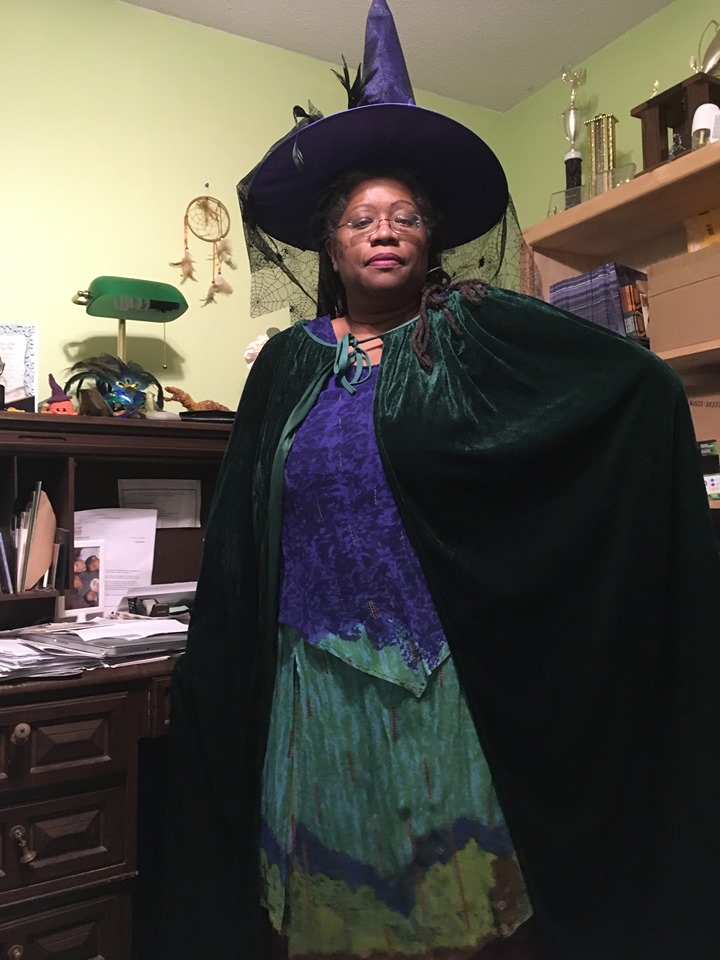
Yes, I do have a broomstick
I have had a lovely, slow couple of months. I slept late, went to the gym on a regular basis, had lovely home-cooked meals, and spent time writing, playing with my pets, and reading to The Mister.


February through May is just around the corner. I'm about to put some serious mileage on the broomstick.


I'll be in multiple states doing multiple venues - sometimes two or three in a day- until the school year comes to a close.


Touring can be like this sometimes. Self-care becomes a huge problem when you are going six days a week or more. Here is my checklist for getting ready to tour like a beast.


1. I keep a travel bag at the ready - If you don't have one of these and you tour regularly, I highly recommend it. It is just one less thing to think about.
The Travel Bag

2. Sleep - This is a great article by Kevin Kulp about the importance of making sure you get enough sleep and why.

3. Maintaining Your Voice - Your voice is an important, finite resource. Make sure you are doing your best to keep it healthy!

4. Maintaining Your Car! - If you don't have the skills or confidence to do this yourself...I don't, then make sure you get your car into a local shop or to your mechanic or to a dealership and have your chariot tuned and tightened.

Happy Car
5. Maintain your Stress Level - Even if you don't feel like you are stressed, if you have been touring, telling, driving, dealing with trains, planes, and automobiles, meeting tons of people, expending tons of energy, then you need to make sure you are stopping to smell the proverbial roses. Make time!

6. Snacks - I keep some snacks in the car to prevent from getting the munchies and buying things that are going to cause me headaches. I have a snack stash of nuts - usually pistachios, chocolate - I get interesting, fair trade chocolate bars and break them into snackable chunks. (If I don't break the candy bars up and separate them, I will just eat the whole thing.) I snack on orange segments, dried fruit, some kind of jerky, and chewing gum. I tend to bake myself some kind of lovely, gluten-free cookie.

7. Water - Make sure you are staying hydrated! Dehydration will cause all sorts of problems that will make you think you are ill! Drink enough water!

Bibliophiles Do It With Books
8. Books - I am an unabashed bibliophile. A personal preference, of course, but I always travel with at
least one long series and three stand-alone books. If I ever look to be in danger of reading them all, I can always swing by an independent bookstore!

I am sure you have other things you like to do. If you have ideas or suggestions, please share them. We do better when we support each other and reinforce best practices!

Happy Touring!


Monday, January 20, 2020

Storytelling Is A Thing


The security guard at my local grocery store: Hey! How have you been?

Me: Fine! How are you?

Guard: Can't complain. I haven't seen you around lately.

Me: Work takes me out of town sometimes.

Guard: What do you do?

Me: I'm a storyteller.

Guard: A what?

Me: A storyteller. I travel around and tell people stories.

At this point, I'm waiting for one of the common answers.
1. I used to tell stories when I was a kid
2. I'm a storyteller too, just ask my wife
3. I was taught you weren't supposed to tell stories
4. Some clever oneliner about telling stories that I've heard lots of times.

I didn't get any of that. He looked at me funny and started laughing.

Guard: You aren't serious.

Me: Yes. I am a professional storyteller.

That's when he said something that most people mean when they respond to me about being a storyteller, but have never put so succinctly.

Guard. That's not a thing.

I started laughing. He laughed with me, and then we got into a conversation. I'm pretty sure he wasn't guarding anything for the next five minutes. He was fascinated by the idea that you could be a storyteller. When I tried to explain what it was, he had other names for it.

Guard: So, you're a speaker?

Me: Yes, but that is only part of it.

Guard: So, you're like an actress on stage?

Me: Sort of, but I am not playing a single character. I have to do all of the parts.

Guard: So, you're like a stand-up comedian?

Me: I suppose some of what I do can be funny.

Guard: I had no idea this was a thing.

One person at a time is an exhausting way to let people know that professional storytellers are a thing. Luckily, I get to go into schools. Exposure to our work on the front end of a person's life is critical to building audiences in the future.

As I was leaving the grocery store, I thought about a packet of cards I just got from some middle schoolers. Two of them stood out for being amusing as well as reaffirming.


First, I was chosen over music and a nap.


The second was a confirmation that there are adults who know what storytelling is and are doing their best to share it with people.


So, yes, storytelling is a thing.

We are part of a continuum that has been moving through people as long as we have been able to communicate.

What I find is that many people have no idea how listening to a story can be all that engaging.

Newspaper and radio interviewers look at me in a perplexed manner as they ask how I think what we do is relevant or interesting in the age of video games and electronic media.

I always answer that people need stories even if they don't know they need them. I explain that we are an animal that has a highly complicated communication system and that stories and storytelling are an intricate part of that. Sharing stories face to face makes a difference.

The thing storytellers do is built into every single human being. We evolved to communicate by listening to each other's voices, watching body language, reading facial expressions, and feeling the tension in the air. Telling stories with each other builds social bonds and feeds our brains.

There are some biologists who believe that one of the reasons our brains evolved as they did was so we could figure out how to deal with each other.

"Human brain size evolved most rapidly during a time of dramatic climate change. Larger, more complex brains enabled early humans of this time period to interact with each other and with their surroundings in new and different ways. As the environment became more unpredictable, bigger brains helped our ancestors survive."

The language of how we move from one generation to another is all expressed as story. Whether we know it or not, storytelling with a living, breathing human is a thing all of us crave. Storytelling is present in our families whether we think about it like that or not. We all have those tales everybody tells about their uncle or sister or cousin.

What we do, as professionals, is combine all of that essential sharing and bond-building, and take it from family to community. That is what our role has been in societies since the first bard, Jeli, minstrel, hakawati, or purveyor of pingshu stood before a group of people and tried to bring us together, or shock us into action, or call for justice, or any other thing that storytellers do.

So, as we head into 2020, there will be many opportunities to introduce thousands upon thousands of people to storytelling.

We will take folks on tours through the universe, into herbal lore, back and forth through history, into the sea, through magical worlds of talking animals, gods old and new, through heroic journeys, into the hearts of our families and friends, on ridiculous adventures with completely made up people, through tall tales, true stories, and any other type of journey we can devise.

We will make thousands upon thousands upon thousands of people laugh, cry, think, hope, dream, dread, deny, remember, and argue. Some people will be furious with us for what we say. Some people will be shocked. Some will be content. Some will decide they want to be storytellers, and their journey will begin. Some will walk out and swear to never see another storyteller! Some will be amazed.

Someday, I hope that a friendly security guard, upon hearing I am a storyteller, will say:

"Cool. I like storytelling."

or

"Cool. What kind of stories do you tell?"

or

"My favorite kind of stories are..."

or

"I don't like folktales."

or any other thing in the world except the equivalent of - That's not a thing.


Happy Telling!


Thursday, December 5, 2019

Fabulaphobia - The Fear of Hiring a Storyteller

I have been a storyteller for thirty-two years. This is the only job I've had as a grown-up person. I get to travel the world and share stories with audiences of all ages. I love it.

One of the things that I have had to deal with over the course of my career is the fact that lots of people have no idea what a storyteller is or what one does. Sometimes I get quite frustrated by that.


If you've followed my blog for any period of time, you know I lose my cool every now and then.

If not, here are some links to some of my more colorful rants.


When Is A Storyteller Not A Storyteller?

When Administrators Attack!

They'll Never Sit That Long!


At the beginning of my career, I would go into high schools or middle schools and the principal would freak out.

Principal:  "Where is your stuff?"

Me: "What do you mean?"

source
Principal: "Don't you have music or drums or something?"

Me: "No."

Principal: "No?"

Me: "No."

Principal: "What are you going to do?"

Me: "I am going to stand in front of your students and talk for forty-five minutes."

You could see the steel trap closing around their brain. All they are thinking is, "When I find out who invited this person to our school, I am going to skin them alive."

When the show was over, they would walk up to me dumbfounded and ask that question many an artist has gotten, "How did you do that?"

I suppose I thought that a day would come when that would not happen. A day would come when people understood what storytelling was, and understood why it connects with audiences.

Alas, it is not to be.

Last week I was in a number of schools. A few of them were K-2 schools. I had a principal sit right at the edge of the stage facing the kids because she thought she was going to have to jump on the stage and save me after about ten minutes. She was amazed k-2 students would sit for forty-five minutes.

Last week, I had a middle school administrator inform me that if she didn't like my content, or I started to lose the audience, she had no compunction about jumping onto the stage and stopping the show. I did three. She didn't have to stop any of them. She was amazed.

In honor of this nonsense, I have decided to coin a new term.


Fabulaphobia - (n) (fAb-yew-la-foe-be-ya) - the fear of hiring storytellers.

source

There are still many schools and venues that are convinced storytelling will never work with an audience.

I fight this by sending schools in-depth information about how storytelling affects literacy, language acquisition, and vocabulary. I stress the fact that it improves language skills, communication both verbal and non-verbal, and it boosts confidence.

Still, people are worried that kids won't like it.

I am in residence for a second grade this week. The teachers are amazed at how much fun the kids are having working on kinetic writing and visualizations skills.

The teachers tell me that their curriculum no longer allows for the kinds of crafts kids used to do. Their imaginations are suffering because they don't spend enough time in unstructured play.

As I was leaving school today, the arts council board representative who sat in on my class said she was amazed at the way I was tying storytelling in with higher-level brain function as it relates to literacy.

I explained how the exercises worked and why I was doing them.

She said: "Somebody should do studies on how arts interact with the brain."

I replied: "We have lots of studies."

I left it there. sigh.

I have been in a number of schools over the last few weeks that were frustrating, but it hasn't been all annoyance. One school in particular sticks out for me.

It is a school with a heavy immigrant population. The ESL teacher deals with twenty-one languages. The kids sat in front of me in all of their multi-hued glory. They looked like America to me. Some girls had hijabs, some wore unicorn horns, some had cornrows, others had multihued thatch. The boys had everything from afros to shaved heads and much of their hair was multicolored and multi-length. They were every possible shade of brown from dark to light.

I turned to the administrator and said, "This gives me hope. At some point, these children will be in charge. They will grow up knowing what it is to have to become a polyglot to speak to their friends. They will grow up with kids from across the world. They will grow up understanding that everybody is "us" and that there is no single skin color or religion that makes a person "other".

The teacher smiled. "That's the most hopeful thing I've heard in a long time."

"Good," I said.

source


Then, I told them stories and we rocked the house.

For schools that do not suffer from fabulaphobia, the world is an amazing place.

Happy Telling!

Thursday, October 17, 2019

What To Do With a Squirrelly Audience? Some Techniques For Young Audiences

Squirrelly Audience? (source)
Every now and then you get a young audience that has no interest in sitting still. They squirm, giggle, and play with their neighbors. They are clearly unfocused and not in a space for some telling.

They are usually pretty easy to spot the moment you come into the room. There is a restlessness with them that you can feel.


There are lots of possible reasons that they are squirrelly.

Halloween Trivia?
- Are they excited because you are really near a holiday of some kind and they can barely hold themselves together?

- Have they just gotten back from a holiday and they are still feeling loose?

- Is this the first assembly of the year and they need to learn/relearn proper behavior?

- Is this a school that rarely gets assemblies and they have little experience with being an audience?


- Are you in a school with students who speak lots of different languages and many of the kids don't understand you?


You start the storytelling, and you can tell that only part of the audience is listening.

I faced such a group this morning. There were almost four hundred Kindergarten, first, and second graders on the floor in the gym.

They really wanted to be at recess, running up and down the halls, or possibly in gym class. Instead, they were in a space where they normally got to run around and play, but they were sitting together for something different.


How do you deal with an audience that starts like this for whatever reason?


Suggestion 1 - Use The Pack To Overwhelm The Individual

I make sure that the stories I am presenting are VERY interactive.

source
Young audiences have various abilities when it comes to listening silently.

Group participation tends to make even the daydreamers pay attention just so they can say the silly things, do the gestures, and be part of the group.

That goes a long way in gathering up the wanderers to become part of the telling community.


Suggestion 2 - You Can Use Some Simple Disciplinary Practices

If I see lots of poking or playing with each other before I begin, I call the behavior out upfront.

-Okay, everybody, let's keep your hands to yourself. If you play with your neighbor or forget your assembly behavior I will have you go and sit next to your teacher.

I try to catch the eye of the disruptor as I tell. I also try to give them a chance to make better choices.

Most of the time I don't have to move anyone, but sometimes I do. I ask them to go and sit by their teacher. I only do this with students who are so disruptive they are causing a small circle of distraction.

Today I ended up moving three kids. The rest of the audience calmed down after that.

Suggestion 3 - Give Them A Wiggle Break

My pre-k through second-grade set has a built-in wiggle break.

The stretch break involves the whole body so that each kid can participate to the best of their ability. There is an upper and lower body activity. I encourage the teachers to get into it as well.

I get them to march, breathe, stretch, dance about and follow visual and audio cues. I try to make it fun.


Sometimes the answer is that your young audience has not dealt with storytelling and doesn't really know what is expected of them.

Novice listeners might need some basic storytelling training.
You consume music and dance differently than sitting and listening to the spoken word without a book. Engaging their imagination without puppetry, costumes, or music could be a new experience for them.

source


The first story might be a little rocky, but with a little exposure, they crack the code.

Picking great stories helps!


Suggestion 4 - Make Sure You Offer Different Levels of Listening, Participation, and Action During The Performance.

When choosing stories for a wiggly audience, I look for tales that have lots of participation both physical and vocal.

I recommend stories that incorporate intensity, silence, and non-pedestrian sound for different levels of involvement. It is amazing how quickly they look up if you go completely silent! These are great techniques to catch their attention.

Hand gestures, call and response, physical cues, voices, rhythms, rhymes, and repetition are all good choices. Oh, and don't forget that three minute or so wiggle break! It will make all the difference.


Good Luck!

Strap in and enjoy the ride!

Happy Telling!