
Sunday, January 18, 2015

You Have To Be Carefully Taught: Reflections on MLK Day.


I was almost seven months old the day Martin Luther King Jr. was killed.  My mother was living in Beaumont, TX with my elder brother and me.  As a young army wife, she was undoubtedly getting ready for her next move to Fort Benning, Ga.

Most of my young life, I wondered why my parents didn’t take part in the whole civil rights movement.  Why didn’t they march?  Why don’t they have stories about ‘being there’?  One of the most important movements in the history of our country, and they missed it.  What on earth were they doing?


My parents grew up in Texas.  Both Beaumont and Ft. Worth were very segregated.  They went to black schools.  In elementary school it was a neighborhood school.  Middle and high school wasn’t anywhere near their homes, and they had to get up early to take busses to those schools.  They passed many other schools that were much closer.  My mother always points out that in the service of segregation, the southern states were happy to bus black kids great distances to keep them separate, but when bussing was instituted to desegregate the schools, suddenly it was a terrible thing. 


My great grandmother raised my mother.  Topsy Lewis didn’t grow up with Jim Crow.  Jim Crow was something that came into vogue to make sure that black folks didn’t forget that they were black.  It burned my great grandmother no end to have to sit in the back of the bus, so she took it as little as possible.  In fact, she stayed in her neighborhood, a place called The Bottoms, rather than deal with the outside world.

My great grandmother taught my mother a number of lessons.  Here are a few of them.

-Your money is the same color as theirs.  If you can’t go in the front door and spend it, you don’t go in there at all. 

My mother never went to restaurants or movies unless she could go in, buy popcorn, and sit where she wanted.  Guess how long it was before she went to a movie?


-Don’t ever let anyone tell you that you aren’t good enough.  Anyone who would think that about you doesn’t know you.

My mother took this to mean ‘don’t let anyone talk down to you’.  I remember one occasion in my childhood where we’d gone into a store to buy something, and the clerk said something offensive or condescending, so mom flashed her gold American Express, gave the person a little smile, and left after making a comment about finding a ‘better’ place to shop.

-Nobody will ever give you anything, ever.  No matter what else happens to you in life, you are black, and they will never let you forget it.  They would kill you before they would acknowledge any part of this country belongs to you.

My mother took this to mean that you have to be one hundred fifty percent better at whatever you do than the best white person just to be considered worthy to be treated only slightly better than less than.
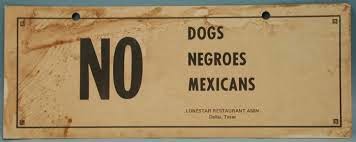


-Be careful.  Be wary.  Don’t put yourself in harm’s way.  Black people can’t get justice in this world.

My mother took this to mean that you stayed far from anything you knew was dangerous.  In my great grandmother’s world, there were quite a few things black folks in general, and black women in particular had to fear.


When the civil rights movement was happening in the 60's, it was not changing anything that was going on in east Texas.  My mother says they watched all that marching and yelling and struggle like a television show, because that’s how it was presented where she lived.  It wasn’t held up to be anything more than a few black folks getting above themselves, and see how much pain they are experiencing because of it? If they would just settle down, they’d stop getting hurt.


It made me think about the parts of the country that were against making Martin Luther King Jr. Day a holiday.  They argued that his work did not rise to the level of national importance.  To this day, there are still those who don't want his legacy taught in schools. 


If you look at the impact of Martin Luther King’s legacy on our country, it is obvious his life’s work changed the course of our nation, but if you watched the whole proceeding in certain parts of the country while it was going down, you would have grown up thinking it didn’t accomplish much of anything, and as an adult, you might actually be confused as to why this bizarre little hiccup in history is getting so much play.


My mother taught us variations on what she learned from my great grandmother.  How could she not? The world was a different place as we grew.  She raised us as an army officer’s wife, not a woman who took in washing to help make ends meet.  We always went to excellent schools, not segregated schools where our books were five years out of date, and the only time we got new materials was when the white schools updated their stuff, and shipped the old things across town to the black schools.  We lived on army bases, and basically left home first thing in the morning, spent the day riding, running, swimming, walking with kids from all over the world who looked different, spoke different languages, ate different foods, and had different ideas about how things worked.  

Military Bases Were A Tiny United Nations

As we head into 2015, our country has already seen a spate of racial violence. We are talking about race, and how we deal with it in society more than we have in a generation.  We are beginning to confront the unspoken fears, hatreds, beliefs, and anger that we have been unwilling to face because it is ugly, and it makes us look small and pitiful.


What will we teach our children?  What will be the lessons we give them because of the struggle that Martin Luther King Jr. took upon himself? 


Race relations in our country have never been better.  You can point to all the terror and darkness we see on the screen, and you can ask, ‘How can you say that?’ 


The answer is, once upon a time, we were carefully taught you weren’t allowed to talk about it, and if you did, you were only allowed to think about it one way.  That isn’t true anymore.

Once upon a time you couldn’t laugh at racists.  You couldn’t call them out.  You couldn’t even suggest they were doing something heinous and wrong.  If you spoke about race, you had to do it in the context of comparing races and saying which one was superior.  Any other kind of discussion about race made no sense.


These days we can’t shut up about race.  We talk about it all the time.  The difference is, talking about it qualitatively will get you in trouble. 


This has led to people trying to change the meaning of the word racist.

Now, if you talk about race at all or try to put it in context of a situation, there are those who will call you a racist or a race baiter.  There are also those who just want to pretend that race isn’t an issue at all, and if you say it is, you are promoting racism.

Photo credit


Then there are the people who keep announcing we live in a post racial world.  If only.


photo credit


My parents raised my siblings and me to be proud of who we are.  They raised us to speak our minds.  They raised us to stand up for what we believe. 


They forgot to raise us to be afraid of people who were different, or suspicious of different ideas.


They forgot to tell us there were places we could not go or things we could not do.

From my trip to Hong Kong

They even forgot to tell us that people would try to stop us because we were black....this caused some strange conversations when we hit our teenage years, encountered bouts of racism for the first time, and were utterly baffled about it, but that’s another story.

All of these ‘don’ts’ seem to have slipped their mind when they raised us.

My mother never marched in a civil rights demonstration.  My father never picketed, or crossed a bridge, or stood peacefully holding someone’s hand while authorities or regular citizens of a different color abused him, spat on him or called him names. 

Still, I think they did their part.  They taught their children.  They taught us very carefully.


Happy MLK Day!


Saturday, January 17, 2015

When Administrators Attack: The Audience Grouping That Gives You Headaches


This week was typical of winter work.  Weather threatened, but we kept our spirits high.  Then, the day before my first show, we got the word:  ICE.

If you do not live in the south, you have no idea how this word can throw terror into the heart of every administrator.  Now, it isn’t that we don’t know what ice is.  We do live in the south, after all.  Ice is that stuff that floats in your sweet tea to make summer bearable.


Before I’d even picked up my daughter from school for the day, the powers that be cancelled all after school activities.

I called the contact for the school I’d been planning to visit the next morning, and suggested we move the show to Friday since I had a different school on Thursday. She agreed.

By four o’clock Tuesday afternoon, they’d put the schools on a two hour delay for the following morning.

By eight o’clock that night, before even a hint of ice had begun to fall from the sky, they cancelled schools altogether.

Wednesday afternoon, my contact for the school that was booked for Thursday morning called.  We expected a two-hour delay, so we rescheduled for the afternoon.  That’s when things got really interesting.

Because of the change in schedule, the administrators decided to regroup the sets:  Kindergarteners in with the third and fourth graders for one set, and first and second graders with the fifth grade.  I later discovered this was because there was some group visiting the school who wanted to observe the kindergarten.


There are moments when I encounter something so strange I just laugh out loud.  My contact was aware that it was not the best combinations, but she had no control of the choices.

 This sort of grouping always leaves me sighing.


When I tell K – 2 sets, I don’t tell to the first grade.  I tell to the kindergartners and the second graders.  The second graders still enjoy the Kinder stories, and the second grade stories stretch the entire audience.

When I tell to 3 – 5, I tell to the Fifth graders since they are the tricky bunch in the room, and if you lose them, you have a problem.

So, the most difficult group to address for me are the Kindergartners, third and fourth graders.  Who do you tell to in that group? 


The stories I generally tell to the fourth grade are very long, involved, have plot twists, and are geared very specifically to them.  These stories will occupy the third grade as they work out what is happening, but they would be the kiss of death to the kindergartners.  The kinder stories are silly, fast paced, full of animals, bizarre sound effects, and they are about learning story structure in its most stripped down form.  How much extreme, plotless silliness can the fourth graders take before they become convinced that storytelling is for ‘babies’?


The first, second, and fifth grade was the easier of the two.  I told Janice Del Negro's Willa and the Wind, a story that works well with third and fourth grade.  I did a first and second grade piece called Too Much Noise, and ended it out with an original story composed by my children called the Prince and the SoccerBall The fifth graders lost all pretense of fifth graderness, since the only people in there to see them acting that silly were the first and second graders, and who cares what they think?


Here is a version of Too Much Noise.  Not the one I tell, but it is a good one.

The Kindergarten, third and fourth set was less successful.  Three wishes is a safe enough story, but the Kinders lose track of it, and they don’t quite remember what the point of the whole thing was, but they like the funny voices and sounds.  This means they laugh inappropriately, or they try to talk to me during the set.  Because they don’t have anyone else their size to take social cues from except each other, they learn how they are supposed to behave slowly.  When the first graders are in the house, Kinders tend to mimic their behavior.  On their own, Kinders can get difficult if you are not telling directly to them.

  One Man, One Fish, a story from China, is a much quieter story, which I tell because the Kinders are less likely to ‘fake’ laugh.  The kinders began to wiggle in the middle of the tale, and they were close to riot by the end.  We took a stretch break, and I changed up the program.

I told two stories for the kinders.  The Squeaky Door, and Johnny and Suzy thumb.  Most of the fourth graders participated without the fear they were doing something babyish, but there were a few, and there always are, who kept looking around with discomfort, and stared at me unmoving for the last two tales.  The third graders were willing to play, and the kinders loved those tales.


A reading of Margaret Read McDonald's version of The Squeaky Door.  Again, not the version I tell, but a good one to share.

Here is a link to Johnny and Suzy Thumb

http://www.cmlibrary.org/bookhive/zingertales/default.asp?storyid=15

Putting sets together for a diverse school audience can be challenging.  There are stories for everyone…but in a set like this, sometimes you have to wait until the teller gets around to your tale.


Happy Telling!


Thursday, January 8, 2015

Normal Never Sounds Exotic: Being a Professional Storyteller


I always feel a bit out of kilter before I do my first set after an extended break.  My first school show after a summer of libraries seems odd.  My first library after months of school shows seems impossible.  Sending out another round of manuscripts after I haven't done it in a while seems scary.  Going back to an old piece I put down so that I can take up the writing seems overwhelming.


Some might ask, 'If it is that hard to get yourself going, why don't you get a regular type of job?'


I am not much of a creature of habits, and I grow easily bored with routine.  I don't play well with others over long periods of time, and I do not do well when it comes to following strict guidelines for days upon end.  Rubrics make me unhappy, and pushing myself beyond the limit should be my choice and nobody else's.  The only person I really like competing against is myself, and I do not take well to being compared one on one with other people.  That's why I don't go get a regular job. I am not well suited for such a thing.


Today, one of the boys in fifth grade raised his hand during the Q&A at the end of the session and asked, "What is it like to travel all over the world?"


photo credit


I get this question a great deal from children.  I give all sorts of answers, but possibly, because it was my first show of 2015, I didn't remember my stock answer.  I just looked up and answered honestly.

"I've been traveling the world since I was about three years old.  I don't remember a time when I wasn't traveling.  So, the answer is that traveling around the world is normal.  It is normal for me to meet people from different places.  It is normal to speak, eat and share with those people.  It is normal to see the way other people live, and respect those differences.  It is normal to hear people speaking a language you can't understand.  It is normal to encounter different customs and clothes."

His question made me think of the other question I am often asked.  "What is it like to be a storyteller?"


Click here to see what you get if you search in google images for pictures of storytelling


As sometimes happens when I utter an unexplored truth, a number of things hit me at once.

I've been an itinerant storyteller, and professional writer for twenty-seven years.  I've never had another type of job since I've been an adult.  For me, what I do, the places I go, the choices I make, the fights I have to fight, the hurdles I have to jump, and anything else that goes with the job is normal.

What does that mean?

Standing up in front of people is normal.
Making odd sounds is normal.
Making bizarre faces is normal.
Putting 45,000 miles on my car in a year is normal.
Writing books is normal.
Writing articles is normal.
Writing thirty or more drafts of a single document is normal.
Flying in planes is normal.
Working with interpreters, sign language or other is normal.
Seeing my name on books in a bookstore is normal.  (It is always fun, but it is still normal)
Being recognized by people I don't remember or know is normal.
Insomnia after a bizarre travel schedule is normal.
Bizarre travel schedules are normal.
Kids saying incredibly odd, funny, sad, interesting, mind blowing things to me is normal.
Adults making odd, off hand, sometimes racist, strange, or brilliant comments to me is normal.
Reading literature meant for kids, middle grade readers, or teenagers is normal.
Speaking in public is normal.

There are so many things that are just part of the landscape of being a storyteller, that I never think about what I do as exotic.  I know it is different, but when you boil everything out of it, storytelling is a job.  You can love it, and it can make your soul sing, but if you are doing it for a living, it is still a job.

Told this story today


Today was my first show after three week break.  Perfect audience, nice teachers, lovely administrators, wonderful space, excited kids...it doesn't get better than that your first day back.

I'm glad today brought me an easy, fun, relaxed show.  It was a good way to begin 2015.  The hinges are oiled, the rust is rubbed to nothing, and the panels are polished.  Am I ready for the full frontal assault that is February?  No, but I've still got a few weeks to get my rhythm back, and my mojo groovin'.


I don't expect all of the shows to be as easy and perfect as the one today, but that's all right because if the situation is nothing else, it will be normal.

Happy Telling!


Wednesday, December 31, 2014

Happy New Year's Eve: Let's get ready for 2015!

Well, another year is coming to an end.  Tomorrow, another year will begin.  I look forward to all of the trials, tribulations, joys, and discovery 2015 will bring.


I want to thank everyone who stopped by to ogle, linked in and perused, read faithfully, shared a post or two, or just happened upon me for a moment.  This is a labor I didn't expect to enjoy or sustain, so the fact that I'm still doing it is quite shocking to me at times!

I've got some ideas for the blog for the coming year.

I am planning some interviews with a few of my favorite tellers.

I'm thinking of doing an internet series, and I'll write about it as well as post it to Facebook.

I'm doing an assortment of conferences, festivals, the occasional showcase, lots and lots of storytelling, watching one kid go off to college, and one possibly going off to boarding school, so I suspect there will be posts about those stories culminating all over the place.

I'm going to try to get my husband/business manager to do a post about what it is like to manage a storyteller...he might have to dictate it since he doesn't really enjoy writing and finds it difficult.

I'm going to ask my 15 year old daughter to write a post about what it is like as a kid to grow up in a home where storytelling and fantasy are just part of the day to day life, and what it was like to write her first novel at the age of 14.

I'm going to ask my 18 year old son to write a short post about his thoughts about leaving home and have him reflect on being a sculptor who wants to storyboard for video games.

Yes, I've got  number of things I think will be lovely.


However, before I embrace 2015, I need to spend this last day of 2014 celebrating the fact that quite some time ago a fella took a chance on marrying a full time professional storyteller.

Today is our nineteenth anniversary.  A life filled with stories is the best kind of life you can have!


Celebrate 2014!  Best wishes for 2015!

Happy New Year!

Thursday, December 4, 2014

Tales From The Trenches: Telling It In Schools


photo credit


Telling stories in schools is not for the faint of heart.  After twenty-seven years of touring and telling, I still have days where I see things I have never seen before. 

Sometimes I don’t think you could pay me enough to do what I do, and other times I really ought to be paying the school because I learned so much from their students.

All of these things happened this week….

I worked with kids who have never had an assembly at their school, and not only did they not know how to behave, they didn’t even really get the concept of what we were all doing there for the first ten minutes.  After that, they settled in and were mostly quiet.  They stared at me in confusion for a big chunk of time, but they did listen.  By the end, I think most of them decided they enjoyed the storytelling.  Either way, the sixth graders waved at me like three year olds when they saw me in the hall as I walked out of the building.


I encountered kids who clearly go to the theatre all of the time as well as symphonies and opera, and asked cogent questions about what sort of art they would be watching.


After a particularly difficult show with third through sixth graders, a fifth grade group came into the gym as I was packing, and asked if I’d tell them one more story before class started.  Taught them Johnny and Suzy thumb.  They were over the moon.  The gym teacher didn’t rush them.  In fact, he stood there grinning the entire time, not even caring they were eating into his class time.  Score.


One school informed me that their lunchtime started about ten minutes into my set, and they were going to have to take a couple of classrooms out of the assembly at that time.  Oh, and after that, every five minutes another group was going to have to leave.  That wasn’t going to be a problem, right?

At another school, all of the work I do tying the stories into character ed was for naught since not a single teacher attended the set, and only one person stayed behind to monitor the kids.  The kids were good, of course, but half of the assembly is lost when there is no chance that the teachers can do any follow up at all.

I got an unanticipated, spontaneous standing ovation from a first grade class.  First time in my life six year olds have given me that sort of response.


Had an arts representative pre-book me for the following year before I left the building.

Had a principal tell me that she didn’t care how close we were to the dismissal bell, she wanted me to tell one more story…and I did.


Worked in schools where the audience was attentive and it was easy.

Worked in schools where the audience had to be convinced that watching was worth their while, and I earned every penny.

Did I succeed in all I wanted to do?  Nope.

Did I share an arts experience with lots of kids?  Yes.

Did I have some fabulous sets that were absolutely perfect, and I felt like a magic person when I left the building?  Yes.  As I always say, sometimes things go well, but every now and then I totally rock!


Did I touch at least one kid’s imagination or spark of creativity in some very important or special way?  Who knows?


Did I convince one kid that if they have a dream that is big enough they should follow it?  I hope so.

Either way, here are some simple rules of thumb I follow that have served me well.

1)   Record the stories you tell in each venue.   You can either use your computer, or some kind of diary. (I save the information in an EXCEL spreadsheet.)  I know that some tellers use journals, but I’m too prone to lose something like that.  I type in the name of the school, the year, the month, grade-levels I saw, and what I told them.


2)   Because I see many schools multiple years, I have also put together some story sets that last exactly 45 minutes.  They are prepackaged stories, and I’ve divided them into ‘set years’.   So, the first time I visit, your school gets this set, the second time, a different set, and so on and so forth.  It means that I can control the time as well as having stories that I know work well for different grade levels.  I start the rotation again after about four years.

3)   Know that sometimes your set years aren’t going to work because of unanticipated events.  i.e. ‘We’ve decided to add the sixth grade to your K – 2 assembly, that’s all right, isn’t it?’  So make sure you have other alternatives, and be flexible!

4)   Be very polite to the office staff and the custodians.


5)   Ask about the school before you begin.  Find out if there is anything the students are dealing with, or if there are any concerns the staff might have.  You should also find out what the staff members consider their strengths.  As you tell, consider the things they’ve told you, and you can work their concerns and strengths into your stories.  I also ask about reading levels and what sorts of things the kids like.

6)   Teachers work hard.  Give them a break, but invite them to participate with the kids.  Sometimes they will and sometimes they won’t.  Invite them anyway.


7)   Carry hand sanitizer with you because kids want to touch you and there is no telling where their little hands have been right before that.


8)   Adjust to your audience; don’t expect them to adjust to you!


9)   Don’t be afraid to call out a kid who is misbehaving.  If the teachers are really focused on you, they won’t necessarily be paying attention to the kids.

10)                    Remember, you are going to have bad days.  Learn from them, and keep on going.

So, eight elementary schools in four days, and tomorrow I begin a tour through middle schools that will last through next Friday.

The work is challenging, interesting and soul satisfying.  Oh, and you can get paid to do it!


It doesn’t get better than that.

Happy Telling!