Tuesday, February 2, 2021

Day 2: The historical Lens Was Cracked!


"Everyone thinks they're the good guy - no one thinks they're the bad guy. Even Al Capone thought he was misunderstood."
 - Amaryllis Fox - former undercover CIA operative

As an adult, I realize why my textbooks in history were so skewed and strange - 

The people who wrote them had a world of internal biases that were seen as "truth".


1, Western Society is the pinnacle of civilization

2. Europeans did terrible things to almost every other group of people on the planet brought civilization to every other group of people on the planet.

3. Americans are all descendant of Europeans - 

4. Americans fought the indigenous people because they were attacked.

5. Manifest Destiny was imperative. There was no other way this could have happened.


At university in a Women's Study Course, I was intrigued by the concept of "The Male Gaze".

Though the term came into being around gender issues and sexuality, I realized that it had been the main problem in my history classes! Not because of sexuality but in terms of who is looking at the scene and who is making the choices about what I learn and see.

Compound that with teaching America the Beautiful, Free, Bold and Magnificent, and the lens you are staring at history through is cracked!

How I'd Reframe It!

Instead of teaching about European cultures as if they were the obvious way cultures should develop or as if they represented "civilization" and everybody else was "less civilized" I would have liked there to be a foundation for how we talk about cultures in general. 

Why were they different?

What forces shaped them?

With that as a background for talking about different kinds of people, we could compare the various cultures as they interacted to understand why the outcomes were as they were.

It would make what happened when Europeans encountered different civilizations more understandable, and it would have given me as a student more of an appreciation for different ways of thinking about the colonization of the world. 

HISTORY REFRAMED

1. All human beings, every single person alive, your ancestors and mine came from Africa. Africa produced the first modern humans. Human beings left Africa in waves and settled all over the world. 

2. As cultures developed in different parts of the world, their environment shaped the melanin content of their skins, the way they developed languge, what they valued, how they lived on the land, what sorts of shelters they needed, what was important for survival, and how they dealt with strangers. They created different traditions, had different sacred beliefs, and made different choices about right and wrong. 


3.  For Europeans, owning and controlling land (space) became the most important commodity. Europe occupies a very small amount of land. The more land you controlled, the richer and more powerful you were. 

4.  Western European civilizations had a high proportion of herd animals that would readily accept a human as their leader. Zebras can't be ridden, Bison are hella difficult to domesticate, and will revert to "wild" behavior if startled. Western Europeans also had a very small number of large, dangerous carnivores. This is due to a fluke of latitude, and where these animals settled out after the last Ice Age. This meant that Europeans lived in close quarters with animals. A number of diseases that infect animals jumped into the European population. These zoonotic diseases became common, and the longer they lived with them, the more tolerant Europeans became of the effects.

 
(Yes, I know. This is a basic lift from Guns, Germs, and Steel, but man, I wish textbooks had used that model to teach history instead of the confusing one they had when I was a kid!)

5. Western Europeans had a very definite belief that the Christian God had chosen which people were going to be wealthy or poor, held in high esteem, or dismissed. Your status in life was Heaven Ordained.

6. When Europeans encountered other cultures, many of them were culturally and philosphically ill equipped to view these "other" peoples as full human beings or anything approaching equals. Humans in general did not know how to deal with "different" people when they first encountered them.

Why does it matter what lens we use to teach history?

The biggest problem in  America right now? Much of the suffering we are still dealing with can be traced to the last two points!


America is still a strong reflection of the Western European Cultures that settled here. We are still treating people as if they somehow "organically" matter less!

Until we face the reality that points number five and six are sung into our bones from the time we start learning the history of who we are, this fight we have between the deserving and the undeserving is going to persist.

We are also going to continually produce people who look at the length and breadth of history and say things like this from former Republican Representative from Iowa - Steve King


This man is a product of a historical perspective that told him that his gaze was the only one that mattered. He certainly doesn't think he's a bad guy. He was just trying to save America from the non-white, multi-cultural infection that he is pretty sure is destroying it.

I am also a product of that history. I'm not a bad guy. I just want to be seen.

He has no reason to question the history as it was taught. As far as he is concerned, what it told him reflects how he has lived his life.

Me? I had no choice but to reject his view of history. Otherwise, I accept that I have no place in it. 


Day 2: The Historical Lens Was Cracked!

Monday, February 1, 2021

Day 1: Telling My Ancestor's Story

 Not Everything that is faced can be changed,

but nothing can be changed until it is faced.

- James Baldwin


I loved history when I was in school. It was one of my favorite subjects. I loved learning how the various moving parts and stories intertwined to create the wild tapestry that explained why the world looks the way it does. I especially loved Medieval history and European history. 

This was not because I found European history more interesting than any other kind. No, what I have realized is that I enjoyed European history because it was the only history that actually flowed and made sense. 

I also loved ancient history. I loved reading about Ancient Greece and Rome. 

These histories were also authentic to me.

Early American history always felt uncomfortable. Lots of African and South American history felt odd. 

Looking back now, I can put my finger on what it was about learning that history that was both uncomfortable and odd.

Europeans had been fighting, killing, and dealing with each other for generations. They had respect for each other even if they didn't like each other. They recognized each other's strengths and knew their history. 

When the textbook writers wrote of English, French, Roman, or Greek history, they were solid. They wrote with confidence, and they have gorgeous, sometimes horrific, full-throated confident language that showed those people and cultures as powerful or important in their own right.

Then there was the way they spoke of Africa...

Looking back, it is clear the people writing these textbooks learned about African History from people who only knew Africa from a Western European perspective. 

We didn't learn about African people.

We learned about the "discovery" of Arica as if it wasn't there before white folks found it.

We learned about the first encounters between Africans and Europeans as if the Africans were some other species of creature.

Columbus "Discovering" America

The same thing happened with the Incas, First Nation peoples of every other continent, and their cultures. Then, when they got to how those other cultures were treated...well, it just went from bad to embarrassing. 

There was no deep telling of who these "other" people were or what they had been up to for thousands of years. 

It was as if they were bit players in the great story of white men in the world. Which, let's be honest, that is how they were portrayed in my history.

No part of history really belonged to me or my ancestors. My only real worth was as a backdrop for the great white way.

There was a paucity of blackness or color of any kind in my "official" teachings of what human history is or was or that people like me had any hand in shaping it.

It made me feel small, insignificant, and as if I had no place.

I know, I know. Some of you are thinking, "No it didn't! Children really don't think about it like that. You are projecting your adult, been through the classes, looking at the research, remembering it wrong brain on your child self!" 

Nope. 

What I remember is clinging desperately to any and all references of blackness that were even somewhat kind, strong, positive, or meaningful.

I tried so hard to find ways to be proud of what and who I knew I was, to the point of my now being able to list three things that struck me in childhood.


1) The book I brought into Show and Tell in Kindergarten. The only one I had that featured a little girl "like me". My favorite book for many years.

This is the original cover

2) The poem that was read to us in music class. I don't remember which teacher read it. All I remember is that I was in second grade. I was at Sheridan Road Elementary School. The poem was by Mary O'Neil, and it was from the book Hailstones and Halibut Bones: Adventures in Poetry and Color


Want a Copy?


The poem that stayed with me that I kept repeating over and over and over in my head for about three years? The poem that still comes back to me as an adult, but it a different way?


Here is the whole poem:

"What Is Black?"


Black is the night
When there isn't a star
And you can't tell by looking
Where you are.
Black is a pail of paving tar. 
Black is jet
And things you'd like to forget
Black is a smokestack
Black is a cat,
A leopard, a raven,
A high silk hat.
The sound of black is 
"Boom! Boom! Boom!"
Echoing in
An empty room.
Black is kind -
It covers up
The run-down street, 
The broken cup.
Black is charcoal
And patio grill,
The soot spots on 
The window sill.
Black is a feeling
Hard to explain
Like suffering but
Without the pain.
Black is licorice
And patent leather shoes
Black is the print 
In the news.
Black is beauty
In its deepest form,
The darkest cloud 
In a thunderstorm.
Think of what starlight
And lamplight would lack
Diamonds and fireflies
If they couldn't lean against Black... (O'Neill, 1960).

3) The last bit of my childhood that I clung to when thinking about finding strength was the story of Wilma Rudolph. I loved this woman's story.


Who was Wilma Rudolph


I found out about Wilma Rudolph when I was in fourth grade. I wrote essays about her as my most admired American for the next four years. She'd worn braces on her legs when she was a child. I'd worn a cast on mine when I was little because my feet and legs were not in alignment and they weren't sure I'd ever walk.

She was an Olympic medalist! She was not given a chance to walk well, and she ran! She was black! She was black like me! 

I absolutely worshipped this woman when I was a kid.

Looking back now on those three tangible facts about what it meant to be going through school as a black girl in the '70s and 80s, I am both angry and sad for that kid when I think of all of the things she could have been taught. 

I'm glad she was surrounded by opportunities, family, books, music, laughter, love, hope, and teachers who looked at her, couldn't believe she was as smart, precocious and determined as she was -

 (these were not qualities that were normally assigned to black girls when I was little - I can guess this because I was literally the only black girl in most of the work groups, study groups, and classes I had through all of my k-12 education, and I know I wan't the only smart, determined, or capable black girl in every school I attended )

and pushed her to do what even she didn't know she could do.

So, as I approached February and thought about what I'd like to do to honor black history month this year, I thought perhaps I would do some retelling.

What would I have wanted to learn about what it meant to be black in America? 

What would i have wanted to understand about what it meant that my ancestors were enslaved here?

What would I have liked to have known?

What would I have liked to have felt?

So, I am going to begin to tackle that.

I am going to spend 27 days retelling this story. 

I won't get through all of it, there are centuries of information to unpack...but I can begin with a rough outline and expand from there.

So, here we go...


Day 1: Telling My Ancestor's Story

Day 2: The Historical Lens Was Cracked!

Day 3: I Couldn't Be Prouder - Reframing What It Meant To Be A "Slave"

Day 4: A New Generation: The Teenage Social Justice Warriors


Saturday, January 23, 2021

The Touring Performer - January 2021 Edition

I can spend every evening like this!

 Last January, I wrote a post about how I was preparing to put thousands upon thousands of miles on my car. I was giving tips about surviving the incoming touring season which typically lasts from February to May.

In fact, over the last decade, I've written similar posts. These are as much to remind me about how to survive my schedule as it is to share with others how I manage it.

Not this year.


This year's workflow is very different.


1. I don't even know most shows are happening - The David changes the passwords on the pre-recorded shows on Sunday. Everyone who has a show booked that week gets the new password for the link, and they have access for seven days, He turns the links "on" and "off" as needed.


2. I have to edit particular intros or outros. - The David sends me images or video clips for specific venues. I edit them into the pre-existing packaged show, upload the altered show into Vimeo and The David sends the link to the particular venue.


"I think she's frozen!"
3. I have a new show or shows coming on-line, so I have to record, edit, and upload new material - I head upstairs to the studio, record the necessary material, come downstairs to the kitchen table, load the footage into my computer, edit it, compose the set, put a copy on my external drive, upload the content into Vimeo, and interact with it like step 1 or step 2.

4. I have a festival coming up where they want pre-recorded sets - I follow step three, organize the information, and send the sets to a dropbox. 

5. I have live/virtual shows - The night before the show, I go upstairs to my studio, check to make sure the background I've got on the frame is the background I want to use, make sure I have my video camera charged because I record me performing for the computer and then I edit the recorded live zoom show and upload it into Vimeo. The school then has access to the recording of me live/virtual telling to them for seven days.

I have a hate/love relationship with Live/Virtual

There are so many things that can go wrong with this set-up!

1. The internet on one end or the other gives up because of Gremlins.

2. The internet slows down because of Gremlins

3. The connection is bad because of Gremlins.

4. People randomly unmute themselves because of people.

5. The sound goes wonky because of Gremlins.

6. The people in their little boxes forget that you can see them and they do something.....because of people.

7. The children in their little boxes totally know they can see you so they do something....because of children.

8. You are totally distracted by the people in the boxes and you lose your concentration.

9. You are totally distracted by yourself looking back at you and you lose your concentration.

10. Your neighbor decides to cut down the tree in his backyard in the middle of your set because of neighbors.

11. Some random dog decides now is the time to express his displeasure at the clouds because of nature.

We are not a quiet bunch!

12. Your son and husband start having a great, loving, loud, silly conversation in the kitchen and you have to leave the set, and remind them you are performing live. They are covered with chagrin because they didn't know they were that loud...family.

13. Pets. Let's just leave it at that.


The Bottom Line?

It is just as exhausting.

I'd rather not have to do it.

I am enjoying it. 

Live Zoom is Exhausting!
Yes, I do see the appeal of live telling. The kids can see each other and me and they can interact. There are some things that make it tricky, like when they decide to unmute themselves when they are supposed to be joining me or doing call and response. I love to hear the voices, but they come in at all different speeds and at different times depending on what's happening on their computer.

It makes a cacophony of sounds that I must stop and wait for because kids who either didn't or couldn't unmute also hear it at different times. The pauses are odd and the rhythm of the story gets wonky. Still, it is kind of fun to watch the kids grooving out to storytelling.

They are at home, so nobody is making them sit still. Some kids go full Charleston Boogie. Some kids don't respond at all other than to stare at me unmoving. 

I've watched twins fight over the best viewing spot to see the screen while I'm telling. I watched one little girl act out each and every story enthusiastically a second after the narration.

People who are really into stories are the most fascinating, distracting, amazing things to watch. I'm enjoying a show while I'm presenting a show!

There are some wonderful things about this brave new touring world.

This is the easiest touring schedule I've ever had.

I fill up my car about once a month instead of two times a day.

As for the grueling commute...There are about a dozen stairs I have to climb. Think about my FiftyThree-year-old knees!

Yeah, I don't feel sorry for me either.

I have never toured so extensively and to so many countries and still managed to sleep in my own bed every single night! 

I actually like The David. I'm glad we get to spend time together!

I am enjoying this as much as I can while I can!


Happy Commuting.


Thursday, January 7, 2021

Toxic Storytelling: When Reality Breaks


source
Before I graduated from university, I had a variety of different jobs. I worked as a receptionist at a doctor's office. I worked as a drone at an insurance company where I sat at a desk and put people's personal information into their files. I did a stint at Kinko's, and I did summer touring theatre.

I worked at the insurance company between my Freshman and Sophomore years at Northwestern.

While I was there, I met a very nice young lady who was the closest person to my age. Let us call her Anne.

Anne was married to a man who beat the hell out of her.

This was the second person I'd heard of who was being beaten by her husband. My mom worked with this woman, let us call her Tammy, who was also being beaten, but I didn't know that young woman.

I'd asked my mother about why Tammy would stay with a man who hit her, and she did not have a good answer. She said Tammy always made excuses about it.

I believed that if I ever met someone who was being beaten, I could help them by explaining they shouldn't put up with it.

source
Anne befriended me right away when I joined what was essentially a small office that was contracted out to do the grunt work of data input. (I think they send most of that kind of work to India these days) Anyway, the first day I was there she asked if I wanted to have lunch with her.

By the second day, she had a huge bruise on her arm. I asked her about it and she gave me some excuse. By the second week, I realized she couldn't hurt herself that much unless she lived in a house that was completely dark and the furniture was sentient and kept rearranging itself.


I spent a summer trying to understand how a woman stays with a man who is beating the hell out of her. Why? You know he's going to do it. You know there is nothing you can do to stop him. You know it's wrong.  He knows it's wrong. Why?

The answer was pretty straight up even though it was frustrating. It always had to do with stories.

What stories do you have to tell yourself to allow the beatings?

It was my fault.

He loves me.

He didn't mean for it to go so far.

He would never really hurt me.

I can't leave him.

I need him.

I was lucky to get someone like him.

He takes care of me.

Nobody else will ever love me.

He'll stop eventually.

If I get pregnant things will get better.

Toxic storytelling. 

You tell yourself whatever stories you need to tell yourself so that you don't have to face an uncomfortable or difficult reality. Once you internalize a toxic story, every incident must fit into that toxic soup in some kind of way for you to be okay. 

The longer you live in that skewed story, the harder it is to face that you might be wrong, or out of touch, or even the instrument of your own destruction.

At the time, in my nineteen-year-old innocence, I stood agape at such stupidity and reckless disregard for personal safety.

That was a long time ago.

I now understand it is not stupidity. It could be desperation, fear, or a vain attempt to control what is out of your control. 

Toxic Stories are often an attempt to make the world conform to what MUST be true if your situation is as it is. 

Toxic Stories are a stand-in for real answers. How can I feel this bad, angry, scared, or hurt UNLESS this is true?

I have since come to understand that Toxic Storytelling is at the root of a great many problems.

source


Conspiracy theories are the fruit of Toxic Storytelling. 


When large groups of people gather and pool their Toxic Stories - the problem amplifies.

Their stories are antithetical to reality. They are aware of that, but:

If it weren't true, so many people wouldn't believe it. 

In fact, it is true! 

Everyone who doesn't believe it is just wrong. 

In fact, everyone knows it is true, and they are just evil, lying, or stupid if they don't admit it!

Some of the people telling the stories know they are not true. They are just telling the stories to manipulate others for their own gain. Unfortunately, sometimes the manipulators start believing their own stories...that's when things really get out of hand.

The remains of the library


I am an unapologetic bibliophile. I am still saddened and upset about the sacking and burning of the Library of Alexandria by a hateful mob.


Yesterday, in my own country, I watched years of Toxic Storytelling collide with reality.

The Toxic Story that exploded yesterday:

Their leader appeared before them and told them that they had every right to be angry at the corrupt carnival of communists and evildoers that were about to destroy our beloved country. He told them that he wanted them to stand against the crime that was happening down the street from where they gathered. He extolled them to go down the street and make sure that justice was done!

What wrong were they trying to make right? What crime were they trying to stop?

source

The Liberal, Democrat, Socialist, Communist, Fascist, Evildoers in cahoots with George Soros, Dominion Voting Machines, China, and Iran have stolen our country by cheating in our last election! Brave Republicans are the only ones standing against this obvious crime! 

We must stop them from stealing this election!

We must stop them from counting these fraudulent votes!

We must force the horrible, weak, foolish, corrupt government to do the right thing and send the tabulations back to the states so that they can change the tabulations and make the person who actually won the fraudulent election the actual president as opposed to the person who the Liberal, Democrat, Socialist, Communist, Fascist, Evildoers in cahoots with George Soros, Dominion Voting Machines, China, and Iran say won the election! 


When they got to the capitol building, the symbol of everything that was wrong in their very Toxic Story, they were overcome with their righteous anger!

They were not considering how to solve a problem. How on earth do you begin to solve a problem as big as: The Liberal, Democrat, Socialist, Communist, Fascist, Evildoers in cahoots with George Soros, Dominion Voting Machines, China, and Iran -

Where do you even begin? What do you do about that? What is step one?

They didn't have anything but anger and a Toxic Story. 

It was the underpants gnomes kind of coup.

1. Mob the capitol

2. ?

3. Tr*mp is president forever!

Toxic Storytelling never creates anything productive or useful. Reality just won't let it.

Those people believed that somehow if they stopped the certification they could Constitutionally force states to resubmit their totals.

They are patriots!

They love America!

They have absolutely no idea how the government works and what rules it has to follow. 

That wasn't entirely their fault. Their leader doesn't know either. Still, he's the POTUS, so why would they doubt him?

Within hours the capitol was cleared, the Senate and House were back in session, and the electoral votes were certified.

Within hours, the new Toxic story began.

IT WAS A FALSE FLAG OPERATION BY ANTIFA!!!! OUR PEOPLE ARE PATRIOTS!!! THEY WOULD NEVER DO SUCH A THING! FAKE NEWS! FAKE NEWS!

I'm just glad there weren't many black folks there or I'm pretty sure they would have accused BLM of doing this. Well, it's early days.

Toxic Storytelling has always been part of humanity. There is nothing we can do to stop it. We can only counter it.

When the people in charge make no effort to challenge it, or worse yet, use it for their own ends, we get a mob at the capitol.

We have a great many Toxic Stories to unravel if we are going to go forward together in America.

I am happy to do my part:

Covid-19 is a real thing. It is very contagious and it can disable and kill people.

I never feel like it matters much that I keep saying that because the Toxic Stories about Covid-19 are pervasive, but I will keep at it.

Reality is rarely sexy. It is often scary. It is never easy.

Telling stories anchored in reality is the only way to face Toxic Storytelling, but it is a difficult lift. 

Toxic Stories are always much easier to deal with. You are never responsible for anything in your Toxic Stories unless your behavior makes you feel better.

That doesn't mean we throw up our hands and give up. It also doesn't mean we assume the people in the Toxic landscape will see the error of their ways. 

They might not be able to.

Toxic stories go deep. If they are then reinforced and exacerbated...you burn down the Great Library of Alexandria again, and again, and again...

Let's work to tell stories that help us face reality even when it's hard.

Today is a new day. Another chance to face reality.

My son took this pic when he visited Africa


Happy Detoxing -

Friday, January 1, 2021

Day 7 - The Last Day of Kwanzaa! Imani

Habari Gani?  What's the news?


 Imani - (i -MAH - nee)


Faith


Today is the last day of Kwanzaa -

Imani means faith.

We should strive to have faith in our people, families, and communities.

2020 really tested my faith...

It tested my faith in America

It tested my faith in common decency

It tested my faith in people's ability to tell the difference between reality and conspiracy theories

It tested my faith in people's willingness to learn

It tested my faith in my own ability to be patient, kind, understanding, or accepting.

(I am not typically good at the whole patient understanding thing, and I strive to be kind and accepting, but I am not always good at that either)

It tested my faith in the general whether or not America can survive itself.

Yes, my faith was tested, but it wasn't broken.

For all of the stories I watched or encountered about people tearing each other down, there were many more about people holding each other up.

Friends sent me facemasks at the beginning of this.

Healthcare workers went above and beyond!

People grasped each other's virtual hands and reached across the world to "embrace" each other.

Frontline (essential) workers in so many industries worked hard to keep things going.

Many people listened to science.

More people participated in our electoral process than ever in the history of our country.

I will focus on what moves our country forward, and continue to stand against those things that attempt to drag our country backward.

I will work to keep my faith in the universal human desire to be safe, have those we love be safe, and to care for those who need our help.

A quick story -

There was once a man who had a magic ring. He'd found it when he was young, and it changed his raucous ways and made him a pillar of the community.

He had three children. All of them were as raucous as he was in his youth.

The children didn't bother curbing their behavior. They all knew that someday their father would will one of them the ring, and that child will have the onerous task of caring for their siblings.

Well, the father - probably because of his misspent youth - died earlier than anyone could have expected.

The next day, each of the man's children came to the village elders. Each had been given golden rings with a note from the father claiming that THEY had the real ring.

A huge argument broke out amongst the children as each claimed they had the real ring. The villagers gathered and joined in the commotion. 

How could they tell who had been given the real ring?

One of the elders came forward. "We need not worry about which has the true ring," she said. "We will look at their behavior. The one who has the actual ring will change."

Each of the man's children stared at their ring. As they did so, they realized that they were certain that their father had put his faith in them.  

Their father had given the other two phony rings so they would not feel bad. Each of his children decided that they would have to work hard to be certain they cared for their siblings. their families, and the community.

The argument ended, and each of the young people returned home. 

in years to come their neighbors were amazed. Nobody could tell which of the three had been given the true ring.

It is amazing how having faith in people can change them.


Happy New Year!

Take the Nguzo Saba with you ou every single day!

See you in story!


Thursday, December 31, 2020

Day 6 - Kuumba - Celebrate Kwanzaa!

 Kuumba - ( coo - oom - BAH )

Creativity!

(It is also my 25th wedding anniversary!)


On the sixth day of Kwanzaa, we celebrate creativity!

Leave the world a more beautiful place than when you found it through your creativity!

This year?

I told lots of stories with lots of people -
I colored with my mother who lives with Alzheimer's -
I co-created ASST to help others fulfill their Kuumba -


What about you?

What did you do this year to make the world a more beautiful place than when you found it?

A quick story - 

The Crow and the Pitcher - an Aesop's Fable

Once, a thirsty crow came upon a pitcher. There was water in the very bottom of it.
The crow stuck his beak in the water, but it was too far away.

He tried to push the pitcher over to no avail.

He beat at it with his wings, pulled the handle, and cawed at it as loud as he could.

He stopped and looked around him. He started picking up stones. 

He dropped the stones into the pitcher. Little by little, the water level rose until the water was right at the top. The crow drank his fill, and then went on his way.


The thing I love most about this story is that crows have been observed doing this in the wild - using stones to raise the water level in a closed container.  Creative thinking - it's not just for the birds!

Wednesday, December 30, 2020

Day 5 - Nia - Celebrate Kwanzaa!

 Nia - (NEE - uh)

Purpose


Habari Gani?

Nia!

Nia means purpose. It is important to move through life with a purpose or goal. This is not an overarching goal that moves everything in your life, but it could be.

Without focus or a goal, then you have no way to know if you are moving towards achieving something or not. Having a purpose also focuses your choices. Is this choice moving me towards my goal, or is it going to ultimately prevent me form achieving what I want?

Looking back on 2020, I can honestly say that when the year started my goals were the ones they always were.

Goals -

- Keep our company afloat

- Support my children in the way that is most helpful to them

- Volunteer in the communit when you can

- Financially support local social services organizations

- Support our neighbors

- Pay attention to local state, and national politics so I can be certain my voice is counted

The purpose in all of these things is to do my best to support my family and the communities in which I participate.

After COVID... it turns out my goas didn't change and neither did my purpose!

How did I live Nia this year?

- Took our business virtual

- Supported my children as jobs ended and everything went virtual

- Co-founded ASST with the amazing Sheila Arnold

- We have financially and pysically supported our local food pantry

- One of the. things I have found amazing is how active our neighbors have been with the Little Library we erected on our corner. People came from all over the place to exchange and share books during the pandemic.

- And, of course, I vote, comment, and participate in politics.

How did you live Nia this year?

What were your goals and how do they interact with your purpose?

- A short poem

The Seedling

As a quiet little seedling
Lay within its darksome bed,
To itself it fell a–talking,
And this is what it said:

“I am not so very robust,
But I ‘ll do the best I can;”
And the seedling from that moment
Its work of life began.

So it pushed a little leaflet
Up into the light of day,
To examine the surroundings
And show the rest the way.

The leaflet liked the prospect,
So it called its brother, Stem;
Then two other leaflets heard it,
And quickly followed them.

To be sure, the haste and hurry
Made the seedling sweat and pant;
But almost before it knew it
It found itself a plant.

The sunshine poured upon it,
And the clouds they gave a shower;
And the little plant kept growing
Till it found itself a flower.

Little folks, be like the seedling,
Always do the best you can;
Every child must share life’s labor
Just as well as every man.

And the sun and showers will help you
Through the lonesome, struggling hours,
Till you raise to light and beauty
Virtue’s fair, unfading flowers.

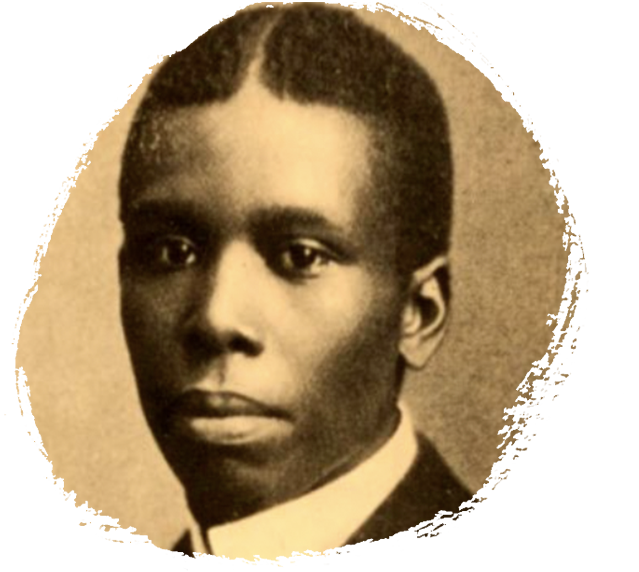
Paul Laurence Dunbar

Born in 1872, Paul Laurence Dunbar was one of the first African-American poets to gain national recognition. He authored numerous collections of poetry and prose during his life.