Thursday, April 7, 2016

Neighborhood Schools: The Good, The Bad, and The Frustrating


Did you go to a neighborhood school?

Did you go to school with all of the kids in your neighborhood?

Were your teachers also from that community?

Did you walk to school?


Did you take a bus?

Did you go to school with your next door neighbor?

What was the make up of the kids in your school?

I ask these questions because it seems to me that big sections of our country are de-segregating right before our wide open eyes.


My mother just turned seventy. She remembers being a kid in segregated Texas. She told me that she could not go to her neighborhood school in middle or high school.

Every morning she had to get up early so she could get on a bus. She would pass a number of schools before she got to the black middle school or high school in town. When desegregation came to Beaumont, TX and they started bussing white kids in order to integrate, parents were up in arms. 'Bussing' became a bad word, and it was fought tooth and nail.

My mom's amused reaction to this was, "We always had bussing. It only became a problem when it was promoting equality."

On the other hand, my mother went to a neighborhood school in elementary school. She attended school in a black neighborhood called The Bottoms. Every kid in the school lived in the same neighborhood, had the same experiences, knew the same basic things about the world, and reinforced the same ideas.

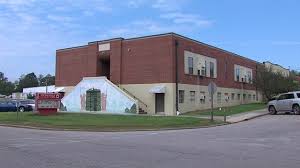
In March, I was in Delaware performing in the Red Clay school district. I went to a number of schools.

In one particular neighborhood school where the population was almost completely African American, the young man who was the proprietor of the 'technology center'-since they no longer lend out books to the children-and I had a long, interesting discussion.

He's starting his second year in this school. They are doing a program where they give the kids a free book every week instead of bringing them to library. The kids keep the books, and so build a library at home. The school does this because this neighborhood is poor, and they know most of the kids don't have books.

This young African American man and I shared stories of our backgrounds. His family travelled, and took him to museums, aquariums, camp outs and lots of other things. He went to a school that was not a neighborhood school.

He would return to school after spring break or the summer, and hear about his classmate's vacations. Some had gone to other countries, or experienced activities of which he knew nothing, and he learned a great deal from them. Their experiences opened up the world and exposed him to different ideas, and his experiences did the same for them. He learned about religious practices different from his own, family traditions that were interesting, and he had discussions with people who had different past experiences, and different life expectations. It changed his life in ways he could not even understand until he was older.

He lamented that the kids at this school never encountered anybody who didn't have the same background, experiences or even understanding of the world. They reinforced the worst elements of their neighborhood, and rejected anything that they didn't recognize because it was in a book or on a film and nobody they knew had any experience with it. For them, it was all fantasy, and did not reflect the real world. Up until he worked there, he hadn't really thought about how neighborhood schools could be a problem.

Our discussion reminded me of a school I visited in Florida. The school was near several really cool exhibits including a manatee center, some cool habitat tours, and lots of gorgeous hiking trails with marsh birds and nature tours.
The principal told me that they try very hard to get the district to give them funds to visit at least one of these easy to get to places once a year because none of these kids have parents who take them to things like that. Most of these kids don't leave the neighborhood. They are fascinated by the trips the school arranges. They never have any idea all of these things are within ten minutes of where they live.

Across this country I go into more and more schools where only one ethnicity is dominant.  These students may not learn how to deal with people who look, sound, behave, or expect different things from life. They will not hear about experiences outside of their understanding of the world, and they will not spark others by showing them something different.

Unless your neighborhood is diverse, which many are not based on the parameters that constitute a neighborhood, then kids are being educated in an environment that doesn't resemble the actual country in which they live.

In some places nothing can be done about it because there is zero diversity in the area and unless they leave their community, they aren't likely to encounter anyone of another ethnicity anyway.

I have personally performed in places like this, and the audiences come expecting I've got two heads, or I'm going to do something 'black' or speak a different language. I'm afraid I'm sort of disappointing to many of them.

I remember a tale a good friend of mine told me about something that happened after she moved to Kansas City after having lived in Olathe, KS. Her family went to the mall. Her three year old saw his first ever black person in the flesh, stopped, stared and said in a voice that was both too loud and too articulate.

"Look, mom! It's the Prince of Bel-Air!"


I'm happy to say Shaun met lots of different kinds of people at his new school!

All of this has been sitting in my body for a while. I've been noting how many schools look as if they are actually segregated.

It begs the question, "Does it really matter? Does meeting different kinds of people in your early years really make that much of a difference?"

In 2015, Justice Antonin Scalia of the Supreme court was listening to arguments about the necessity of making sure that our universities remain as diverse as we can make them. There were a number of things said during these proceedings that were pretty awful.

At one point Justice Scalia suggested that African American students should go to slower Universities because 'they' weren't up to any rigorous standard.

For Scalia, African Americans are a monolithic block of people who can mostly be classified the same way. This opinion, sadly, is accepted by far too many people.

That, of course, is distressing, but these two questions from Chief Justice Roberts brought home to me the true importance of having a diverse population at an early age.

"What unique perspective does a minority student bring to a physics class?" Followed by: “And I’m just wondering what the benefits of diversity are in that situation?”

The backlash to the above comments were swift and furious.

 We learn by being around people. We learn not just their names, or what they look like, but how they live, what motivates them, where they go, how they experience the world. Our understanding of who they are changes our perspective on the world, and opens our minds and eyes to a richer reality.

The more diverse our encounters at a younger age, the richer our understanding of ourselves, our culture, our neighbors, and some of the myriad of possibilities this world offers. Demystifying the unknown is a powerful tool towards making the society we live in work more cooperatively.

I understand the motivation behind neighborhood schools. Your kids will only go to school with kids they know. You usually have lots more control in neighborhood schools, and it reflects the tax base of your community, which might very well be why you bought that house in the first place. It is frustrating to buy a great house, in a great neighborhood and find out that your kid is going to be bussed to a less wonderful school than is in your lovely neighborhood. I get that frustration.

I'm not saying all neighborhood schools are terrible.

Some neighborhood schools are very diverse. Some are great at helping students learn about the world. I've been in some schools where you look out over the population and it is a melange of lots of different kinds of kids from all over the world. I've seen others that look like a casting call for one particular type of person.

Seoul American Where Everybody is From Somewhere Else
So, what's the answer?

I don't know.

I believe that there is a benefit to being around a diverse group of people.

Then again, I'm pretty biased. I went to elementary school on military bases in three different countries.


Hearing different people's stories, finding out how those stories interact with yours, and learning to respect their stories is a powerful tool in the learning arsenal.

That, just in case Justice Roberts wants to know, is the benefit of having a diverse group of people in a physics class...or any class for that matter.


Happy Mingling.


National Association of Black Storyteller's Annual Conference

Have you been thinking to yourself...

'Boy o howdy, I sure would like to go to the National ASSOCIATION OF BLACK STORYTELLERS (NABS) conference and festival in Philadelphia, PA – November 2-6, 2016.


I'll bet it will be amazing!

 I'll bet there will be great performers! I


'll bet there will be interesting sessions.

If you have been thinking these thoughts, well, you are correct!

It will be amazing!

There will be great performers!

There will be interesting sessions!

'Alas," you might think, 'I'm short of funds for such a trip.'

Well, worry not! Funds are available.


The National Association of Black Storytellers (NABS) is offering the second annual Cowtail Switch Scholarship to young adults interested in learning, developing, and using storytelling in their respective community. 


Winners of the scholarships will be mentored by others at the National Association of Black Storytellers Festival and Conference. Information about the conference may be found on the NABS website (http://www.nabsinc.org).


Terrific! But who can apply for these funds?


Who May Apply?
Adults ages 18-35 interested in using the oral tradition in various venues: libraries, day cares, schools, community centers, etc.


Okay, okay. But if I win, what will I get?


-Free registration to full conference, beginning Wednesday, November 2 through Sunday, November 6, 2016. 

-This will include workshops, Opening Gala, Circle of Elders, Zora Neale Hurston storytelling concerts and other storytelling programs within the Festival, and the closing Mama Linda Goss Spiritual Breakfast.

 -Three nights shared lodging at conference hotel – Wyndam Hotel Philadelphia 

So, a completely free ride? 

Well, not exactly.


Additional Requirements
Must provide own transportation to/from conference
Must pay own meals that are not included in registration
Must pay for all incidental expenses (parking, etc.)
Must be willing to work as a volunteer during the conference and meet with NABS Leadership. Winner(s) will be asked to complete an evaluation, to provide ideas for attracting future Cowtail Switch Scholarship recipients to the NABS festival, and to write a letter to thank scholarship contributors. 

How many people are going to be able to take advantage of this opportunity?


At least one scholarship will be awarded. If additional funding is received, an additional scholarship will be granted. Members of the Cowtail Scholarship Committee will judge applications and determine scholarship winners. Applications are due May 28, 2016 (postmark date). Winner(s) will be notified by June 30, 2016 and must register for the conference by July 15, 2016.

All right, so how do I apply? 

Glad you asked!


Application Process
Please provide the following information via email or U.S. mail: Name, Address, City, State, Zip
Telephone Numbers (home and cell)
Email Address
Employer/Job Title or School/Year
Date of Birth
Storytelling experience (either telling or listening)

Answer the following questions:
1. Why are you interested in attending the National Association of Black Storytellers Festival and Conference?
2. Have you ever attended a NABS festival? If so, what years?
3. What do you hope to gain by attending?
4. How can storytelling be used in your present or desired line of work?

Email your application letter to: sanwbush@gmail.com, or mail your application to: NABS Cowtail Switch Scholarship Committee, c/o Sandra Williams Bush, PO Box 452, Amherst, NY 14226.
APPLICATION DUE DATE: May 28, 2016 (postmark date)


Good Luck, and I'll see you PA!


Happy Conferencing!

Thursday, March 17, 2016

In Residence at Stoneviille Elementary School: You Want Me To Work With What Age?


Stoneville, NC
This week I am in residence in Stoneville, NC. This means that I am teaching all week at Stoneville Elementary school.

This means I have four classes a day. In some residencies, I get a core class, or I work with a single grade level.

I've got some fun residencies in my toolkit for grades three through twelve

 I have one about humans needing to leave the earth because it is dying. The residency is designed to get students to study the solar system, consider alternative energy, visualize technologies that do not exist, work together in small groups, research current technologies that are being considered for space exploration, as well as lots of arts and creative drama work.

I went into the classroom, explained who I was and what I was doing there. When I started the creative drama element of the residency by telling the group of fourth graders they were the last, best defense against the destruction of the world, about three quarters of the kids thought I was undercover from NASA. Some of them were pretty freaked out about it. The next day I had to explain once more that it was a creative drama experience. Despite realizing I really was not sent from NASA, the kids took the activity very seriously. All of the classes had a great time.


Basically, each class was divided into small groups, and each group came up with plans to evacuate the earth. I was cool with any plan they could concoct, and we would create the technology to make it work no matter how far fetched.

The students spent three days planning our escape. I came in on the fourth day, told them that there was bad news. Time was shorter than we knew. Not everyone could get off of the planet. A representative from each group came up and drew a slip of paper out of a bag. The slips with nothing on them meant the group got to leave, but the ones with red lines across them had to stay on the planet. We didn't have the resources to evacuate them. The groups that were going to be left behind were extremely bummed. There were some tears. We bucked up, however, and began to consider how to proceed.

Four days into a five day residency,  one or two groups in each room had to scrap all of their plans and begin to see if they could figure out a way to stay on the planet, and survive. On the fifth day, we spent most of our time in the evacuation stage, except for the abandoned groups...they threw themselves into saving our planet with such energy and fervor, that their ideas were extremely cool. The students participated in guided visualizations, drew pictures, and described the systems they designed.

The teachers had pulled books about the solar system earlier in the year, but nobody looked at them twice. That week, the books made the rounds in the rooms as student groups tried to pick a planet on which to live, and create life support systems to deal with the various drawbacks of their orbits, atmospheres, and proximity to the sun. The kids had a blast, and if it encouraged even one of them to think seriously about physics, the universe, science of any kind or alternative fuel sources...then it was worth it. If not, then it was still a blast and we got all sorts of arts impact out of it.

Ellis Island
I also run an involved five day residency about Ellis Island. A version of that residency can be found in the wonderful book by Sherry Norfolk and Jane Stenson entitled Storytelling in the Social Studies Classroom.

I have one residency on the start of the revolutionary war. I also teach a variety of writing residencies that are designed to help students with descriptive writing, and I've taught fantasy writing residencies as well.

Still and all, it is not my favorite way to spend a week.

Stoneville Elementary
This week I am in residence in Stoneville, NC.  No matter how long I do this job, there is always something new!

I have never quite done a residency like this. I am visiting every single class in the school once, and then I have a show at the end of the week. I am not seeing any class more than once! How can you build anything? You can't. You just offer up a sampling. It is not very satisfying, but I get why they want to do it this way. It allows for more arts exposure for every kid in the school.

This means I have to work with Kindergarten and First Grade. There are few things that can make my heart stop beating as quickly as knowing I have to spend an hour in a Kindergarten or first grade class.

I have no idea what you are supposed to do with little bitty kids in a classroom! I can tell stories to them all day long, but teaching them?  Just kill me now.

I don't know what people did about this sort of conundrum before the internet, luckily, I don't have that challenge. I had some ideas about what I might try that seemed a bit out there, so I reached out to our storytelling community online and asked, "what do I do?"

Our very supportive storytelling community was happy to offer up some ideas and encouragement. I finished my final classes with K and 1 today, and they were great.

What did I do?

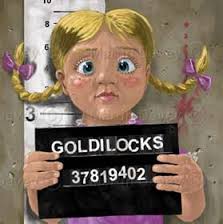
Well, I told a version of goldilocks where she is a really naughty person. We played it in drama space, acting out the story, and then we talked about story structure.


Luckily, this school has done a great deal of work helping students with story structure. This means they already know the beginning, middle, end organization of a tale. We looked at what images or ideas go in each part of the story. The part of the story they had the most trouble with was Resolution, but they got the hang of it.

With the Kindergarteners, I also played the Button Factory. This is how I learned it.

Hi! My name is Joe!
(The children repeat this line.)
And I work in a Button Factory!
(Repeat)
I have a house!
(Repeat)
And a dog!
(Repeat)
And a family!
(Repeat)
One Day, my boss came up to me.
(Repeat)
He said, "Joe are ya busy?"
(Repeat)
I said, "No."
(Repeat)
So he said, "Work with your right hand."

What happens here is I start making big circles with my right hand.

source


We go through the chorus again, and after Joe says 'no', the boss says, "Work With Your Left Hand"

The rest of the instructions are added onto the hand movements
Work with your right leg (Bring that leg up and down)
Work with your left leg (March)
Work with your bottom (wiggle while you march and move your hands)
Work with your nose! (Move your head back and forth or all around while you do the other movements)

At the end of this last chorus when the boss says, "Joe, are ya busy?" you say 'YES!"

Afterwards, we went through the button factory using our story structure chart, and focused on how that story broke down into characters, setting, a problem that vaults the character into action and then the resolution of the action.
The Monarch Butterfly


Two of my  kindergartens and one of my first grades were immersion classes, and so I broke out La Mariposa (the butterfly), a story I learned from Carrie Sue Ayvar.

Bilingual storytelling is fun! The kids who spoke Spanish enjoyed knowing what was happening a half step before their English speaking peers. All in all, it was a great time.

Tomorrow I am seeing all of the second graders at the same time, and then I have a show.

I'm in residence in Stoneville, NC. I'm learning so much about being in the classroom, managing kids, and gauging how they are doing.

I am recalling why I would be a terrible classroom teacher.

I am enjoying playing with the kids. I'm enjoying watching the kids focus on improving their concentration and visualization skills. I'm enjoying the teachers as they watch the process and make notes about follow up after I'm done.

It is good to do this every now and then as I write and think about brain function, but as much fun as I am having....I'm looking forward to being done tomorrow!


Happy Tell/Teaching!


Thursday, February 25, 2016

The Art of Procrastination: How Do You Roll?


When I have a writing deadline, my house gets really, really clean.


When I have a writing project I should be doing, I watch a ton of Netflix.


When I have a writing project that is actually kind of important to me, but I know it is going to take me a while to finish it, and it is going to require outside sources, research, and learning tons of new stuff as I go through it, Facebook becomes a really important factor in my life.


When I have a writing project that is probably important to my career, I've given myself a personal deadline of May, I really should be working on it especially since I have this week off, I know it is going to take a while to finish, it requires outside sources, lots of research, learning tons of new stuff as I go, and I already know the style, structure, and outline of the project....


I really would like to talk more about this, but I have to do the floors; hang out the wash; I'm in the middle of binge watching Crossing Lines on Netflix; and I just heard that tell tale bing that says I got a new message from the really intense discussion I'm having with somebody about a politically fraught subject on Facebook.


Maybe I'll get to that book I'm writing about language and literacy building today...maybe I won't.

See you Next Week.

Happy Procrastinating.

Sunday, February 21, 2016

Words, Words, and More Words: Our Kids Need Them

Tellin' It
What a week!

Lots of storytelling. Worked in schools that educate the very privileged, all the way over to the children whose parents have little to nothing. The difference in these two groups is always stark. The similarities between these two groups is always interesting.

I've been trying to figure out what to write about this week. When the work is rich, the audiences teach you many things, the world reconfirms what you have noticed over many years, and you discover that this job has new curves and surprises you never suspected could exist, there is much material that can be discussed.
Told Rumplestilskin, got cool reactions.

Oh, then, my drive from Florida home to North Carolina. Wow, it was very Zen. I was in a great zone, chewing over all of the performances, tweaking stories, thinking about new material. The weather was perfect, and the drive was both cleansing, and lovely. Perhaps this week's blog should be about using drive time to refresh and renew?

Zen Driving


I had great interactions with teachers, administrators, and even the hotel attendants, and I got to see Carrie Sue Ayvar, one of my favorite people and acquired family. Perhaps this should be a blog about advocacy, downloading with another storyteller, sharing news and suggestions? Downloading with other tellers?

I got invited to a festival I'd never heard of, and know nothing about at all. Perhaps this could be a blog piece on how to approach this sort of situation?

Lots of things happened this week that I thought might make a decent piece, and then, when I was about five miles from home after driving for eight hundred miles, something happened that upended my entire trip, and wrecked my Zen.

I was listening to my XM radio, as I often do, and a song I'd never heard came on called On The Phone, On the Toilet sung by a man named Randy Kaplan.
Randy Kaplan


He's done some fun songs, and I do like his music. I particularly like the song, Don't Fill Up On Chips.

This one, however, floored me. Basically, it is this song about a kid whose mother is always on the phone. He thinks she is missing his whole childhood. He sings about the fact that she never talks to him. She never has conversations with him. She doesn't interact with him at all. He always feels lonely. Then, one day he looks at her phone and discovers that she is actually tweeting, blogging and face booking? about him. He feels better, and less alone.

Me? Horrified. His mother isn't interacting with him, she's interfacing with her phone. it doesn't matter if she's tweeting, blogging and whatever else with the world about him if she doesn't interact with him. Kids need our attention, our eyes, our words, our presence. It isn't enough for you to be bodily there if every other part of your world is focused on the tiny square in your hands. Study from a couple of years ago that finds that parents with smart phones tend to ignore their children. It isn't just kids in America, other countries are noticing this problem as well. Here is a piece about kids discussing how kids feel about their parent's phone obsessions.


I turned off the radio and considered all of the kids I'd seen over the last week. I considered how many teachers were on their phones right when the storytelling began. I started looking around at the other drivers and passed no fewer than eight in the last five miles who were texting and driving.


It made me consider how lucky my kids were that we didn't have a television in our kitchen. We sat at the table, had meals together, and talked. It made me consider how many hours we played language games as a family like Scattagories, Apples to Apples, and Balderdash.

It made me think of all of the research that tells us how important it is to speak to children. They can't learn language if they don't hear us speaking. They can't develop deep vocabularies if they don't hear us speaking. They won't develop conversation skills if they don't hear them modeled. They won't develop visualization skills if they only interface with screens that give them all of the images. The basis of all things literate start with speaking.

I pondered the song the rest of the way home. I pondered what kind of language the next generation of kids is going to get from their parents. I pondered, and I thought about storytelling. By the time I got home, I didn't want to write about anything else.

Happy Talking


Friday, February 12, 2016

A Day In The Life: Being a Professional Storyteller

Any day that I am planning to perform starts the night before.

First, I receive my data sheet. These are compiled by my manager husband, and they contain all the information necessary. Depending on when and where the work is to be done, I get this sheet either the night before I have to leave if it s a travel experience, or the night before the show if it is a day trip. The sheets look like this.


Top of the page:

Balance Due - (This is in green, and it tells me the amount the organization still owes, and whether or not they are going to pay me that day, have paid in full, or if there is some kind evaluation I have to fill out after the fact if it is an arts council show)

(Most of the rest of the sheet is always in black)

Friday February 12th, 2016

(What am I doing? This is listed next)

Two Storytelling Sets 10:00 am & 11:25am

(Where am I going?)

The Xavier School for Gifted Children
0000 Gendon Heights Drive
Anywhere, USA 00040
Phone: (444) - 555 - 6666

(Next, my contact person. Sometimes this person has a different phone listed, sometimes not)

Contact: Storm


A little further down the page is a rectangle. Inside the rectangle is a list of situations about product


Book/CD Sales?  Y/N (Depending on the color of the Y or N that will tell me if I can sell product)
Library/School ordering Books from Publisher? Again Y/N
Book Sale Prices Hardbacks  $    /Paperbacks   $   / CDs $


The prices in these slots will depend on whatever type of deal my manager/husband made with the school about product.


This is the cover page. Flipping beyond it there are any notes the school may want me to have, maps to the hotel if I have to stay overnight somewhere, and maps to the school(s) I will be visiting that day.

There is plenty of blank space on the cover page for me to doodle, make notes, or 'think in ink' as I am want to do.

Upon receiving my travel sheets, I go to my computer and open the Exel spreadsheet where I keep a list of all the schools I've visited, the year I was there, and the stories I told. I also make notes if anything in particular occurred. I check to see when or if I was last there.

If I discover I was never there, then I break out my first set year and make a note of it on the cover page.

Next, I look at the time I have to start performing, decide what time I have to leave my house or hotel in order to arrive half an hour before the show, and then I back that up an hour to figure out what time I really have to be out of bed.


This is the one I have. A Fender Passport System.
I check with my manager/husband about whether or not the school has a decent sound system. If they do, I don't worry about the sound system, but if they say they don't or if they aren't sure, we pack mine in the car just in case.

If I have to spend the night away from home, I drive there. Usually to a Hampton Inn. I try to get there in plenty of time to have dinner by about 5:30, because if I eat later than that on the road, I'm likely to be up really late. (Don't know why it just happens like that when I am traveling!)

Next, I do my nails, iron my outfit for the next day, and make sure I get at least eight hours of sleep.

Next morning  - Arrive at school half an hour before show. Make the necessary acquaintances, see the space, make sure the sound system works, find out about the school and the kids, find out if the school wants anything in particular. Discuss which groups I'm seeing when, and make sure there are no surprises. If there are surprises, because sometimes there are, I adjust at that point.

Perform.

Today I was working with a middle school in Charlotte, NC. Middle School is my favorite group. We had a blast. After the sixth grade set, one of the teachers came up to me. "I've never seen them sit that well. You kept the attention of three hundred sixth graders!"

"Thank you. Storytelling can do that." This is my canned answer. 

"You're really good at your job!" She beamed.

"Thank you! I've been at this for 28 years. If you work at something for almost 30 years and you're not good at it, then you should consider making it a hobby." We both laughed. This is a variant of what I say when people seem surprised that I am good at my job.

The seventh grade set was also fun, and after it was over I was packing my stuff, and trying to get home since I had a three hour drive in front of me. The set started almost ten minutes late, and the teachers said they didn't care if I cut into the next class so long as the kids got the entire set. That meant they were in limbo for about fifteen minutes after the last story, and they wanted to ask me questions as I was trying to get out of there ahead of the weather.

What are you going to do? So, I stopped putting the sound system away and spent ten minutes answering questions. Then, I went back to packing. The bell sounded, they left, and some of them were very sweet. They came up and shook my hand, asked how they could find me online (I give out this information during the set, but there are always a few kids who just want to talk to me, so they ask again after the set is over), some told me I did a great job, and a few were certain I was the best storyteller in the whole world. (well, they're young)

Then, I drove three hours home.


Built a fire, opened Excel and recorded the name of the school, the month and year as well as the stories told. Then, I went into the mileage sheet in my business folder, recorded the mileage, and filed the paper contracts in the filing cabinet. After that, I filled out the arts council sheet to show I'd completed the show, evaluated the experience, and emailed that back to the ASC office.

Now, after all of that, I'm sitting here typing this blog post.

There is still laundry and dinner to get to, and my daughter has an audition for Governor's School tomorrow morning in Raleigh.

Did I mention I was pretty tired?

So, that's a typical day in the life give or take the kinds of travel, performance, or teaching needs.

I enjoy this work. I enjoy this life. Good thing, because I'm not really suited for anything else!

Happy Telling!


Monday, February 1, 2016

Feast, Famine, or Flood: Don't Spend It Unless You Have It!

Money can be an odd thing when you are a professional storyteller, or artist of any kind. Sometimes it seems like our bank accounts are very healthy, we turn around, and they are completely empty. This is typically called feast or famine.

Work is the same way. We have months and months when it is flooding, and then it dries up for a while and we are just staring at our barren calendars.

There is only so much we can do as artists. Oh, we can market like there is no tomorrow, and work as hard as we can to get work, but we can't make it show up if it isn't out there.

We can budget, and we can save, but if that dry spell gets long, things get worrisome.

So, in honor of the fact that I saw a post by Antonio Sacre lamenting the in-between moments when contracted money has yet to show up, and contracted work has not yet been completed, I thought I'd do a post about the taboo subject...Money. In our business, you can be paper rich and cash poor.

Not only that, it is tax season, so here is a post about artist finances.


First - Did you pay quarterly taxes last year? Should you pay them this year? If you are self-employed, you might need to pay quarterly taxes to reduce your tax liability. The link  is a great way to find out if you should be paying them, and how you go about doing that.

Second - Do you have an accounting system that helps you deal with your finances? There are many different ways to deal with keeping track of your expenditures and income. Here are a few I've done in the past:

1) You can throw all of your receipts into a box, and then take them to an accountant when it is tax time. Leave hastily as they open the box and begin trying to make sense of what you've given them.

2) You can put receipts from different months in different envelopes and then go through them at the end of the year, tally them, and use the numbers to fill out your taxes.

3) You can put everything in Quicken. (I recommend this one)

4) You can keep a long hand account book. (I used this until things got changed over to Quicken)


5) You can do a combination of all of the above based on how good you are with sticking with a system, or if you get overwhelmed and things start piling up until you get around to it!

Third:  Who does your taxes?

If you do them yourself, great! Make sure you are taking advantage of as many perks as you can.

-deduct the business use of your home if you don't have an outside office
-deduct your per diem (easier than keeping track of all your individual receipts for food. You'll most likely come out ahead unless you have really expensive tastes)
-deduct your mileage (Usually more beneficial than deducting your expenditure on gas)
-deduct your supplies
-deduct your postage
-deduct your performance clothes
-deduct your cabs
-deduct your hotels
-deduct your plane fare
-deduct your luggage fees and the purchase of your luggage!
-deduct your fees for anything you ship anywhere
-deduct your fees for conferences, festivals, storytelling events
-deduct your organization fees
-deduct whatever you can think to deduct
Good Luck.

If you use an accountant, it is great to get an accountant who works with artists. They are really, really good at finding things to deduct. Before we became a company, I used the same accountant as Donal Davis. Judy Crook could figure out how to deduct anything. She was fabulous!


If you discover that you owe the government money, and you can't afford to pay, here are some suggestions for dealing with that.

My last bit of information has to do with the way we artists deal with our bottom line.

As an artist, there are three kinds of money .

Ifcome

Income

Wishcome

Ifcome: This type of money is defined as any money that might come in 'if' certain events align.
Examples:

"If this grant comes through, I will make twenty thousand dollars in November."
"If this residency is fully funded, I will work the entire year."
"If this librarian can get all ten schools in the district, March will be a great month."

Do not spend this money. It is not real.

Income: This one is easy. It is contracted, and you can expect it to show up at some point, and end up in your bank account. Now, be wary of this type of money, because we all know that even if it is contracted, things can happen. The organization could take sixty days to pay you. They could lose the paperwork or invoices, and it could take even longer to get you your check. You could be snowed out and the check will be delayed. I'm sure you know the sorts of things I mean.

Don't spend this cash until it is in the account.

Wishcome: This is really imaginary money.
Examples:

I wish this book was a best seller
I wish I could get a contract off Broadway
I wish this CD could win a grammy

Do not spend this money. It is pure fantasy for the most part, and utterly non-existent to boot.


Now, it seems obvious that you wouldn't spend money that is iffy, or wishy, but lots of artists do just this, and find themselves in a hole when things they were hoping for don't pan out as they thought.

Heck, we can't even spend our income about a quarter of the time because it is overdue!

Last but not least. Consider saving out money when you have it. This can either become a cushion for a future shock, or seed money to invest in something you want or need like a portable sound system, or stocks.

So, let's be smart about how we deal with the money that is coming in the door. It is hard since we always seem to need something for the business that we have been putting off forever, but making more conservative economic choices can make being a storyteller easier in the long run...you know, unless you win some huge lottery jackpot, or write the next 'Harry Potter', then you can just do whatever you want without worrying about it.


Happy Earning!