Thursday, February 25, 2016

The Art of Procrastination: How Do You Roll?


When I have a writing deadline, my house gets really, really clean.


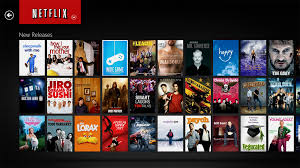
When I have a writing project I should be doing, I watch a ton of Netflix.


When I have a writing project that is actually kind of important to me, but I know it is going to take me a while to finish it, and it is going to require outside sources, research, and learning tons of new stuff as I go through it, Facebook becomes a really important factor in my life.


When I have a writing project that is probably important to my career, I've given myself a personal deadline of May, I really should be working on it especially since I have this week off, I know it is going to take a while to finish, it requires outside sources, lots of research, learning tons of new stuff as I go, and I already know the style, structure, and outline of the project....


I really would like to talk more about this, but I have to do the floors; hang out the wash; I'm in the middle of binge watching Crossing Lines on Netflix; and I just heard that tell tale bing that says I got a new message from the really intense discussion I'm having with somebody about a politically fraught subject on Facebook.


Maybe I'll get to that book I'm writing about language and literacy building today...maybe I won't.

See you Next Week.

Happy Procrastinating.

Sunday, February 21, 2016

Words, Words, and More Words: Our Kids Need Them

Tellin' It
What a week!

Lots of storytelling. Worked in schools that educate the very privileged, all the way over to the children whose parents have little to nothing. The difference in these two groups is always stark. The similarities between these two groups is always interesting.

I've been trying to figure out what to write about this week. When the work is rich, the audiences teach you many things, the world reconfirms what you have noticed over many years, and you discover that this job has new curves and surprises you never suspected could exist, there is much material that can be discussed.
Told Rumplestilskin, got cool reactions.

Oh, then, my drive from Florida home to North Carolina. Wow, it was very Zen. I was in a great zone, chewing over all of the performances, tweaking stories, thinking about new material. The weather was perfect, and the drive was both cleansing, and lovely. Perhaps this week's blog should be about using drive time to refresh and renew?

Zen Driving


I had great interactions with teachers, administrators, and even the hotel attendants, and I got to see Carrie Sue Ayvar, one of my favorite people and acquired family. Perhaps this should be a blog about advocacy, downloading with another storyteller, sharing news and suggestions? Downloading with other tellers?

I got invited to a festival I'd never heard of, and know nothing about at all. Perhaps this could be a blog piece on how to approach this sort of situation?

Lots of things happened this week that I thought might make a decent piece, and then, when I was about five miles from home after driving for eight hundred miles, something happened that upended my entire trip, and wrecked my Zen.

I was listening to my XM radio, as I often do, and a song I'd never heard came on called On The Phone, On the Toilet sung by a man named Randy Kaplan.
Randy Kaplan


He's done some fun songs, and I do like his music. I particularly like the song, Don't Fill Up On Chips.

This one, however, floored me. Basically, it is this song about a kid whose mother is always on the phone. He thinks she is missing his whole childhood. He sings about the fact that she never talks to him. She never has conversations with him. She doesn't interact with him at all. He always feels lonely. Then, one day he looks at her phone and discovers that she is actually tweeting, blogging and face booking? about him. He feels better, and less alone.

Me? Horrified. His mother isn't interacting with him, she's interfacing with her phone. it doesn't matter if she's tweeting, blogging and whatever else with the world about him if she doesn't interact with him. Kids need our attention, our eyes, our words, our presence. It isn't enough for you to be bodily there if every other part of your world is focused on the tiny square in your hands. Study from a couple of years ago that finds that parents with smart phones tend to ignore their children. It isn't just kids in America, other countries are noticing this problem as well. Here is a piece about kids discussing how kids feel about their parent's phone obsessions.


I turned off the radio and considered all of the kids I'd seen over the last week. I considered how many teachers were on their phones right when the storytelling began. I started looking around at the other drivers and passed no fewer than eight in the last five miles who were texting and driving.


It made me consider how lucky my kids were that we didn't have a television in our kitchen. We sat at the table, had meals together, and talked. It made me consider how many hours we played language games as a family like Scattagories, Apples to Apples, and Balderdash.

It made me think of all of the research that tells us how important it is to speak to children. They can't learn language if they don't hear us speaking. They can't develop deep vocabularies if they don't hear us speaking. They won't develop conversation skills if they don't hear them modeled. They won't develop visualization skills if they only interface with screens that give them all of the images. The basis of all things literate start with speaking.

I pondered the song the rest of the way home. I pondered what kind of language the next generation of kids is going to get from their parents. I pondered, and I thought about storytelling. By the time I got home, I didn't want to write about anything else.

Happy Talking


Friday, February 12, 2016

A Day In The Life: Being a Professional Storyteller

Any day that I am planning to perform starts the night before.

First, I receive my data sheet. These are compiled by my manager husband, and they contain all the information necessary. Depending on when and where the work is to be done, I get this sheet either the night before I have to leave if it s a travel experience, or the night before the show if it is a day trip. The sheets look like this.


Top of the page:

Balance Due - (This is in green, and it tells me the amount the organization still owes, and whether or not they are going to pay me that day, have paid in full, or if there is some kind evaluation I have to fill out after the fact if it is an arts council show)

(Most of the rest of the sheet is always in black)

Friday February 12th, 2016

(What am I doing? This is listed next)

Two Storytelling Sets 10:00 am & 11:25am

(Where am I going?)

The Xavier School for Gifted Children
0000 Gendon Heights Drive
Anywhere, USA 00040
Phone: (444) - 555 - 6666

(Next, my contact person. Sometimes this person has a different phone listed, sometimes not)

Contact: Storm


A little further down the page is a rectangle. Inside the rectangle is a list of situations about product


Book/CD Sales?  Y/N (Depending on the color of the Y or N that will tell me if I can sell product)
Library/School ordering Books from Publisher? Again Y/N
Book Sale Prices Hardbacks  $    /Paperbacks   $   / CDs $


The prices in these slots will depend on whatever type of deal my manager/husband made with the school about product.


This is the cover page. Flipping beyond it there are any notes the school may want me to have, maps to the hotel if I have to stay overnight somewhere, and maps to the school(s) I will be visiting that day.

There is plenty of blank space on the cover page for me to doodle, make notes, or 'think in ink' as I am want to do.

Upon receiving my travel sheets, I go to my computer and open the Exel spreadsheet where I keep a list of all the schools I've visited, the year I was there, and the stories I told. I also make notes if anything in particular occurred. I check to see when or if I was last there.

If I discover I was never there, then I break out my first set year and make a note of it on the cover page.

Next, I look at the time I have to start performing, decide what time I have to leave my house or hotel in order to arrive half an hour before the show, and then I back that up an hour to figure out what time I really have to be out of bed.


This is the one I have. A Fender Passport System.
I check with my manager/husband about whether or not the school has a decent sound system. If they do, I don't worry about the sound system, but if they say they don't or if they aren't sure, we pack mine in the car just in case.

If I have to spend the night away from home, I drive there. Usually to a Hampton Inn. I try to get there in plenty of time to have dinner by about 5:30, because if I eat later than that on the road, I'm likely to be up really late. (Don't know why it just happens like that when I am traveling!)

Next, I do my nails, iron my outfit for the next day, and make sure I get at least eight hours of sleep.

Next morning  - Arrive at school half an hour before show. Make the necessary acquaintances, see the space, make sure the sound system works, find out about the school and the kids, find out if the school wants anything in particular. Discuss which groups I'm seeing when, and make sure there are no surprises. If there are surprises, because sometimes there are, I adjust at that point.

Perform.

Today I was working with a middle school in Charlotte, NC. Middle School is my favorite group. We had a blast. After the sixth grade set, one of the teachers came up to me. "I've never seen them sit that well. You kept the attention of three hundred sixth graders!"

"Thank you. Storytelling can do that." This is my canned answer. 

"You're really good at your job!" She beamed.

"Thank you! I've been at this for 28 years. If you work at something for almost 30 years and you're not good at it, then you should consider making it a hobby." We both laughed. This is a variant of what I say when people seem surprised that I am good at my job.

The seventh grade set was also fun, and after it was over I was packing my stuff, and trying to get home since I had a three hour drive in front of me. The set started almost ten minutes late, and the teachers said they didn't care if I cut into the next class so long as the kids got the entire set. That meant they were in limbo for about fifteen minutes after the last story, and they wanted to ask me questions as I was trying to get out of there ahead of the weather.

What are you going to do? So, I stopped putting the sound system away and spent ten minutes answering questions. Then, I went back to packing. The bell sounded, they left, and some of them were very sweet. They came up and shook my hand, asked how they could find me online (I give out this information during the set, but there are always a few kids who just want to talk to me, so they ask again after the set is over), some told me I did a great job, and a few were certain I was the best storyteller in the whole world. (well, they're young)

Then, I drove three hours home.


Built a fire, opened Excel and recorded the name of the school, the month and year as well as the stories told. Then, I went into the mileage sheet in my business folder, recorded the mileage, and filed the paper contracts in the filing cabinet. After that, I filled out the arts council sheet to show I'd completed the show, evaluated the experience, and emailed that back to the ASC office.

Now, after all of that, I'm sitting here typing this blog post.

There is still laundry and dinner to get to, and my daughter has an audition for Governor's School tomorrow morning in Raleigh.

Did I mention I was pretty tired?

So, that's a typical day in the life give or take the kinds of travel, performance, or teaching needs.

I enjoy this work. I enjoy this life. Good thing, because I'm not really suited for anything else!

Happy Telling!


Monday, February 1, 2016

Feast, Famine, or Flood: Don't Spend It Unless You Have It!

Money can be an odd thing when you are a professional storyteller, or artist of any kind. Sometimes it seems like our bank accounts are very healthy, we turn around, and they are completely empty. This is typically called feast or famine.

Work is the same way. We have months and months when it is flooding, and then it dries up for a while and we are just staring at our barren calendars.

There is only so much we can do as artists. Oh, we can market like there is no tomorrow, and work as hard as we can to get work, but we can't make it show up if it isn't out there.

We can budget, and we can save, but if that dry spell gets long, things get worrisome.

So, in honor of the fact that I saw a post by Antonio Sacre lamenting the in-between moments when contracted money has yet to show up, and contracted work has not yet been completed, I thought I'd do a post about the taboo subject...Money. In our business, you can be paper rich and cash poor.

Not only that, it is tax season, so here is a post about artist finances.


First - Did you pay quarterly taxes last year? Should you pay them this year? If you are self-employed, you might need to pay quarterly taxes to reduce your tax liability. The link  is a great way to find out if you should be paying them, and how you go about doing that.

Second - Do you have an accounting system that helps you deal with your finances? There are many different ways to deal with keeping track of your expenditures and income. Here are a few I've done in the past:

1) You can throw all of your receipts into a box, and then take them to an accountant when it is tax time. Leave hastily as they open the box and begin trying to make sense of what you've given them.

2) You can put receipts from different months in different envelopes and then go through them at the end of the year, tally them, and use the numbers to fill out your taxes.

3) You can put everything in Quicken. (I recommend this one)

4) You can keep a long hand account book. (I used this until things got changed over to Quicken)


5) You can do a combination of all of the above based on how good you are with sticking with a system, or if you get overwhelmed and things start piling up until you get around to it!

Third:  Who does your taxes?

If you do them yourself, great! Make sure you are taking advantage of as many perks as you can.

-deduct the business use of your home if you don't have an outside office
-deduct your per diem (easier than keeping track of all your individual receipts for food. You'll most likely come out ahead unless you have really expensive tastes)
-deduct your mileage (Usually more beneficial than deducting your expenditure on gas)
-deduct your supplies
-deduct your postage
-deduct your performance clothes
-deduct your cabs
-deduct your hotels
-deduct your plane fare
-deduct your luggage fees and the purchase of your luggage!
-deduct your fees for anything you ship anywhere
-deduct your fees for conferences, festivals, storytelling events
-deduct your organization fees
-deduct whatever you can think to deduct
Good Luck.

If you use an accountant, it is great to get an accountant who works with artists. They are really, really good at finding things to deduct. Before we became a company, I used the same accountant as Donal Davis. Judy Crook could figure out how to deduct anything. She was fabulous!


If you discover that you owe the government money, and you can't afford to pay, here are some suggestions for dealing with that.

My last bit of information has to do with the way we artists deal with our bottom line.

As an artist, there are three kinds of money .

Ifcome

Income

Wishcome

Ifcome: This type of money is defined as any money that might come in 'if' certain events align.
Examples:

"If this grant comes through, I will make twenty thousand dollars in November."
"If this residency is fully funded, I will work the entire year."
"If this librarian can get all ten schools in the district, March will be a great month."

Do not spend this money. It is not real.

Income: This one is easy. It is contracted, and you can expect it to show up at some point, and end up in your bank account. Now, be wary of this type of money, because we all know that even if it is contracted, things can happen. The organization could take sixty days to pay you. They could lose the paperwork or invoices, and it could take even longer to get you your check. You could be snowed out and the check will be delayed. I'm sure you know the sorts of things I mean.

Don't spend this cash until it is in the account.

Wishcome: This is really imaginary money.
Examples:

I wish this book was a best seller
I wish I could get a contract off Broadway
I wish this CD could win a grammy

Do not spend this money. It is pure fantasy for the most part, and utterly non-existent to boot.


Now, it seems obvious that you wouldn't spend money that is iffy, or wishy, but lots of artists do just this, and find themselves in a hole when things they were hoping for don't pan out as they thought.

Heck, we can't even spend our income about a quarter of the time because it is overdue!

Last but not least. Consider saving out money when you have it. This can either become a cushion for a future shock, or seed money to invest in something you want or need like a portable sound system, or stocks.

So, let's be smart about how we deal with the money that is coming in the door. It is hard since we always seem to need something for the business that we have been putting off forever, but making more conservative economic choices can make being a storyteller easier in the long run...you know, unless you win some huge lottery jackpot, or write the next 'Harry Potter', then you can just do whatever you want without worrying about it.


Happy Earning!


Friday, January 22, 2016

Let It Snow: What Is Your Inclement Weather Policy?

I'm stranded in Virginia at my parent's house. Weather.com assures me I will be here until Monday at the very least.

I guess if you must be stranded, it might as well be with people you love.

Well, it seems the perfect time to break out an inclement weather post!

Businesses, little league, and other types of groups that require people to gather in order to do something communally usually have some kind of inclement weather policy.


If you were ever involved in the PTA or a church leadership, this set up will not be shocking to you!

Then there are the groups where a single person makes a decision, and everyone else just has to wait and see what it is.

Someone (usually the superintendent of schools) decides which schools will be open on any particular day, and they often let everyone know at about five in the morning. You just go to the website!


Does your artist business have an inclement weather policy?

DLW Storyteller Inc., my company, has one.

We instituted this after a particularly bad year where we lost about six thousand dollars in revenue during one horrifyingly snowy week in February.

Our inclement weather policy dovetails right into our regular policy, so it is neither elaborate, nor needlessly complicated. Here are the steps.

1. A week before a show, the company contacts the venues to confirm times and dates. (this is standard procedure)

2. If there is some sort of inclement weather, a plan is put into place. One of four things could happen.


                a. We will consider the situation as we get a little closer to the date. (This requires a follow up phone call to see if action needs to be taken, or if we plan to attempt the show as scheduled.)

                b. We move the show to another day. (This avoids headaches...unless we run into more weather, and then you just go back to step one.

               c. We roll the dice, and just wait and see. (Sometimes this works, and our optimism is rewarded. Sometimes Mother Nature laughs heartily, and we discover at about five in the morning that the school is closed, and we need to think about another date.)

               d. If the show is cancelled on the day in question, and we have not picked another date because of our rose colored glasses, then we offer the school the next available dates. We usually follow up with them if they don't pick one after about a week, but most venues get back to us within about forty-eight hours.

3. If the venue has trouble finding a date to reschedule, we work to accommodate them even if it means rescheduling for the coming year. Some places decide to cancel the event altogether. Eight years ago we instituted a deposit policy that is non-refundable. If an organization decides not to book the show, that is their prerogative, but we do not offer refunds. The only way a group would see that deposit again is if my company was responsible for the cancelation.

It is very simple, but it makes the snowy season much less stressful. It also makes venues feel better when they know you are thinking about how to make the show work. We also make sure we instigate the contact and the rescheduling so they are not running around after us.

So, there you have it.

As for me, I'm going to curl up here at my mother's house, and have a nice cup of tea with honey.

The school I was supposed to visit this afternoon in North Carolina was closed last night, and probably won't even be open Monday, but that's okay since the show was rescheduled for next Thursday last Wednesday.


Happy Snow Day!


Monday, January 18, 2016

Packaging and Selling the African American Experience: Working While Black between MLK and Feb. 28th


On January 17th of this year, I was asked to do a twenty minute presentation at a Synagogue with a Jewish Reform congregation. This was not such an unusual request.

I often joke that between MLK Jr. day and the end of February, even people who didn't know they wanted any kind of performer discover they desperately need a black one.

When I first started performing, October and February would pay for the entire year. I could make about fifteen to twenty thousand dollars in each of those months.

Now, the folks at this synagogue are local to my home, so a goodly number of the adults and children have encountered me in our community at the schools, at author presentations, or at local festivals. I am not an unknown quantity to them, and they only thought of having me come because they were trying to figure out a way to cap their day of mitzvahs.

I was honored to be considered, but the request for what type of program I was to do was both typical and a little frustrating.

They wanted me to come and do 20 minutes on the African American experience.


This is typical, because apparently that is what is supposed to happen between MLK Jr. Day and February 28th in our country. For those who don't know, February is Black History Month.

I have no beef with black history month. In fact, I'm all for it. When I went to school, I didn't know anybody but old white guys had a hand in building our nation. Talking about slavery was uncomfortable. We learned statistics about slaves, and I think somebody mentioned something about Harriet Tubman and George Washington Carver, but that was about it. Oh, Martin Luther King, we heard about him too.

Madam CJ Walker
First African American
Millionaire. Inventor
These days, kids in America spend an entire month learning about black engineers, doctors, inventors, politicians, pioneers, soldiers, and such like.

I occasionally encounter bitter people who lament that there is a women's history month, Native American Month, Hispanic History Month, African American History month, and so on, but there is no white history month. For anyone who has ever expressed this sentiment I humbly submit to you that pretty much every month is white male history month, it's just that on special months kids are encouraged to learn about some of the other people who also had a hand in creating our country.


That is neither here nor there. No, the big question is how do you present the African American experience in America?

I have no idea.

First of all, I didn't actually grow up in America. I grew up in South Korea.


I didn't grow up on 'the economy' - which is what we army brats call anything that isn't on a military base.

I grew up on military bases until I was in seventh grade.

I grew up in majorly multicultural, multi-ethnic neighborhoods, schools, and communities.

The first time I ever witnessed kids separating themselves by color in a lunch room was on my first day of seventh grade in Lawton, Oklahoma. Talk about culture shock!

I grew up on military bases in four different states and three countries.

I grew up with a high ranking military father on military bases where rank was important.

I grew up with a really diverse group of friends. At no point were all of them the same general color or from the same general part of the world...even in Lawton, Ok!

I grew up in a family with three adopted Amerasian siblings

From left to Right: My nephew John, slightly behind and above him is my brother Joseph, (Jaslyn's dad) slightly below him, my mother, next to her my sister,Annie (John and Jeremy's mom), my brother Don, my sister Duyen, My dad, my brother Milton, my brother Darren. The little guy in the black and white sweater is Jeremy, my new husband David is on his left, I am seated, and I have Jaslyn on my lap. (This was twenty years ago, we've added quite a few folks to our family since then)

I spent a big chunk of my childhood surrounded by heavily armed men.

I spent a big chunk of my childhood living in countries where I could just barely communicate with a majority of the people around me.

I was in the first integrated class to graduate from my high school in Indiana in 1984.


I was the first person of color to win a small scholarship from the Optimist club in 1983 in Indianapolis, Indiana.

I lived near Indianapolis when its motto was, 'Keep Indianapolis Lily White'. It was what they called their beautification program back in the '80s, and they justified the slogan by pointing out that Eli Lilly pharmaceuticals has their national headquarters in Indy.

The seeds of the Klan run deep in Indiana, and it is a touchy subject.

I attended Northwestern University.

I was in the first integrated international tour of Wiley and The Hairy Man in 1990. (Linked to a recent production, not the one where I played mammy.)
Depaul University


I married a Jewish man.

I am a Unitarian Universalist.

When my daughter was little she looked Asian, and people often asked me who she actually belonged to or if I were her nanny or babysitter.


My son is attending university for graphic design.

My daughter is currently in a boarding school for kids gifted in science and math.

I'm a professional storyteller and author.

My husband is my business manager/agent.

That is my African American Experience.

Being black does not mean you are having some kind of monolithic experience that all black people have. It might mean that you are more in tune with random, difficult, morale sapping, injustice that takes a toll on African Americans in general. Luckily, lots more voices are beginning to speak out against these cultural and social soul killers.


Being pulled over by the police.

Being followed around in a nice store by someone because they aren't sure black people should be shopping in nice stores.

Being give a harsher sentence or punishment than a white counterpart for the same infraction because...that's just how it is.

Being steered into a higher risk loan.

Being turned down for a job interview because of your name.

I was once discriminated against in a housing situation. It happened to David and I when we lived in Chicago. I went with David to look at an apartment he and his friends were trying to rent. The renters took one look at me and made some excuse about why the couldn't rent the apartment to Dave and his friends. They filed a complaint, the city checked on the complaint, found that the couple was indeed discriminating and Dave and his friends were given a small settlement. First and last time that ever happened to me...though it didn't actually happen to me, just because of me.


My daughter and her new
favorite sweatshirt
My mother always told me that if I wanted to succeed in life I would have to be twenty times better than any white person just to be given a shot at what 'they' take for granted as a given. Is that true? I don't know, but I try really hard not to have to find out by putting my best foot forward as often as I can.


When I am asked to give presentations on the African American Experience, I suppose I could stand up and rant and rave about how many things are still wrong in this country, and that it shouldn't be this hard to just go about your life while black, but I don't, because to tell you the truth, my life has been pretty remarkable, fun, and exciting, and wouldn't I be some kind of hypocrite or ungrateful fool to pretend it hasn't. No, I end up giving the history of the stories I'm telling, and explain how the choices made in our country shaped the way African Americans told and shared stories in the oral tradition.  I make allusions to the fact that if we understand our history, it helps put in context why we are still struggling with the biases and injustices that still plague our country, but I don't bring my soap box to a show.


That's pretty much all I've got when it comes to presenting the African American Experience in America.

As we go into the future, it would be cool if the 'othering' of our neighbors was not such a given. We each have our own experiences. Those experiences shape us, mold us, determine who we are, but they don't give any of us the right to speak for every African American, Hispanic American, Muslim American, Sikh American, middle class American, poor American, Caucasian American, Japanese American...the list goes on and on...in the country.

So, if you happen to be black during the next month and a half, share stories, start conversations, spread knowledge, and don't let anyone tell you what is true of all African Americans, or anybody else for that matter.

If you don't happen to be black during the next month and a half, share stories, start conversations, spread knowledge, and don't let anyone tell you what is true of all African Americans, or anybody else for that matter.

Happy Sharing!

Thursday, January 14, 2016

Who Is Looking For You? What Will They Find?


I realized I needed a website a long time ago. I was really pleased when I had the first one designed, and we actually put a bid out on a tech site to get my latest one done by a real live graphic arts studio.

In fact, that company did all of the PR so that my press packet, stationary, and website all had the same graphic quality and images.

Well worth the expense. I thought that was all I'd need to do. Heaven's above but I was wrong!

That did not make me excited to do anything else!

 I had zero interest in writing a blog.

In fact, When Sue O'halloran first suggested that I do it, I thought, 'no way'.

I didn't want a Facebook Page, and put off getting one until a few years ago.

I didn't want a You Tube Channel, but I have one...I don't post much there, but that will change this year.

I don't want to do an original 'show' for my YouTube Channel, but I will be putting the thing together, and if it goes well, I will be marketing the heck out of it by fall.

I didn't want to have a Twitter account. I have one all the same. You can follow me  on Twitter @dlwstoryteller. I still don't really get tweeting, and I'm not one hundred percent sure how the whole thing works, but I'm in there like everybody else!


I even joined Linkedin, but I'm not one hundred percent sure what to do with that either. Though, I'm happy to connect with you over there!


There are, in fact, a whole host of things that I don't find particularly lovely about the maintenance of my on-line persona, but, if I want to work, these are important things.

All of this on-line stuff started because of an epiphany I had some years ago.

There was lots of footage on youtube and in other places of me, but I didn't put any of it on-line, had no way to encourage or discourage people from finding it, and none of it was catalogued in any way shape or form.


Then, there are all of the random pictures, the on purpose pictures, and the 'Good Heavens I hope nobody ever sees that one' pictures.

 I wanted to make sure that if someone were looking for me, they found the information I wanted most prominent, and not the work of someone who was standing a quarter mile from the event while recording the backs of half the audiences' heads.


I decided that the only way to make sure I was putting my best foot forwards was to take control of my various on-line bits, and combine them into something that helped me funnel people and traffic to things that helped my career.

In the last couple of years I've realized I need to get into some more video posting online. My learning curve for this is horrible, but, I will figure it out with tutorials and the occasional mocking laughter of my children as they say things like, 'Just click this, mom'.

Luckily, there are new videos coming online all of the time, and that helps, but I still need to get my own stuff out there.

This newest piece is from Kentucky and is part of their PBS Learning Media. It is called A World of Stories.  I'm doing Anansi and the Hat Shaking Dance.

Those stories are going to become part of my marketing strategy going forward into the year. There are some good ones by Megan Hicks, Carrie Sue Ayvar, Dan Kedding and Mary Hamilton, so, if you have a moment, go and give it a look!


So, here is the question: When someone is looking for you...what do they see? What sites come up first? What links will they encounter? Where does Google send them? What is the overall impression people get of you when they search for you online?

That's why I write the blog.
That's why I have a Youtube Channel.
That's why I tweet.
That's why I'm on Linkedin.
That's why I'm working on a short video series.
That's why I post on Facebook.
That's why I market all of my preferred links to schools in my online marketing material.

Driving traffic to my favorite sites instead of hoping for the best is my on-line marketing strategy.

It requires constant upkeep.

What is your on-line marketing strategy?

What are your potential employers and/or fans seeing when they look for you?

Are you leading that search, or are you being carried along by it like a cork in a river?

Let 2016 be the year you take control if you are still being moved by the current.

Happy Marketing!